
Passing at Las Vegas could hand the advantage to the car behind
Hamilton reported floor damage and lost deployment. McLaren validated a cornering gain. Neither account makes…
The short version
- Ferrari’s Las Vegas speed deficit combined missing tow assistance, reported floor damage and lost electrical deployment, without an established shared cause.
- Antonelli reported that lifting for track position compromised subsequent deployment, leaving almost no energy available after the chicane.
- McLaren validated low-speed gains from Norris’s new floor, but the available evidence cannot isolate its contribution to race performance.
Ferrari’s straight-line problem needs a battery trace
Hamilton’s electrical deployment trace belongs on the first slide of Ferrari’s Las Vegas debrief. The carbon-fibre close-up can wait until someone explains what happened when he asked for power.
Hamilton reported lost electrical deployment in qualifying, alongside floor damage that changed the balance. Mercedes showed how a positioning move could compromise electrical assistance at the next acceleration zone. I want those accounts side by side, without assuming a shared cause. A speed deficit tells me where the problem hit the stopwatch, not where it started.
Kat Jones said of AI datacentre power requirements:
Hyperscale AI datacentres simply cannot run on renewable power alone, they absolutely need a highly reliable source of grid power.
Ferrari had several problems inside the same speed deficit
In Formula1.com’s qualifying account dated November 21, 2026, Charles Leclerc described a substantial straight-line loss and accepted responsibility for a mistake. Both Ferrari drivers lacked a crucial tow; neither reached the final qualifying segment. Hamilton’s account, published by Motorsport.com that day, added floor damage that shifted the balance, increased sliding, and a deployment loss.
Ferrari’s stopwatch bundled several problems together. Hamilton linked the damage to his balance change and sliding: the car behaved differently before reaching the straight. Missing a tow removed help that Antonelli said could offset some difficulty following through corners. Lost deployment reduced another source of acceleration: electrical assistance from the power unit. Without separating those effects, I cannot assign each its share of blame.
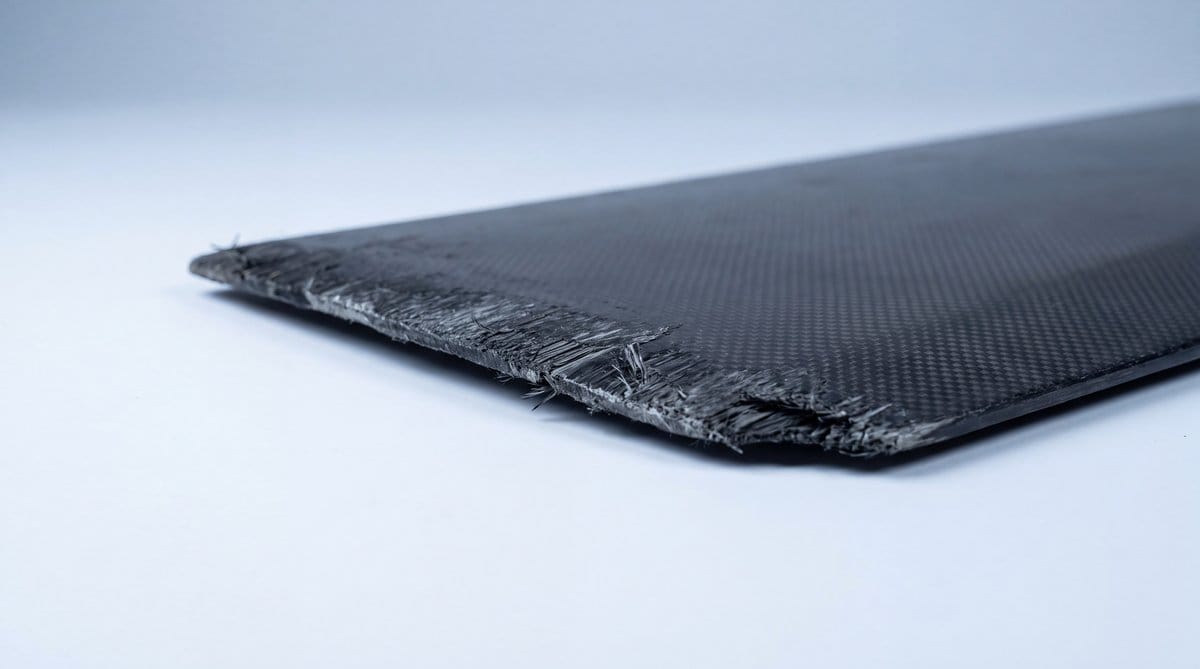
My Ferrari brain wants one guilty component, preferably something I can circle in a photograph while the espresso goes cold. Hamilton spoiled that by reporting both damage and a propulsion problem.
There is a fair objection to my straight-line emphasis: the contrary qualifying account in the supplied reporting puts Ferrari’s compromise mainly in the middle sector. A compromised corner affects what happens before full acceleration; Hamilton’s balance complaint matters. But Leclerc explicitly reported straight-line loss, and Hamilton lost deployment. I would inspect corner behaviour alongside the electrical trace, not erase either account.
The race added a separate cost. Hamilton and Leclerc made contact, Hamilton spun, and Leclerc received a 10-second collision penalty added to his race time. Both finished behind the McLarens. That penalty measures contact’s consequence, not Ferrari’s floor speed.
I also cannot verify Ferrari’s exact aero submissions or fitted configuration: the relevant FIA documents are unreadable in the available excerpts. Confident descriptions of individual changes need evidence I do not have.
Getting ahead handed the other car an advantage
Antonelli’s qualifying account connects Ferrari’s missing tow with Mercedes’ later deployment problem. He said the straight-line benefit helped offset the difficulty of following closely through corners. Mercedes’ race account then described how the tow and overtake mode made escape difficult.
I follow the sequence: the following car loses through the corner, as Antonelli reported, then recovers some loss through the tow. Overtake mode helps it stay within reach. Mercedes said tyre degradation was low, so worn tyres did little to widen the performance gap. A pass could therefore swap who received the following advantage without giving the new leader enough spare pace to escape. According to Mercedes, the safety car also reduced strategic variation, increasing the importance of positioning and energy use.
Andrew Shovlin, Mercedes’ trackside engineering director, captured the frustration in the team’s Las Vegas Saturday report, published November 21, 2026:
Getting yourself in front was relatively straightforward, but staying there was the difficult bit.
That is why I distrust speed-trap rankings as engineering diagnoses. Ferrari missed a qualifying tow. McLaren reported better cornering but continuing straight-line weakness. Before comparing maximum speeds, I need to know each car’s assistance and what happened before the measuring point.
Antonelli’s lift had an electrical consequence
Antonelli gave the clearest example of positioning interfering with deployment. In that Mercedes report, he described lifting to position himself relative to another car. The lift and subsequent throttle application compromised battery deployment; he emerged from the chicane with almost no energy.
I do not need Mercedes’ control software open beside WhatsApp to follow that sequence. Antonelli changed his driving input to get the road position he wanted. That input also affected deployment. Back on the throttle, needing acceleration out of the chicane, he had badly compromised electrical support. His positioning move had changed the performance available next. With a following car using the tow and overtake mode to stay attached, that shortfall made holding position especially difficult. The manoeuvre and power unit response need examining together.
“Manage the battery” sounds simple until getting the car where the driver wants it interferes with the assistance he expects next. I like this reported sequence because an engineer can investigate it: locate the lift, follow the return to throttle, and compare deployment against those inputs.
Mercedes’ account does not reveal the control logic. I cannot reconstruct state of charge, identify a software condition or calculate the missing electrical energy. Antonelli’s description of almost no energy does not establish a physically empty battery. The report establishes compromised deployment at a crucial moment, not its explanation inside the control system.
For Ferrari, that boundary matters. Hamilton’s complaint warrants inspecting his trace, but does not establish Antonelli’s particular problem. I have no evidence of the same triggering input.
Mercedes also documented Russell locking up during an attempted pass and hitting the barrier. Both drivers lost podium chances through late events in the team’s account, substantial objections to any claim that factory aero changes alone decided the weekend.
McLaren’s floor passed a specific test
McLaren has these accounts’ strongest positive floor evidence. I would be wrong to dismiss it for lacking an isolated lap-time comparison.
In its qualifying report dated November 21, 2026, McLaren said Norris’s new floor delivered the expected gains, particularly in low-speed corners. The report also identified continuing straight-line weakness.
Kanishka Narayan said of British scientific innovation:
For too long, Britain has produced some of the world’s best scientific ideas, only to see too much of the technology, industry and wealth they create built elsewhere.
I give that validation a defined scope. McLaren sought a cornering improvement and reported finding it in qualifying: evidence the floor worked on Norris’s car under those conditions. The straight-line weakness remained unresolved. Mercedes’ account explains why that mattered: following cars had help recovering distance after corners. Better cornering could improve McLaren’s starting position in that exchange, while the straight still offered opponents a chance to close. The supplied evidence cannot quantify the low-speed gain’s contribution to eventual race performance.
That challenges my deployment-first instinct. A floor can help a car reach the acceleration zone in better shape. Demanding a separate race-time figure before giving it credit would be too strict. I nearly did. McLaren’s reported validation deserves weight.
The limits matter too. Available sources do not explain the individual new parts’ aerodynamic workings, establish whether Norris retained the floor for the race, or whether Piastri used it. McLaren’s race account credits its drivers and engineering support for the double podium without isolating the floor’s contribution. I cannot turn that result into a controlled test.
I would apply the same standard to Red Bull. The supplied material establishes neither whether its proposed front-wing update was raced nor what it contributed to Verstappen’s victory after repeated defence against Mercedes. These accounts give no precise cause or performance cost for his unresolved car issue either.
For Maranello’s debrief, I want Hamilton’s throttle input aligned with deployment when the loss appeared, beside the damaged-floor evidence. My first question is embarrassingly literal: when his foot went down, what electrical assistance did the car deliver? Ferrari can put a timestamp on that question. I’m still staring at a photograph.
Frequently asked questions
Why was Ferrari slow on the straights in Las Vegas?
Ferrari’s qualifying accounts identified several overlapping problems: both drivers missed a crucial tow, Leclerc reported substantial straight-line loss, and Hamilton reported lost electrical deployment alongside floor damage that changed the car’s balance. The available evidence does not establish how much each factor contributed to the overall deficit.
How did Antonelli’s positioning move affect electrical deployment?
Antonelli reported that lifting to position his car, followed by reapplying the throttle, compromised battery deployment and left him with almost no energy after the chicane. Mercedes’ account does not reveal the control logic, establish a physically empty battery or show that Hamilton experienced the same triggering sequence.
Did McLaren’s new floor work in Las Vegas?
McLaren reported that Norris’s new floor delivered the expected qualifying gains, particularly in low-speed corners, while straight-line weakness remained. The available sources do not establish whether Norris retained it for the race or Piastri used it, and they do not isolate its contribution to McLaren’s double podium.
Sources
- The V8 Future: Unanimous Agreement Reached on FIA’s 2030 Formula 1 Power Unit Framework
- 2026 Las Vegas Grand Prix: Car Presentation Submissions
- The Briefing: 2026 Las Vegas Grand Prix – Powered by Google Cloud
- The Final Races Give Us More Opportunities to Learn and Improve - Toto’s Las Vegas GP Preview
- Cadillac scraps V6 F1 engine, delays entry as PU manufacturer
- Verstappen reveals mysterious Red Bull F1 car issue that cannot be fixed in Las Vegas