
Can NFS2ROOT get root on Linux nfsd: no login required?
OpenSec’s demo shows root command execution. Crediting Antara with autonomous exploit engineering requires…

The short version
- OpenSec says Antara autonomously built a Linux NFS remote-root exploit; independent evidence supports the underlying overwrite and memory disclosure.
- The vulnerable session operations require reachable NFSv4.1 or NFSv4.2 server machinery and do not check export access.
- Operators should check distribution advisories, restrict unnecessary NFS access, and verify the running kernel after patching and rebooting.
OpenSec says Antara built a Linux root exploit
OpenSec’s root-shell demo gets my attention. Crediting its AI with engineering the exploit takes the development record, not just the finale.
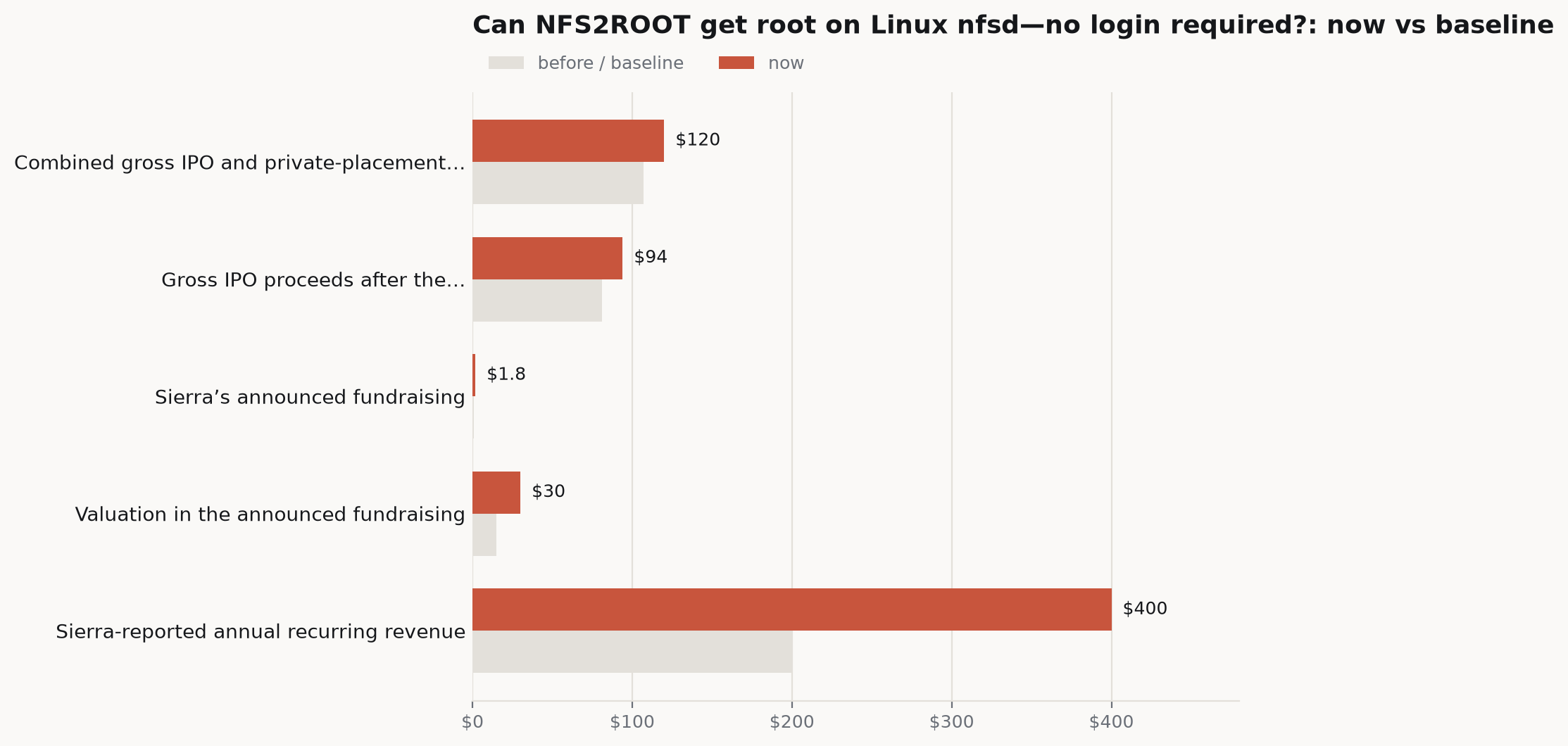
OpenSec says Antara autonomously built a remote-root exploit for CVE-2026-99362, the reply-cache vulnerability independently documented by the Linux kernel CVE team. The complete exploit remains private. I’d patch, but keep the champagne refrigerated.
How an empty reply cache becomes a memory overwrite
What grabbed me: a reply cache with zero bytes of data space. The kernel’s KASAN diagnostic records an 80-byte write into it under crafted-request conditions. The server promises to remember a reply it cannot store.
Linux’s in-kernel NFS server caches replies to answer repeated requests consistently. A client can negotiate the cached-reply limit to its minimum, leaving slots without reply-data space. A crafted COMPOUND tag then fills the narrowed response buffer, leaving room for the SEQUENCE operation code but not its status word. According to the upstream fix, the encoder exits without encoding SEQUENCE, but the operation remains marked successful with its data offset at zero. Trusting that state, the cache-store routine copies the entire reply, including headers and the client-chosen tag, into the empty destination, overrunning neighboring memory. The fix checks whether the required reply fits before consuming the slot’s sequence ID.
OpenSec describes about 60 bytes beyond the heap object, 40 client-chosen. That boundary differs from the reply-cache data area measured by the kernel diagnostic: the accounts describe different parts of the overwrite.
The replay behavior matters. The kernel CVE team says replaying the corrupted entry can return adjacent slab memory. OpenSec says its exploit combines that disclosure with the overflow to defeat kernel address randomization, then forges a pointer and reclaims memory with a fake callback. Disconnecting the client triggers root command execution, according to its account.
That final chain comes from OpenSec. Its recording shows the victim reporting uid=0(root) before powering off. Upstream evidence independently supports the overwrite and disclosure, but does not demonstrate the full command-execution chain.

What I would need to credit Antara
Antara is OpenSec’s white-box harness, with source-code access. I credit the company for a concrete exploit-engineering claim: turning an overwrite into controlled execution takes considerably more work than producing a crash.
For me, autonomy hinges on the development record. A recording shows the final command, not how the exploit got there. Someone might have preselected a favorable target configuration, supplied a useful hint, or repaired a failed attempt. Each changes how much engineering I attribute to the system. I have no evidence any happened; an audit should answer those questions. Reproducible run records and disclosed interventions would let outsiders trace the work; testing different kernel configurations would show what survives beyond the demo.
OpenSec’s strongest case deserves its due: independent bug documentation, an upstream repair, and demonstrated command execution. Dismissing that because I cannot download the exploit would be lazy. It warrants investigating the capability, while autonomous development and production reliability remain unverified.
Discovery credit needs its own receipt. OpenSec acknowledges that Jérémy Jean of France’s cybersecurity agency ANSSI submitted an independent fix on August 17, before the September 21 finding it attributes to Antara. Jean wrote the upstream fix. Antara’s claimed contribution is autonomous exploit construction, as OpenSec describes it.
The disclosure dates need untangling. Greg Kroah-Hartman’s kernel CVE announcement is dated November 19, a day before the severity-scoring commit. OpenSec dates CVE publication with fixes to that following day.
OpenSec published its exploit-and-autonomy account on November 25, after both kernel events. I’d use Kroah-Hartman’s announcement as the disclosure date.
Check whether your kernel actually contains the server
An affected kernel version starts my exposure check; it doesn’t finish it. Syself’s counterexample: its affected-version Kubernetes releases omit the in-kernel NFS server code, operating only as NFS clients. No vulnerable server for the request to reach.
Where the code exists, I’d trace service reachability. The affected session machinery must be active through NFSv4.1 or NFSv4.2, with a potentially hostile client able to connect. The kernel CVE team says these session operations do not check export access. Reaching them requires neither privileges nor a local user mounting a share; folder-level permissions leave this earlier path open. An internal foothold supplies network access even without a public service address. I’d check who can reach the NFS listener on TCP port 2049 before congratulating myself on restricted exports.
Red Hat says default RHEL configurations do not enable this server. That covers those defaults, not every storage node or NAS appliance. My reverse proxy is equally useless here: protecting a web-facing Docker setup says nothing about a separate storage listener.
Distribution advisories identify repaired packages, particularly with backported fixes. KrCERT’s fixed-release list extends beyond OpenSec’s initial four releases.
KrCERT includes 5.10.275 and 6.6.163, not just newer kernel branches. These are exact software identifiers; rounding either sends someone hunting a different kernel.
Debian’s November 21 advisory covers the linux-6.12 package, not every kernel in the distribution. I’d check the installed package name before following its instructions.
For Debian 12, it identifies 6.12.117-1~deb12u1 as that package’s fixed version. That gives me a package-level check, not an answer about a different Debian kernel.
As of November 26, checked sources reported no exploitation in the wild; exposed-server and compromised-system counts remained unknown. So does the private exploit’s reliability across production kernels and hardening settings. No reported attacks doesn’t reassure me about a particular machine.
My patch checklist ends with rebooting and verifying the running kernel, not installing the update. Meanwhile, restricting NFS to required clients or disabling an unused server reduces exposure. I’d coordinate with storage users: Red Hat warns that stopping the service terminates active sessions, and firewall changes can disconnect excluded clients.
I can wait for an independent audit before crediting the AI. My maintenance window has to happen sooner, preferably before shared storage turns my evening into a group project.
Frequently asked questions
Has Antara’s autonomous Linux NFS exploitation been independently verified?
OpenSec says Antara autonomously constructed the exploit, and its recording shows the victim reporting root access before powering off. Independent kernel evidence supports the underlying overwrite and memory disclosure, not the complete private exploit. Verifying autonomous development requires reproducible run records and disclosure of human interventions.
Which Linux systems are exposed to CVE-2026-99362?
Exposure depends on more than the kernel version: the system must contain the affected in-kernel NFS server, have NFSv4.1 or NFSv4.2 session machinery active, and be reachable by a potentially hostile client. The affected session operations do not check export access, so folder-level permissions do not block this path.
How should Linux administrators address CVE-2026-99362?
Administrators should use distribution advisories to identify repaired packages, install the appropriate update, reboot, and verify the running kernel. Restricting NFS access to required clients or disabling an unused server reduces exposure. Stopping the service terminates active sessions, and firewall changes can disconnect excluded clients, so storage users need coordination.
Sources
- NFS2ROOT (CVE-2026-99362): pre-auth root in Linux nfsd
- CVE-2026-99362: nfsd: preflight SEQUENCE replies before accepting a slot
- CVE-2026-99362
- Linux 제품 보안 업데이트 권고
- NFS2ROOT, Linux NFS server flaw gives root without a password
- NFS2ROOT: Linux Patches a 12-Year Pre-Auth Remote Root Bug in nfsd