
Home Assistant says: Big tech ruined the cloud, so we’re out
Home Assistant Link keeps automations local while remote access, backups, and voice stay online. Here’s what…
The short version
- Home Assistant says ‘Big tech ruined the cloud, so we’re out’, yet Link still provides optional online services.
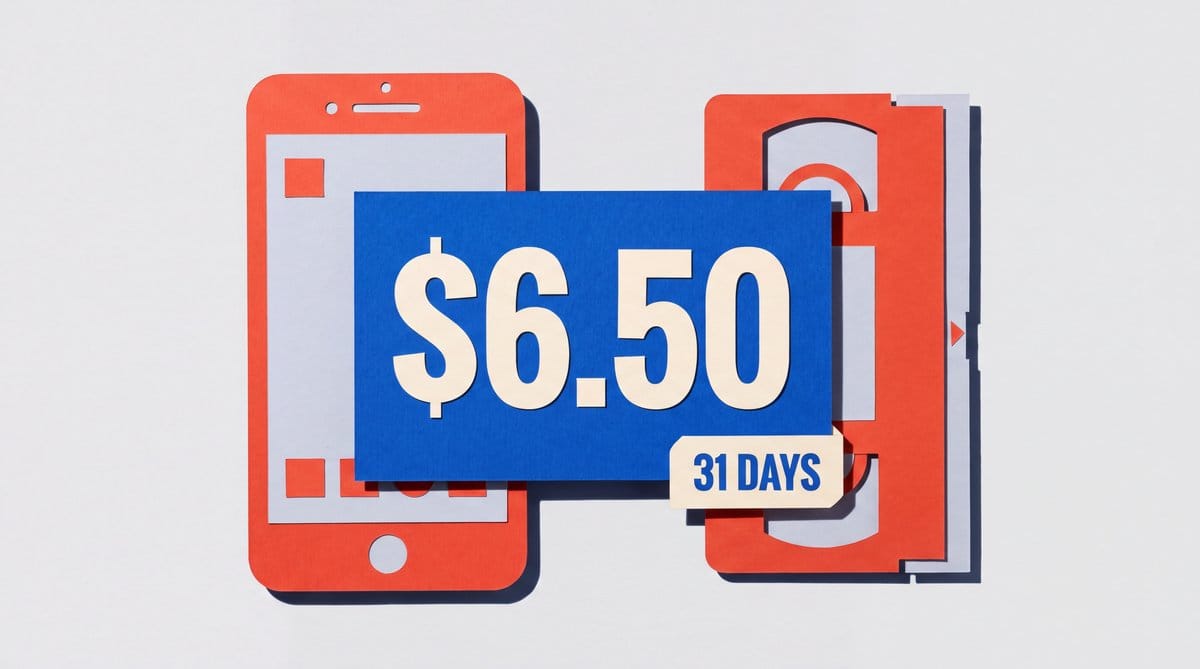
- The United States subscription costs $6.50 monthly or $65 annually, with a 31-day card-free trial.
- Readers should disconnect internet before buying smart-home gear to confirm essential functions survive cloud outages.
I pulled the internet cable. Home Assistant’s remote access died instantly; my local automations didn’t blink.
That test tells me more than any privacy manifesto.
The slogan says, “Big tech ruined the cloud, so we’re out,” but nobody loaded Home Assistant’s servers into a Fiat and drove them into the Adriatic. Online infrastructure still provides remote access, offsite backups, and other optional conveniences. The core runs locally, so cancelling the subscription or losing internet leaves local automations running. The headline is philosophy and branding, generously seasoned with hot sauce.
Home Assistant Cloud became Home Assistant Link because “Cloud” misled people. Some prospective users thought Home Assistant ran on Nabu Casa’s servers. The word also reeks of data harvesting, lock-in, and smart appliances becoming decorative plastic when manufacturers get bored.
“Link” fits better. My smart home lives with me; the subscription connects it to useful outside services.
A remote server helps me reach home from an airport, process speech online, or recover an offsite backup after hardware failure. Trouble starts when that server becomes the only route to a product I supposedly own.
The failure path owns the product
Two identical-looking smart bulbs can offer completely different control. With a local bulb, my switch talks to an in-house controller, which commands the light directly. A cloud-dependent bulb sends my command outside, waits for the manufacturer’s system, then receives permission to illuminate a kitchen three meters away. An internet outage breaks that trip; the manufacturer closing its service breaks it permanently. Packaging rarely explains this dependency with the enthusiasm reserved for gradients and suspiciously happy families. I learn who controls a device by seeing what happens when each outside connection disappears.
So I test smart-home gear before the return window closes. I disconnect the WAN but leave local Wi-Fi and power running, then try the essentials. Does the switch work? Does a scheduled automation run? Can another local controller reach the device without the manufacturer’s app?
A short outage is the easy exam. What happens if the company disappears, changes its API, or declares my functional hardware “end of life”? Companies retire services for understandable reasons: servers cost money, old systems become dangerous, and eternal support is fantasy. Users still never interpret “we may discontinue this service” as “your oven could lose features because a spreadsheet in another country turned red.”
Recurring revenue is fair when it funds recurring work. Remote connections need maintenance. Backups consume storage. Voice processing burns compute whenever somebody asks whether it will rain. Lock-in starts when a company removes the exit and calls the dependency convenience.
Home Assistant’s bargain is cleaner. The controller and local rules stay in my house; online features carry an ongoing price. If I stop paying, those features vanish while my home’s basic functions survive. Nabu Casa must keep Link useful because my thermostat is safe from the cancellation page.
Founder Paulus Schoutsen gave The Verge the sharper version:
Big tech ruined the cloud, so we’re out.
Excellent line. Literally, it is also wrong: Link remains an online service, servers included.
Home Assistant Link connects to a local brain
Home Assistant runs on hardware inside the user’s home. That machine stores the configuration, receives device events, and evaluates automations. When a local motion sensor reports movement, the installation checks the rule and tells the light what to do. No Nabu Casa server approves the exchange. Link joins the route only when I request something outside the local boundary, such as opening Home Assistant from my phone while travelling. Cancelling Link removes that managed route and its online extras; the installation remains on my hardware. A device dependent on its manufacturer’s API keeps that separate cloud dependency because Home Assistant cannot invent a local interface the manufacturer never provided.
The local-first claim needs a qualifier. The platform can run in my house while an individual integration calls an outside API. My Zigbee sensor may keep reporting during an outage while a Wi-Fi thermostat using a manufacturer-controlled connection loses its clever features. Home Assistant does not sprinkle open-source holy water over closed hardware.
The rename tackles that confusion. “Home Assistant Cloud” sounded like hosted Home Assistant even though the core installation lived at home. On December 2, 2026, the Home Assistant 2026.12 release replaces Cloud with Link. Existing subscribers do nothing, and Nabu Casa says the underlying service remains unchanged.
That service includes remote access, encrypted offsite backups, and Alexa and Google Home connections. Link also provides online voice processing, media streaming, and dedicated support. Every feature requires internet infrastructure somewhere, making the “we’re out” framing cheekier than the architecture.
The reasonable counterargument: the headline never said online services were ending; it rejected what “cloud” now represents. Fair. Nabu Casa’s announcement says the subscription continues unchanged, with no user action required. But headlines outrun architecture diagrams, and “we’re out” easily sounds like “we no longer use the cloud.” That did not happen.
Local ownership also asks more from me. I run Linux services and have wasted an embarrassing amount of life on reverse-proxy settings, yet my soul still leaves my body when a household feature becomes a Sunday-afternoon certificate problem. Most people would rather make lunch than debug NAT beside a blinking router. I cannot blame them, especially if lunch involves proper carbonara.
Charging me to avoid another weekend in my router’s admin panel is a respectable business. “Link” sets the right expectation too: it is a connection I can remove.
What the Link subscription actually buys
At home, my phone reaches Home Assistant over the local network. Outside, the router separates phone from controller. I need a secure route through that boundary and a destination my phone can find when the home connection changes. I can build it myself, then maintain it whenever certificates, routers, or network settings change. Link sells a managed path to the Home Assistant installation still running in my house. The online service carries the request home; my local controller handles the device. If Link disappears, existing local automations continue because they never used that path.
In the United States, Link costs $6.50 per month before tax. Paying $65 annually buys a year for the price of ten monthly payments. The free trial lasts 31 days, costs nothing, and requires no card details. I would still check regional pricing before carving this into marble.
The fee covers ongoing costs. Remote access needs maintained infrastructure. Offsite backups need storage away from the protected machine; otherwise, a dead drive or unfortunate espresso incident can destroy both copies. Online speech processing can use resources unavailable to a small home box. Support consumes human time, technology’s least scalable resource after founder sanity.
According to Nabu Casa, Link traffic is encrypted and only the user holds the key. Schoutsen described the privacy model to The Verge:
You don’t have to trust me not to misuse your data because I just don’t have your data.
I like that architecture, but I want independent verification before treating every claim as proven. No outside technical audit covers every Link feature, and nobody has published a complete map of vendors or data flows for speech processing and backups. An analysis from ic.work argues that online speech recognition uses Microsoft Azure Cognitive Services. It also says some integrations call manufacturers’ cloud APIs, though Nabu Casa’s primary material does not document those dependencies. The company has mentioned back-end speed and reliability improvements, but no comparative measurements show whether users will notice either.
The financial story needs equal caution. Nabu Casa says most subscription profit funds Home Assistant development through the Open Home Foundation. The Verge reports a specific figure from Schoutsen: 60% of profit, versus the less precise “majority” in Nabu Casa’s material. Profit is what remains after costs, not 60 cents from every subscription dollar going directly to the foundation.
Nobody outside the organisations has published an audited breakdown of Link revenue, operating costs, profit, or foundation transfers. Nor is there independent technical verification that Nabu Casa and the foundation cannot access encrypted user data. Nobody has shown whether the rename changes adoption, retention, or trust, or how many people misunderstood “Cloud.” Those are meaningful gaps for a service selling privacy as part of its identity.
I still prefer this model to selling household data or locking basic controls behind a permanent subscription. Eventually, though, “trust us, the money helps” needs receipts. Schoutsen put it with disarming brevity:
We’re growing up.
Pull the cable before trusting the box
My failure test removes one dependency at a time. During an internet outage, local rules and locally connected devices should continue; remote access and online speech should disappear. Cancelling Link should draw the same boundary: the managed connection and offsite services vanish while Home Assistant stays on my hardware. If Nabu Casa disappears, the official bridge may vanish too, though the open-source installation remains available. I can replace remote access or backups myself if I accept the configuration work. A device tied to its manufacturer’s API remains vulnerable, however lovely the Home Assistant dashboard above it. Each failure reveals who holds the keys.
Perfect independence is fantasy. My home still needs electricity, a router, and devices with questionable life choices. Local hardware dies too. Ownership means having an exit that preserves essential functions, plus documentation that does not require archaeological training.
As Link grows, its creators must protect that boundary. New voice features and smoother integrations will tempt the company to move more work online because centralised services are easier to update. Convenience creeps inward one harmless feature at a time. I have watched enough products become subscriptions to know the first compromise always arrives wearing excellent UX.
Before buying any connected product, I pull the internet and try the function printed largest on the box. If it fails, I know who owns it.
Within a year of the Link rollout, I expect other smart-home companies to borrow “local” while quietly keeping one essential command on their servers. Home Assistant’s rename matters only while I can cut the Link without cutting the lights.
Frequently asked questions
What happens to Home Assistant if I cancel Link?
Cancelling Home Assistant Link removes its managed remote-access route and online extras, including offsite services. The Home Assistant installation remains on local hardware, and local automations continue running. Devices that depend on a manufacturer’s cloud API keep that separate dependency and may still fail when the manufacturer’s service is unavailable.
Does Home Assistant Link work without internet?
Home Assistant’s local controller and locally connected devices can continue working without internet, but Link itself cannot. Remote access, online speech processing, offsite backups, and other internet-based features disappear during an outage. Any integration relying on a manufacturer-controlled cloud API can also lose functionality even though Home Assistant remains available locally.
How much does Home Assistant Link cost?
In the United States, Home Assistant Link costs $6.50 per month before tax or $65 per year. The annual option provides twelve months for the price of ten monthly payments. A 31-day free trial requires no payment card, while regional pricing may differ.
Sources
- Home Assistant says ‘Big tech ruined the cloud, so we’re out’
- Big Tech ruined the cloud, so we’re renaming ours
- Cloud becomes Link
- Home Assistant Link
- Home Assistant dit adieu au « cloud »: son service en ligne sera renommé Home Assistant Link
- Home Assistant Cloud becomes Link as a simpler hub is planned