
Shield AI IPO: What Investors Still Haven't Been Told
Shield AI has no IPO date, and its private valuation cannot answer the harder question: are investors buying…
The short version
- Shield AI has announced no IPO date, ticker, exchange, price range, or confirmed public filing.
- Hivemind offers reusable autonomy software, while X-BAT adds factories, suppliers, inventory, testing, and years of cash needs.
- Investors need product-level revenue, margins, backlog, customer concentration, and cash burn before judging the private valuation.
The rumored $20 billion Shield AI valuation buys you zero shares. As of October 1, 2026, Shield AI has announced no IPO date, ticker, exchange, price range or confirmed filing.
The company is large enough to attract IPO speculation. That says little about its public-market readiness. Investors must separate Hivemind’s reusable autonomy-software economics from X-BAT, an aircraft program requiring factories, suppliers and years of testing. Nobody outside Shield AI knows the revenue mix, funded backlog, customer concentration, cash burn or free cash flow needed to judge either.
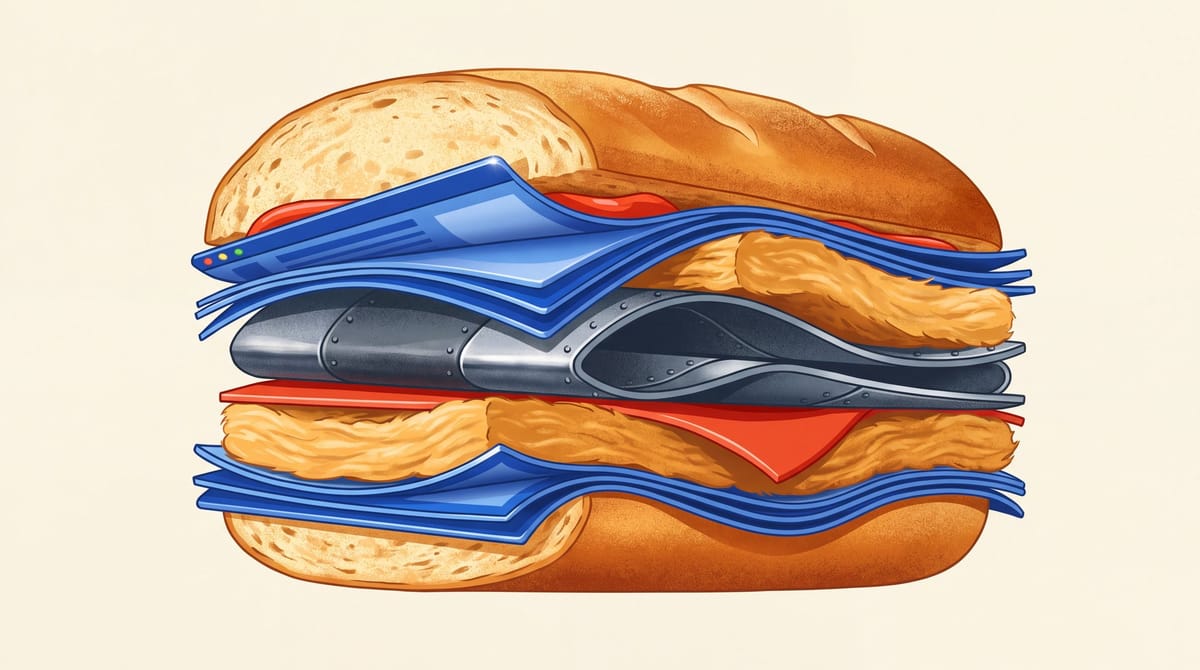
A higher private valuation may reduce pressure to list. Private financing keeps the software and aircraft stories glamorously blended. A prospectus would reveal whether investors are buying software margins, defense-manufacturing economics or a chaotic panino containing both.
Can I buy Shield AI stock before its IPO?
No. I cannot buy Shield AI shares through an ordinary brokerage account. The company remains private, without a public ticker.
Here’s the machinery. In a typical venture round, a company issues shares to selected investors on negotiated terms, creating the private valuation reported in headlines. Existing shareholders may get none of that cash. In a secondary sale, an employee or early investor sells an existing private interest, usually subject to company restrictions. Neither creates an exchange listing for regular investors. An IPO adds public trading and recurring financial disclosure. Until then, news that somebody bought Shield AI stock tells me almost nothing about whether I can buy the same security on comparable terms.
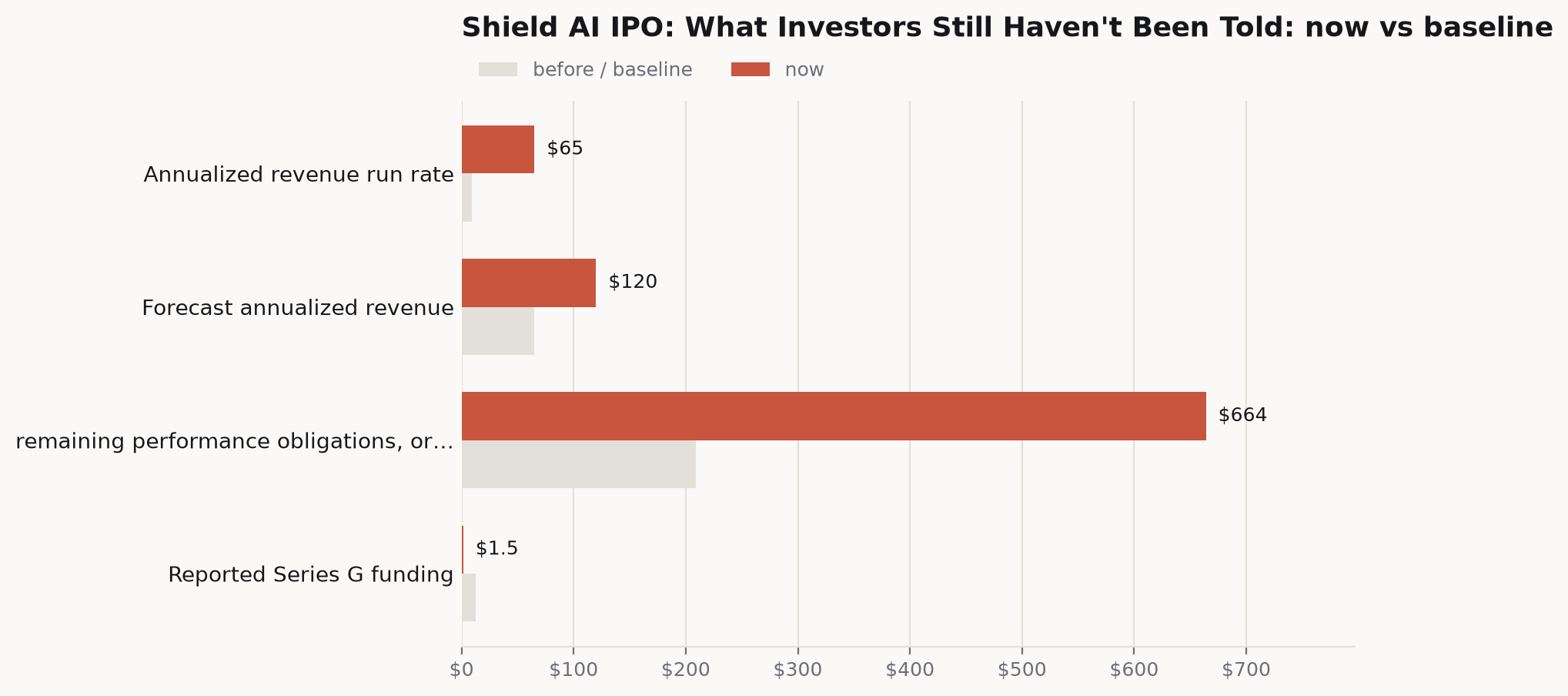
TechCrunch reported a $1.5 billion Series G in March 2026 at a $12.7 billion post-money valuation. GeekWire later gave a different financing amount with the same valuation, and the supplied sources do not reconcile the discrepancy. I’d rather show the wrinkle than iron it flat with vibes.
Then came the shinier number. A September private-markets newsletter said Shield AI was discussing a valuation of at least $20 billion, versus the March mark. It named no investor, signed term sheet or completed transaction, and the company did not confirm it. For now, somebody reportedly heard a conversation.
Private shares can hide ugly details behind a beautiful logo. An access vehicle may own a specific share class or an economic interest several steps removed from Shield AI. Transfer restrictions can hinder resale, and investors may have different rights if an exit disappoints. I once spent an evening reading an investment packet because the headline asset looked irresistible. By page thirty-something, I understood the company better than the security offered, a molto reassuring discovery for my blood pressure.
A public registration statement would answer the basics. Shield AI might also have filed confidentially: no public filing does not prove none exists. We do not know whether it has filed, which exchange it might choose, how many shares it could offer or how it would use the proceeds. The supplied sources explain none of the IPO’s mechanism or terms. Anyone offering a date or ticker today is decorating a blank page.
Alex J. Prince put the incentive neatly:
The round is doing the IPO's job: price discovery, employee liquidity and a fresh mark for every LP's book, delivered in a term sheet on a calendar the company controls.
Lovely for those invited inside. Retail investors are still checking the door handle.
Hivemind has flight evidence, but investors need commercial evidence
Hivemind’s strongest evidence is its move from simulation to flight. The Air Force selected Shield AI to integrate its mission-autonomy software onto a Collaborative Combat Aircraft, and the software was flight-ready by January 2026, according to the company. In March, Hivemind piloted the YFQ-44A across three sorties totaling more than four hours. Physical tests expose problems even excellent simulations miss. The company says performance matched its digital-model predictions, connecting lab work to real flights. Engineers can reuse familiar interfaces, safety evidence and integration patterns on another platform. If that foundation performs as advertised, each integration should carry less technical risk.
That is the best case for Hivemind becoming a scalable platform, not a pile of bespoke defense projects.
Successful tests do not guarantee attractive economics. Every aircraft needs integration work, safety review and customer approval. A common foundation may ease that burden, but “platform-agnostic” is an architectural goal, not magic marinara. Public investors need to know each integration’s duration, engineering demands and path to revenue.
Hivemind has been integrated into more than 40 uncrewed systems across air, land, sea and space, according to the company. Impressive, yes. But there is no independent system-by-system list, and “integrated” covers wildly different maturity levels. A prototype interface and deployed operational system may both qualify despite carrying entirely different commercial value.
Give me boring disclosure. How many integrations reached flight testing or operational use? Does Shield AI license Hivemind, charge for engineering, sell ongoing support or bundle software into aircraft contracts? The answers show whether reuse compounds software economics or merely makes custom projects less painful.
Defense investors love demos because the footage resembles a deleted Top Gun scene. Founders do too: polished presentation, excellent lighting, one terrifying spreadsheet off-camera. Flight evidence matters. Revenue quality matters more.

X-BAT turns the software thesis into an industrial bet
For X-BAT, Washington is slated to handle production; Kansas will handle production-acceptance testing, customer flights and fleet maintenance. The company says this connects prototyping, delivery and lifecycle support across its sites. That is a serious industrial commitment.
Aircraft production converts PowerPoint confidence into inventory risk. A prototype must become parts suppliers can deliver consistently. Tooling must reproduce them within tolerance, using trained workers and documented assembly processes. Company testing precedes customer acceptance flights. Defects return to engineering, sometimes requiring rework or supplier changes. Meanwhile, inventory consumes cash before delivery produces revenue. Hivemind can improve through a software release; a factory cannot download its way out of a missing engine.
Production is planned for 2029, with full-rate output targeted for the early 2030s. Those are company plans; neither milestone has happened. The supplied sources contain no independent X-BAT flight-test evidence, so outsiders cannot verify the schedule.
Demand is equally murky. Shield AI has announced interest and industrial plans, but the supplied material does not show how much demand rests on binding procurement contracts. Letters of intent and company projections may open doors. They do not reveal how many aircraft customers must buy.
X-BAT could become Hivemind’s best distribution channel. Every aircraft delivered with Shield AI’s autonomy software would expand the installed base, create support work and produce operating data. Or X-BAT could consume capital for years while software revenue subsidizes factory expansion. Without product-level financials, I cannot tell which side carries the other.
A prospectus must separate software, aircraft and services revenue, then show funded backlog. I’d also want gross margin by product and cash required before each X-BAT delivery. Factory plans prove commitment. Utilization decides whether it was clever.
IPO calendars have nothing in common with earnings dates
A public company’s earnings date follows an established disclosure cycle. A private-company IPO remains optional until filings and exchange arrangements make it concrete. Management can hire advisers, prepare internal controls and test demand without committing to list. It can pause and raise another private round, providing employee liquidity and a fresh valuation for selected investors. Public shareholders still get no access, and detailed financial statements stay private. Management controls the calendar.
That is why searches for the ORCL earnings date or MSFT earnings date work differently. Oracle and Microsoft already trade publicly and owe investors recurring reports. Shield AI has no equivalent schedule.
Oracle announced its latest results on September 10, 2026. Its next earnings release was expected on December 14, though that was an outside expectation, not confirmation in Oracle’s supplied primary release. I’d still check its investor-relations page before trading around it.
The latest release shows what public disclosure buys. Oracle’s quarterly revenue reached $19.3 billion, up 30% from the prior-year quarter. Cloud-infrastructure revenue hit $7.4 billion, up 121%.
Investors could also inspect the cost. Oracle reported negative $5 billion in free cash flow despite generating $23 billion in operating cash flow that quarter. Shield AI offers no comparable baseline.
The Anthropic IPO has the same calendar problem. Anthropic has no confirmed listing date in the supplied sources despite extraordinary reported growth. The Irish Times said second-quarter revenue reached $11.5 billion, about 14 times its year-earlier level. Its annualized run rate reportedly rose from $9 billion at the end of the prior year to $65 billion. Those numbers make an IPO plausible, not scheduled.
People searching when is OpenAI IPO have one boundary: Sam Altman ruled out 2026. The following year is the earliest indicated possibility, but OpenAI has announced no listing date.
Altman directly addressed the pressure:
I actually think that, given everything happening with safety, right now would be an ill-advised moment to go public, and we don’t feel pressure on that.
Shield AI’s calculation may differ, but the incentive is similar. Private capital can fund factories without exposing aircraft margins, contract concentration or cash burn to quarterly scrutiny. A higher private valuation gives management even less reason to rush.
My dated bet: if Shield AI files before the end of 2027, one page will matter most, the split between Hivemind revenue and X-BAT economics. The IPO date will own the headlines for a day. That split will decide whether the valuation survives breakfast.
Frequently asked questions
When is the Shield AI IPO?
Shield AI has not announced an IPO date, ticker, exchange, price range, or confirmed public filing as of October 1, 2026. The company may have filed confidentially, but no public evidence confirms that. Any date or ticker currently being offered is unsupported by the disclosed information.
Can retail investors buy Shield AI stock?
Shield AI shares are not available through an ordinary brokerage account because the company remains private and has no public ticker. Some private-market transactions may involve selected investors or existing shareholders, but those securities can carry transfer restrictions, different rights, and terms unavailable to retail investors.
What financial information must Shield AI disclose before an IPO?
Investors need separate revenue and margin data for Hivemind software, X-BAT aircraft, and services, plus funded backlog, customer concentration, cash burn, and free cash flow. Those figures would clarify whether Shield AI has scalable software economics, defense-manufacturing economics, or a capital-intensive combination of both.
Sources
- Defense Startup Shield AI in Talks for Valuation of at Least $20 Billion
- Form N-2 Registration Statement: Powerlaw Corp.
- Shield AI names Kansas and Washington the flight test and production homes of X-BAT
- Shield AI and Kraken Technology Group demonstrate Hivemind-enabled autonomous maritime teaming
- A New Tempo for Defense Software
- Dark Drones Are Here. Is Our Air Defense Ready?