
How Europe is killing makers and micro-entrepreneurs
One padded envelope can force a maker into national registration, recycling contracts and recurring reports before demand even exists.
The short version
- PPWR can make a cross-border micro-seller a packaging producer from the first parcel shipped into another EU country.
- Ten sensor-board sales across four countries could create €1,150 in first-year compliance costs under an illustrative marketplace scenario.
- A single EU EPR portal, de-minimis route and marketplace aggregation could preserve recycling funding while removing duplicate administration.
A Greek maker ships one sensor board to Hamburg and, congratulations, Germany considers them a packaging “producer.” That padded envelope can trigger national compliance before the seller knows whether Germans want another board.
The Packaging and Packaging Waste Regulation, or PPWR, has applied across the EU since 12 August 2026. I support its premise: companies should help fund the packaging they release, especially when half the internet arrives in a box big enough for a Vespa.
But Europe put the administrative burden in the worst place. Recycling contributions follow packaging volume; registration and reporting often begin country by country with the first parcel. A retailer spreads those fixed costs across warehouses of orders. Someone soldering boards at a kitchen table gets the same portal login before sale one.
We built a single market for goods, then left its smallest sellers facing national entrances. Molto europeo, and not in the good way.
One parcel can make you a foreign packaging producer
The PPWR starts with each packaging unit. First, the rules identify its manufacturer; the Zentrale Stelle Verpackungsregister, Germany’s packaging-register authority, says every unit has exactly one across the EU. Producer status is then determined where that unit becomes waste, generally by identifying the first company in the domestic supply chain. If my hypothetical Greek engineer ships directly to Germany, no German distributor stands between parcel and bin. The Greek seller becomes the German producer and must finance recycling there. Ship through a German distributor and the allocation can change because it becomes the first domestic seller. Same cardboard. Different route, different paperwork.
Germany shows what follows. A foreign company selling packaged goods directly to a German end user must register in LUCID. If the packaging requires system participation, the seller must also contract with an approved recycling system and regularly report volumes. A company without a German branch must appoint a German authorised representative, though the seller must personally complete its LUCID registration. The account is only the beginning.
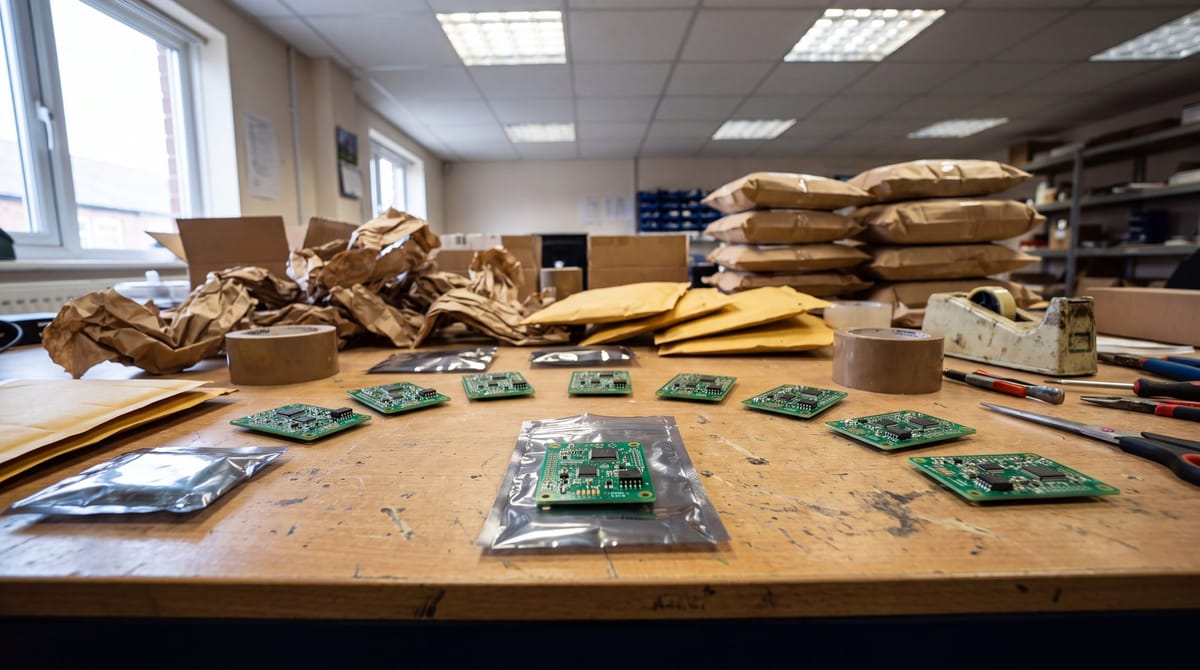
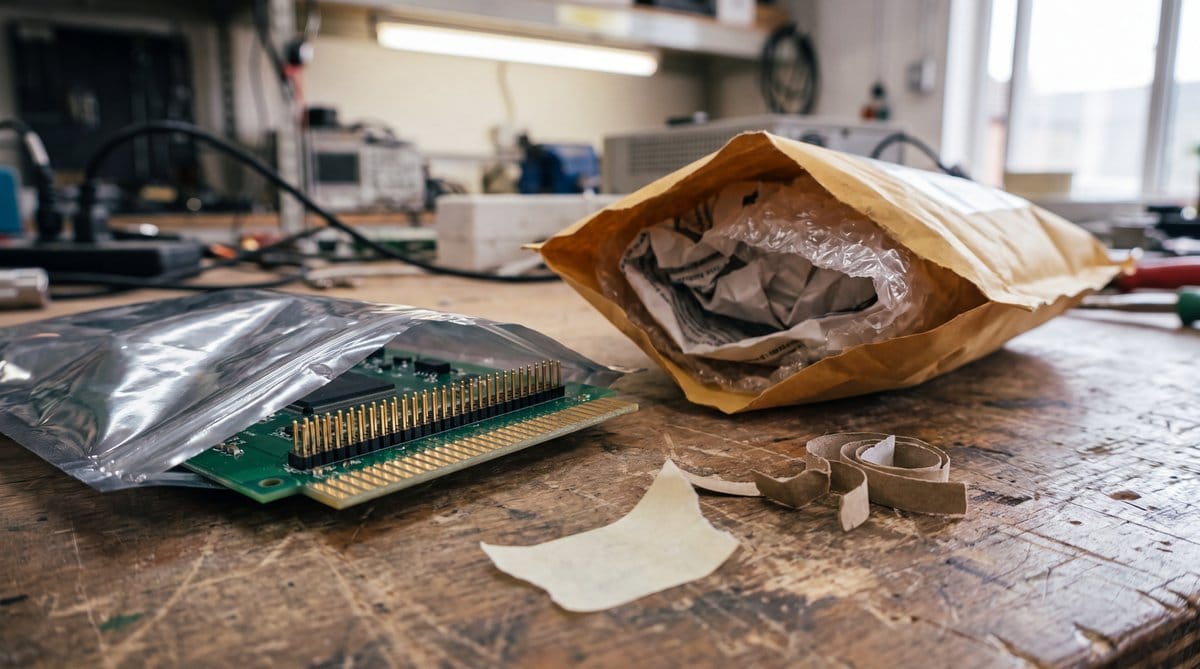
Packaging means more than the box. ZSVR guidance includes bags, labels, tape and e-commerce filler, and says shipment packaging requires system participation without exception. The antistatic sleeve around a circuit board counts. So does the tissue paper keeping my handmade espresso cup from becoming artisanal ceramic gravel.
The same seller can therefore have different roles across Europe. Anyone shipping into several Member States must check each destination: German registration proves only German compliance, and the ZSVR confirms its representative requirement only for foreign direct sellers without a German branch. That primary source does not establish identical rules elsewhere. Each national requirement needs separate verification: exactly the comparative-law homework a single market should eliminate.
Apothaka author Natasha Dauncey captured the small-business reaction efficiently:
It’s utter madness!
A few grams of packaging can unlock a four-country bill
Lectronz, a marketplace for open-source electronics, built a useful hypothetical: a Greek maker sells 10 sensor boards across Germany, France, Austria and Belgium, using about 50 grams of packaging per shipment. That is roughly half a kilogram of waste. Under Lectronz’s optimistic assumptions for national registration, recycling schemes and authorised representatives, first-year compliance could reach €1,150 across those 10 sales.
Lectronz contrasted that annual barrier with an implied environmental contribution of about 22 cents for the half-kilogram. I loved the comparison because it is almost offensively neat. I was too quick. The article does not publish the levy calculation behind that figure, and no verified all-country price schedule lets me reproduce the annual total. Both are illustrative estimates for this scenario, not official tariffs.
The mechanism still matters. Weight-based recycling contributions rise with material shipped, so the environmental bill broadly tracks waste. National registration creates fixed work before meaningful volume; local representation adds another fixed cost where required, followed by scheme contracts and recurring reports. After setup, one more parcel may barely change the variable contribution. But opening another destination can create a separate administrative relationship, even when the package contains less protection than my mother uses for biscotti.
There is a serious environmental case for obligations from the first parcel. A broad exemption could encourage companies to divide sales among tiny entities, leave packaging unfinanced or reward sellers staying below a threshold. Germany closes that loophole by putting all shipment packaging into system participation. Regulators must also identify who placed material on the market before collecting money. Those concerns deserve more than a founder shouting “but I’m small” with the Italian hand gesture that traditionally overrides parking regulations.
Europe answers them with repeated national administration. Nobody has quantified whether a shared EU portal, marketplace-level representation or carefully designed de-minimis threshold could preserve waste funding more cheaply. Nor do we have comparable data on how the burden changes with company size after accounting for sales, packaging volumes and compliance staff. Europe is running an expensive experiment without a control group.
The micro-enterprise exception misses most cross-border makers
Claims that the PPWR has zero small-business exceptions need a large footnote. The linked definition of a micro-enterprise covers companies with fewer than 10 employees and no more than €2 million in annual turnover or balance-sheet total. Under a narrow arrangement where a supplier in the same Member State provides complete shipment packaging, responsibility can remain with that supplier even when the micro-enterprise’s brand appears on it. This changes manufacturer and producer allocation for that specific relationship. It is not a general escape from cross-border registration or EPR fees. A solo maker packing a parcel for a foreign customer still faces the destination-country problem.
Fixed compliance costs kill experiments first. A maker considering two foreign orders must compare their likely margin with the cost and time of entering that national system. If paperwork overwhelms the sale, disabling the destination is rational. Alternatives mean finding a distributor or using a larger platform. Big companies spread setup costs across more parcels and assign recurring reports to existing compliance staff. The regulation need not mention Amazon. Scale does the lobbying quietly.
Lectronz’s author framed what gets lost:
Every Arduino begins somewhere.
That line sticks because early commerce is messy. Someone builds a board, mixes skincare serum or fires a ceramic cup, then discovers strangers will pay for it. Those first orders are market research with shipping labels. Sometimes they become a company; sometimes the product joins my first startup pitch deck in the drawer.
Businesses have reportedly paused EU destinations, but nobody has measured how many makers stopped cross-border sales because of PPWR and EPR compliance. We do not know how many entered wholesale, focused outside Europe or abandoned products. Anyone offering a continent-wide casualty count is improvising.
That evidence gap cuts both ways. I cannot prove this bureaucracy has destroyed a generation of European makers; regulators cannot show that funding the same recycling systems required every duplicate login and paid intermediary. The European Commission should measure blocked destinations, business exits and compliance cost per unit of packaging, then publish results by company size. Otherwise, a country quietly vanishing from checkout looks like nothing happened.
Europe needs one EPR front door
I want an aggressively European fix: one EU EPR portal based on the VAT One Stop Shop. A maker would register once, report packaging sent to each destination and pay through a shared interface. It could route contributions to national recycling organisations while Member States retain enforcement powers. Sellers would use one data model instead of learning another portal whenever a customer crosses an internal border. Marketplaces could submit through an open API; independent sellers could file directly. National waste funding stays. The duplicated plumbing disappears.
Europe should pair that portal with a real de-minimis route for experimental sales. A micro-seller below an EU-wide packaging threshold could file one simplified declaration and pay the contribution due. Anti-abuse rules could aggregate connected businesses, stopping large operators from splitting into fake hobby shops. The threshold should simplify administration without defunding waste disposal. Environmental policy must survive contact with founders and finance ministries.
Marketplaces also need an optional way to aggregate qualifying micro-sellers. A specialist platform already knows each order’s destination and can collect packaging data at checkout. One auditable submission would be easier to inspect than thousands of accounts generating one or two parcels. But the technical standard must stay open. Europe should not replace national gatekeepers with one mandatory private platform in a nicer blazer.
None of these reforms has a proven savings figure. No source has calculated the cost of marketplace aggregation or an EU portal, or how much work either would remove. Fine. Build a pilot, publish the results and let evidence shape the system. Federal capacity lets Europe create shared infrastructure instead of training every ceramicist and electronics nerd as an unpaid comparative-law researcher.
I am passionately pro-EU because the single market can give one person in Thessaloniki instant access to customers from Lisbon to Tallinn. That promise gets flimsy when environmental rules are European in ambition but fragmented at checkout. Euroskeptics will cite this mess against integration; leaving the duplication untouched writes their campaign material.
Brussels needs one brutally simple test: can someone legally make their first 10 cross-border sales without hiring intermediaries across the continent?
If the answer remains no, Europe’s next hardware champion may still begin in a garage. Its eleventh customer will simply be American.
Frequently asked questions
How does PPWR affect makers selling to customers in other EU countries?
Under the PPWR, a foreign seller shipping packaged goods directly to an EU customer can become the producer where the packaging becomes waste. In Germany, that can require LUCID registration, a recycling-system contract, volume reports and, without a German branch, an authorised representative.
Does the PPWR exempt micro-enterprises from packaging compliance?
The micro-enterprise provision is narrow, not a general exemption. It can alter responsibility when a supplier in the same Member State provides complete shipment packaging. A solo maker packing parcels for foreign customers still faces destination-country registration and extended producer responsibility obligations.
How could the EU reduce EPR costs for small cross-border sellers?
An EU-wide EPR portal could let sellers register once, report packaging by destination and route payments to national recycling organisations. A de-minimis process and optional marketplace aggregation could simplify experimental sales while retaining waste funding, enforcement powers and anti-abuse rules.
Sources
- How Europe is killing makers and micro-entrepreneurs
- New packaging rules for less waste and easier recycling
- How to register with the LUCID Packaging Register
- At a glance: appointing an authorised representative
- EU waste packaging rules: Why small businesses are worried
- ‘Unfair and disproportionate’ – the new EU rules worrying small businesses