
What a Federated European Cloud Would Look Like
Europe doesn’t need one mega-cloud. It needs a governed network of edge, telco, regional, and AI compute that works across borders.
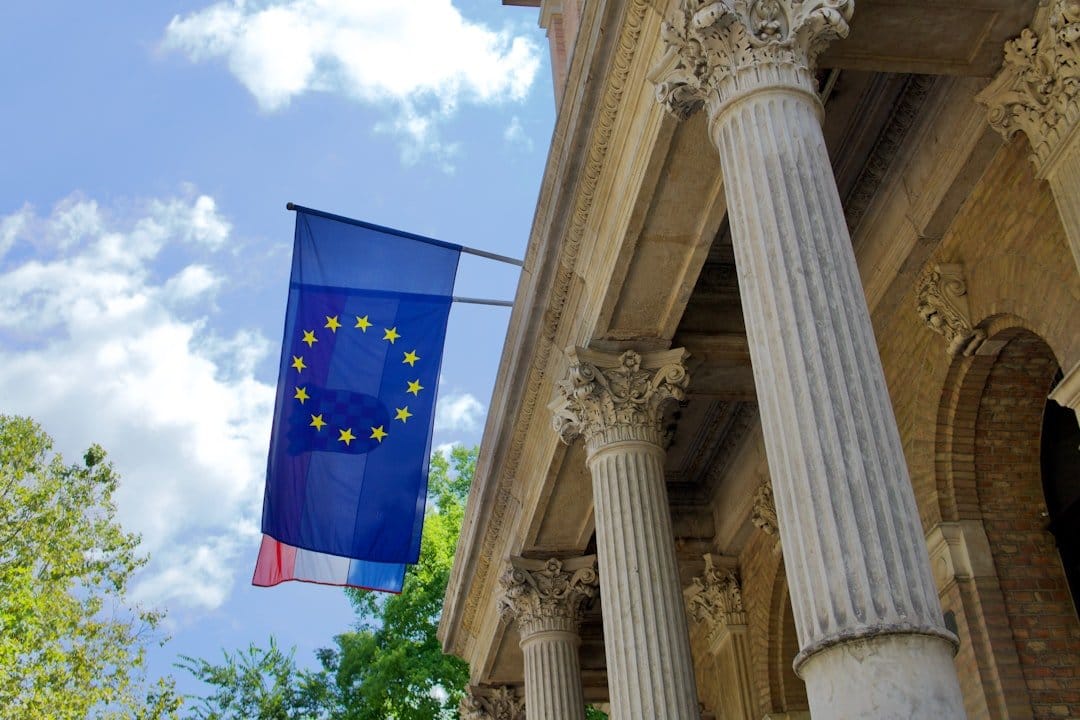
Every time someone says Europe needs “its own cloud,” I picture a cursed screenshot: 27 committees, one miserable dashboard, and a procurement portal that looks like it survived three governments and a small fire. That’s the version a lot of founders hear in their heads. And honestly? I get why they check out.
The interesting version is the opposite.
If you want to understand what a federated European cloud infrastructure would actually look like, stop imagining “European AWS.” That idea has broken too many brains already. A federated European cloud is not one mega data center in Luxembourg with an EU flag sticker slapped on the side like a Ryanair cabin bag. It’s a network. Telcos, edge nodes, regional cloud capacity, supercomputers, AI factories, public and private providers — all stitched together so a startup in Milan, a hospital in Lyon, and a manufacturer in Brno can play by the same rules without being trapped in the same vendor stack.
That difference is the whole game.
I’m aggressively pro-European on this, and not in the soft-focus “shared values” way people use on Brussels panels before going back to their hotel. I mean actual power. Compute power. Market power. Political power. We keep losing the cloud debate because too many people still talk about cloud like it’s software you buy, when it’s really infrastructure. Railways. Energy grids. Payments. Ports. The boring stuff that decides who gets leverage and who ends up paying rent forever.
My nonna would not have called it “strategic digital infrastructure,” obviously. But she absolutely understood the principle. If the roads don’t connect, your little local excellence means niente.
Stop Imagining “The European AWS”
The metaphor is the bug.
Europe is not going to win by cloning a hyperscaler and pretending the only thing missing from AWS, Azure, or Google Cloud was a better privacy policy and a few stars on a blue background. That’s not strategy. That’s cosplay.
The point of a federated cloud is to make different systems work together well enough that Europe behaves like one digital market.
Which, by the way, is a very European answer. Messy. Modular. Slightly annoying. Potentially powerful.
The European Commission calls this the “Telco-Edge-Cloud continuum.” Terrible name. Very Brussels. But the idea is solid: telecom networks, edge nodes, and cloud resources linked together instead of everything being sucked into a handful of giant centralized platforms.
And Europe already has pieces of this all over the place. Telcos. Regional data centers. Public supercomputers. Industrial clusters. Compliance expertise. Plenty of engineers who are tired of hearing that every serious tech future has to look like Northern Virginia with better branding.
From the founder side, the test is pretty simple. I don’t care how noble the speech is if the basics are broken. Can identity work across borders? Is billing sane? Can workloads move without a six-month migration exorcism? Is latency low enough for real applications? Can I deal with compliance without feeling like I’m trapped in a Kafka spin-off sponsored by 27 ministries?
That’s the test.
A few months ago in Milan, over an espresso that somehow cost more than my first monthly phone bill in Italy, I was talking to a founder building AI tools for logistics. He didn’t want a “sovereign cloud” because it sounded patriotic. He wanted to know if he could sell into Italy, Germany, and France without rebuilding his stack three times and hiring compliance people before Series A. That’s how normal people think. Infrastructure matters when it removes friction. Otherwise it’s just vibes in a PDF.
And that’s why federation fits Europe better than centralization. We are not the US. We are not China. Bene. We are a union of states with different strengths, legal traditions, industrial bases, and one single market that still too often behaves like a group project where half the class forgot the deadline.
What a Federated European Cloud Infrastructure Would Actually Look Like
So what would it actually look like in the real world?
Not one giant fortress. Not one sacred bunker in Brussels. Not some Marvel scene where Ursula presses a button and all European compute awakens at once. Sadly.
A real federated European cloud infrastructure would be layered.
At the bottom, telco networks move traffic across and within countries. Then edge nodes sit closer to users, devices, factories, ports, hospitals, rail systems, city infrastructure. Above that, regional cloud hubs handle heavier storage and compute. At the top end, you have supercomputers and AI factories for the really heavy workloads: model training, simulation, advanced research, shared industrial use cases.
That’s not theory. The Commission has said 80% of data is expected to be processed closer to users in smart devices and edge environments, not mainly in giant centralized data centers. And by 2030, the EU wants 10,000 climate-neutral and highly secure edge nodes across Europe. Those two numbers alone should kill the fantasy that the future is one giant warehouse of servers sitting somewhere cheap with a nice press release attached.
Europe’s advantage is distributed density.
We have economically serious places everywhere. Bologna. Eindhoven. Lyon. Barcelona. Brno. Hamburg. Turin. Leuven. Cities that matter a lot, even if some American VCs would need a map and emotional support to find them. That spread is annoying if you want one clean narrative. It’s fantastic if you’re building edge computing in Europe for actual use cases.
Think hospital networks sharing imaging workloads. Factory floors running AI inference close to machines. Cross-border rail systems. Smart energy infrastructure. Public services tied to digital identity. Defense-adjacent systems where latency, resilience, and control are not optional. These are not all “throw it in a faraway hyperscale region and pray” workloads.
And sovereignty, in practice, is not just where the building sits. That’s the toddler version of the debate.
The grown-up version is about where compute happens, who controls access, whether services can move across the stack, whether companies can switch providers without setting fire to six months of roadmap, and whether the governance layer is European enough to reduce dependency without strangling innovation.
That sounds less sexy on stage. It also sounds a lot more useful in real life.
Cloud Federation Gets Real the Moment Something Crosses a Border
Federation sounds boring right up until the moment something has to cross a border.
Then everyone discovers the hard part was never “do we have servers?” It was “do these systems recognize each other, trust each other, bill each other, certify each other, and let me move workloads without sacrificing a goat to procurement?”
This is where the project becomes real or turns into PowerPoint nationalism.
A federated European cloud needs interoperability in all the ugly layers people love to ignore: identity and access management, data-sharing rules, workload portability, procurement standards, security certification, common contractual terms. Miss those, and you do not have one market. You have 27 mini-clouds wearing a trench coat.
Honestly, that is the most European failure mode imaginable. We love standards in theory and artisanal fragmentation in practice.
The EU’s Digital Decade target says 75% of European businesses should use cloud-edge technologies by 2030. Necessary goal. But in 2023, only 45.2% of businesses used cloud services. And the gap by company size is brutal: 77.6% of large enterprises, 59% of medium enterprises, and only 41.7% of small businesses.
That tells me the bottleneck is not just supply. It’s usability. Trust. Complexity. Fragmentation.
Big companies can brute-force complexity. They hire consultants, lawyers, systems integrators, and someone with a title like “VP of Strategic Transformation,” which usually means “professional survivor of procurement meetings.” SMEs can’t. If a federated cloud doesn’t make life easier for smaller firms, I genuinely do not care how many officials smile next to a launch banner. It failed.
This part is personal for me. Building across Europe can feel weirdly lonely. You know the market is there. The talent is there. The customers are there. But every border still adds just enough friction to make you question your own sanity. I’ve had moments where I thought, maybe the Americans are right. Maybe scale only happens in one legal system, one procurement logic, one dominant platform.
I hate that thought.
Which is exactly why I care about getting this right. Europe’s answer cannot be sentimental. It has to be operational. Federation should reduce drama, not add another layer of it.

AI Changes the Stack. This Isn’t Just a Cloud Debate Anymore
Once AI enters the picture, this stops being a nerdy architecture argument and becomes strategic infrastructure. Full stop.
AI blows up the old “just pick a cloud” mindset because not every workload belongs in the same place. Training and large-scale experimentation need huge shared compute. Inference, sector-specific applications, and real-time industrial use cases often need to happen much closer to users, enterprises, or physical systems. Then governance, access control, and data frameworks have to connect both worlds without turning into legal spaghetti.
Europe is already building pieces of this, just under names that sound way less dramatic than they are.
The Commission’s AI Continent Action Plan says the EU now has 19 AI factories deployed across its supercomputers and 13 AI Factory antennas for regional access, with AI Gigafactories on the way. That matters. A lot. It means Europe is not just saying “we should maybe do AI someday” while everyone nods over bad coffee. It is building shared computational capacity with public access logic baked in.
The same plan frames progress across five pillars: infrastructure, data, talent, adoption, and trustworthy AI. That’s actually sane. Compute without data access is theater. Data without talent is a museum. Talent without adoption money becomes brain drain with nicer branding.
And yes, adoption money matters. The Commission says the Apply AI Strategy already has €1 billion in funding calls earmarked. Not enough to magically solve everything. But enough to prove this is more than another glossy deck floating around the Berlaymont.
This is usually where my American friends do the little shrug. Europe is too slow. Too bureaucratic. Too public-sector-heavy. Too obsessed with rules. Sometimes they’re right. Europe can bureaucratize a sandwich if left unsupervised. But they also miss the logic. Europe’s model is less “winner takes all” and more “public capacity plus market access.” For consumer apps, maybe that sounds boring. For industrial AI, health systems, science, manufacturing, logistics, public services, regulated sectors? It might be exactly the right model.
And let’s say the quiet part out loud: if Europe leaves AI infrastructure entirely to foreign hyperscalers, then all the speeches about strategic autonomy become decorative. Elegant, maybe. Politically useless.
That’s why I like the more federal voices on European tech. Enrico Letta made the point in Much More Than a Market. Mario Draghi made it too in his competitiveness report. Different tone, same message: scale or become a customer of someone else’s future.
Esattamente.
The Hard Part Isn’t the Servers. It’s Acting Like a Union
Here’s my strongest take: Europe’s real problem is not technical capability. It’s governance.
We know how to build networks. We know how to run data centers, telecom systems, supercomputers, certification regimes, industrial software, research infrastructure. Europe is not some digital village discovering electricity for the first time. The hard part is deciding that compute is strategic infrastructure and then acting like a union instead of a collection of polite holdouts.
The Commission has already put €75 million into the EURO-3C Project to build a federated Telco-Edge-Cloud infrastructure. Good. More of that. The AI side is getting real money too, with €1 billion already earmarked through the Apply AI Strategy. Also good. But money alone won’t fix a governance model that still rewards duplication, national vanity projects, and everyone wanting their own little sovereign toy cloud.
That’s not sovereignty. That’s fragmentation with a logo.
So, what would a federated European cloud infrastructure actually look like when it’s working? Common standards. Common certification. Shared procurement. Cross-border funding logic. Demand aggregation. Rules that let providers interoperate without forcing everyone into one monolithic stack. And yes, political willingness to let EU-level coordination actually coordinate.
That last part makes some people twitch, usually the same people who are perfectly relaxed about depending on three American companies for half the digital economy. I find that contradiction exhausting.
And sorry, but the euroskeptics are wrong on this one. They treat deeper integration like some romantic constitutional hobby. It isn’t. In tech, it’s market design. If you want one market, you need shared rules and institutions strong enough to enforce them. Otherwise the biggest platforms write the rules for you. Usually from Seattle or Mountain View.
Europe Has the Pieces. Now It Needs the Nerve.
If Europe gets this right, the most European thing about its cloud won’t be where the servers sit. It’ll be that a company in Naples can build once and operate across the continent without begging permission from five different gatekeepers — or three American ones.
That’s the prize.
So when people ask me what a federated European cloud infrastructure would actually look like, my answer is pretty simple: not one giant cloud, but a governed network. Edge nodes near users. Regional capacity where it makes sense. Shared AI factories for heavy compute. Common identity, security, portability, and procurement rules across borders. Public and private players connected by standards strong enough to make Europe behave like one market.
The technical pieces are mostly there.
The real question is whether Europe has the nerve to stop acting like 27 separate kingdoms every time infrastructure gets strategic. Because if we don’t, we won’t get sovereignty.
We’ll get expensive nostalgia.
Sources
- Gaia-X Season 2.0 – Digital Ecosystems in Action at the European Parliament
- Commission announces €75 million EURO-3C Project to build a federated Telco-Edge-Cloud infrastructure for digital sovereignty
- Cloud computing
- OVHcloud to provide sovereign cloud services for the ECB digital euro
- Federated Coordination for European AI Infrastructure: A Coordination Strategy for Europe’s Apply-AI Phase (2025–2030)
- Dozens of European cloud CEOs call for real tech sovereignty ahead of Cloud and AI Development Act