
Nvidia Robotics Strategy Is Really a Stack Grab Play
Jensen Huang’s robotics push looks like a humanoid story, but the real Nvidia strategy is owning the software, simulation, and control layer.
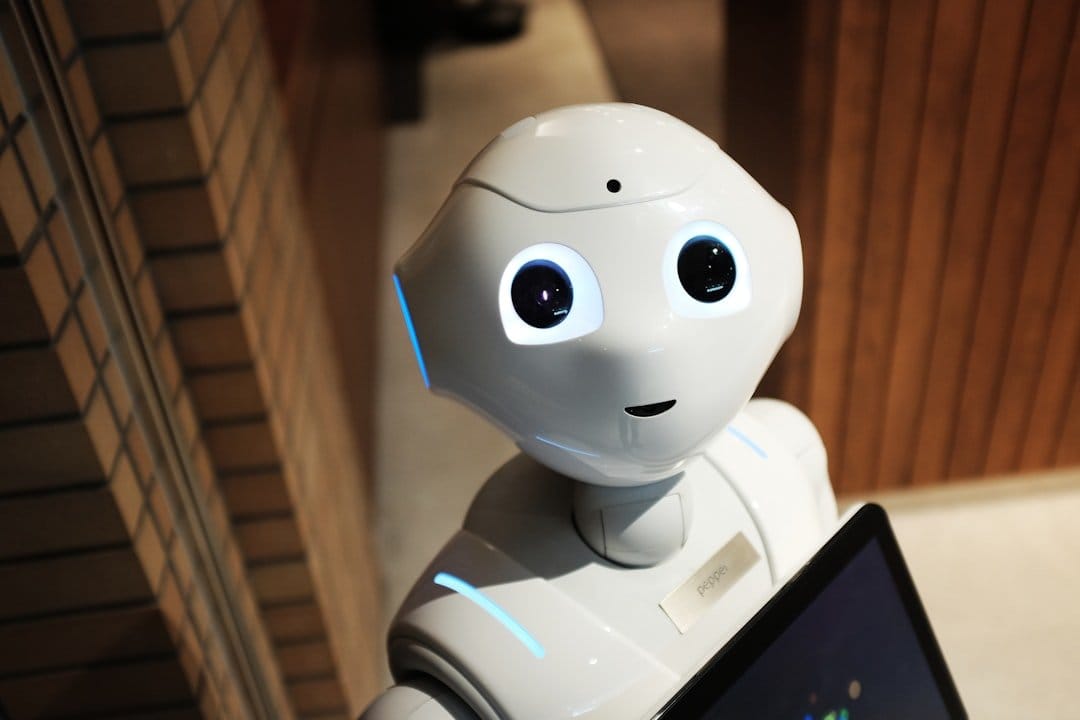
Nvidia robotics strategy looks like a humanoid robot story on the surface, but the real play is much bigger. Jensen Huang says “robots,” people picture sci-fi hardware, and the headlines follow. But this is less about machines with arms and legs than it is about control, margins, and owning the layer that turns AI into action.
More specifically, it is a stack story. Nvidia already dominated the chatbot era so thoroughly that the rest of the market is now trying to reduce its dependence on the company. OpenAI, Anthropic, Amazon, Google, and other hyperscalers all want alternatives to Nvidia’s grip on AI compute. If you are Jensen Huang, defending the old castle is not enough. You need to build the next one.
That is why Nvidia’s recent robotics push matters. The humanoids are the visual hook. The real opportunity is owning the layer that connects intelligence, simulation, deployment, safety, and physical execution.
Once you see that, Nvidia’s robotics strategy starts to make much more sense.
I have spent years building products where hardware, software, and cloud systems all had to work together in the real world. The lesson was always the same: the money is rarely in the shiny endpoint. It is in the layer nobody can remove without breaking the whole stack.
That is what Jensen Huang appears to be chasing now.
The chatbot boom was huge, but robotics offers escape velocity
Nvidia’s current challenge is the kind of problem most founders dream about until it becomes real: total dominance in one layer of the market.
Because once you dominate a layer, every serious customer starts planning your replacement.
TechCrunch reported Nvidia’s stock fell 15% from its May peak even while projected revenue kept growing. That is not a collapse. It is the market asking what happens when customers stop wanting to pay Nvidia-level margins forever.
TechCrunch also described Nvidia as becoming a “victim of the compute marketplace it created.” The line is harsh, but the logic is sound. Nvidia won the training boom so decisively that it taught the entire industry where the power sits. Now everyone wants some of that power back.
You can see it in the bottlenecks. Memory matters more than ever. High-bandwidth memory has become a critical choke point, and as those choke points shift, so does leverage.
Nvidia understands this better than almost anyone. CUDA was a masterclass in bottleneck capture. For years, if you wanted serious AI compute, you bought Nvidia and adapted around it.
Now pressure is coming from both directions. Hyperscalers want custom silicon. Model companies want cheaper inference and less dependency. TechCrunch reported Anthropic discussed a custom chip with Samsung. OpenAI teamed up with Broadcom on an inference chip called Jalapeño. Amazon has Trainium and Inferentia. Google has TPUs.
This is no longer theoretical.
So when Jensen Huang talks about robots, it does not read like a casual adjacent expansion. It reads like a move toward escape velocity.
If training and inference become a cost war shaped by supply chains and memory constraints, Nvidia needs a market where the bundle is tighter: hardware, software, simulation, deployment, safety, and tooling. A market where removing Nvidia is not just expensive, but operationally painful.
Robotics fits that perfectly.
Not because robots are trendy, but because physical AI is integrated, messy, and difficult to commoditize cleanly.
Nvidia does not need to build every robot
This is the part many people still miss.
Nvidia’s robotics strategy does not look like a plan to build the single defining humanoid robot. It looks more like an effort to become the platform layer for anything with motors, sensors, and autonomy.
WIRED described Nvidia’s humanoid blueprint as combining Unitree’s H2 Plus robot, Nvidia’s Thor T5000 chip, and a dexterous hand from Singaporean company Sharpa. That tells you a lot. Nvidia did not arrive with one fully integrated robot and ask the market to buy it. It assembled a reference architecture.
That is platform behavior.
Spencer Huang, Nvidia’s director of product for robotics, told WIRED, “Unitree is the first, but they’re not going to be the last by a long shot.” That line captures the thesis. Not one robot maker. Many robot makers. One underlying intelligence and tooling layer.
If Nvidia can occupy that position, it gets lower manufacturing risk, more partners, more developer dependence, and less exposure to the ugly realities of hardware production.
There is also a practical reason this matters now. Humanoids get attention, but industrial systems get budgets. WIRED noted that the H2 technology could also improve conventional industrial robotic arms. That matters more than cinematic humanoid demos. Warehouses and factories do not care if a robot looks futuristic. They care whether it reduces labor friction without creating new operational chaos.
The geopolitical angle matters too. WIRED quoted Scott Singer of the Carnegie Endowment saying the U.S. has the best AI chips while China has a supply-chain edge in robotics hardware. That points to the real market structure: American silicon, Chinese hardware, global software, and enterprise buyers trying to make all of it trustworthy.
Security is part of that equation. WIRED noted concerns that Unitree robots could capture and transmit data, and Nvidia has reportedly added security features to reassure users. That is not a side issue. In enterprise robotics, the real sales conversation is about data flow, update control, and what happens when these systems operate inside hospitals, factories, or critical infrastructure.
That is exactly why the platform layer becomes more valuable over time.
The company that solves intelligence, controls, deployment, simulation, and trust gets to charge rent for a long time.
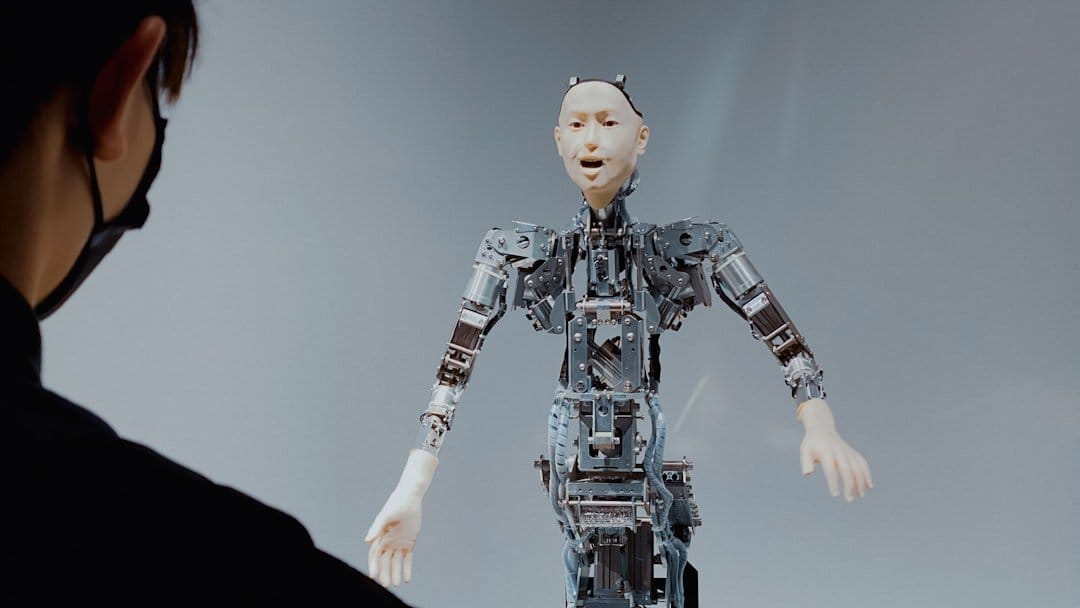
Physical AI turns robotics into a software distribution problem
The phrase physical AI can sound like marketing language, but the shift underneath it is real.
Robotics becomes economically meaningful when it stops behaving like a bespoke research project and starts behaving more like software. Not because atoms become bits, but because common tooling changes the distribution model.
That is why open robotics infrastructure matters so much.
IEEE Spectrum pointed out that ROS became the de facto standard after its 2007 debut. Before ROS, teams often rebuilt the same basic infrastructure from scratch, losing years before they could focus on the actual problem they wanted to solve.
Then the substrate settled, and progress started compounding.
Brian Gerkey, now CTO at Intrinsic and board chair at Open Robotics, told IEEE Spectrum that he likes to share tools as openly as possible because that is where the biggest impact comes from. The idealism is real, but so is the market logic. Shared tools create bigger markets. Bigger markets create more applications, more companies, and eventually more lock-in at another layer.
That pattern has played out repeatedly in computing.
Now it is happening higher up the robotics stack. IEEE Spectrum reported that Hugging Face, Nvidia, and Alibaba are all investing in open-source robotics tooling for reasoning, decision-making, and action. The industry is moving from basic motion control toward systems that can understand tasks, sequence actions, recover from failure, and adapt when reality gets inconvenient.
That is a much more valuable problem.
Nvidia is layering its answer across Isaac, GR00T, and Cosmos. That is why the Nvidia robots narrative is smarter than it first appears. The real product is not the body. It is the development environment for competence.
Once the plumbing standardizes, the market shifts quickly. The question stops being whether a team can build a robot at all and becomes what useful workflow that robot can own.
Better simulation, shared models, reusable skills, and cleaner deployment pipelines are what move robotics from lab demos to systems companies can actually buy.
Chatbots digitized language. Physical AI is trying to digitize motion, dexterity, and task execution.
That is harder, and if it works, it is much stickier.
The real bottleneck is competence, not intelligence
This is where much of the AI conversation goes wrong.
People like to talk about intelligence because it sounds profound. In the real world, the bottleneck is competence. Can the machine do a boring task reliably in a messy environment with bad lighting, unstable connectivity, and humans nearby?
That is the real test.
WIRED’s example of Flexion Robotics, a Swiss startup founded by former Nvidia robotics researchers, gets directly to that point. Flexion is not trying to win attention with another backflip clip. It is training systems to perform practical sequences of work.
The demo instruction WIRED highlighted was deliberately ordinary: retrieve a delivered parcel using the stairs and elevator, then unpack it and place the items into a drawer in the snack area.
That is the market.
Not parkour. Not spectacle. Competent execution of repetitive tasks that save real labor in offices, hospitals, warehouses, and hotels.
Flexion cofounder and CEO Nikita Rudin told WIRED that the software’s “secret ingredient” is reinforcement learning across every layer of the stack, from high-level orchestration down to motor control. That sounds plausible because many robotics demos still rely on teleoperation or tightly scripted conditions. A robot can look magical in one controlled environment and fail immediately in another.
The commercial milestone is not that a robot can impress viewers. It is that a robot can handle routine work without becoming a liability.
That is where Nvidia’s opportunity becomes clearer. If simulation-trained modular skills become standard, then the company that owns the simulation environment, training stack, deployment pipeline, and edge compute layer gets paid from every direction.
That is why this is more than a research initiative. It is a stack capture attempt.
Japan sees robotics as infrastructure
One of the more revealing parts of Jensen Huang’s recent push happened in Japan, not Silicon Valley.
According to Nvidia’s July 15, 2026 blog, Huang visited the Build-a-Claw event at Happo-en and Studio Koku in Tokyo right after landing. Instead of beginning with a formal executive summit, he went to a room full of builders making robot claws with open models and Nvidia tooling.
Yes, it is good founder theater. But it also signals where Nvidia thinks physical AI becomes real: inside ecosystems that still know how to make things.
At the event, Huang said, “Forty years ago was the beginning of the PC revolution. Now, forty years later, instead of a personal computer, you can now have your own personal AI.” He also told attendees, “I’m happy that all of you are here to build your own claw, your own agent.”
Those quotes matter because they collapse the categories. Claw, agent, AI. Hardware and software becoming one workflow.
Later, Huang made the industrial case more directly. Nvidia’s blog quoted him saying, “Japan has historically been very good at precision manufacturing and very large-scale manufacturing, but now we have AI. You can combine the two technologies and create robotics.”
That is the broader thesis.
Physical AI will reward countries with industrial depth, not just countries with the loudest model launches or the most software hype.
Japan appears to understand that. Robotics is being treated as economic infrastructure.
Europe, by contrast, still risks treating it like a policy discussion rather than an industrial imperative. If sovereignty is the goal, then industrial AI sovereignty matters too: robotics, simulation, supply chains, deployment, and factories.
That is where long-term strategic value will sit.
If voice was the interface, robots may be the invoice
Another reason this does not look like just a robot story is that Nvidia’s other bets point in the same direction.
TechCrunch reported Nvidia backed Gradium, a Paris-based voice AI startup that has now raised $100 million in total. Gradium focuses on ultra-low-latency voice interactions, and Renault is already a customer.
That is not random.
It suggests the interface layer is getting ready for the action layer.
First AI answered questions. Then it started taking actions in software by summarizing, routing, booking, and replying. The next step is coordinating physical work through voice, vision, simulation, and embodied systems.
A warehouse manager speaks. An agent plans. A robot executes. Another system verifies. A human steps in only when confidence drops or an edge case appears.
That is where this seems to be headed.
So when people reduce Jensen Huang’s robotics push to another hype-cycle chase, they miss the architecture. If Nvidia can sit underneath voice agents, software agents, and physical agents through chips, models, tooling, simulation, and deployment, then it is no longer just selling compute.
It is taxing automation itself.
That is a much bigger business.
It is also where the stakes become more serious. A bad chatbot wastes time. A bad software agent breaks a workflow. A bad robot can halt a warehouse aisle, damage inventory, interrupt a hospital process, or hurt someone.
That is why competence matters more than benchmark theater.
Physical AI is exciting, but it should also be approached with skepticism. Real systems often look magical in controlled conditions and unstable in production. Markets are usually won by boring reliability, not by the most cinematic demo.
Five years from now, the chatbot boom may look important but limited compared with what came after it. The long-term winners will not just generate text well. They will turn AI into something a warehouse manager, factory operator, hospital administrator, or logistics team can trust on an ordinary afternoon.
That is what Jensen Huang is really chasing.
The question is not whether robots are coming. It is who gets to charge rent when intelligence leaves the screen.
Sources
- NVIDIA and Japan Bring Full-Stack AI and Robotics to Every Industry
- Open-Source Software Is Starting to Help Robots Think
- Nvidia is a victim of the compute marketplace it created
- The Humanoid Robot of the Future Is a 6-Foot-Tall Beefcake With a Chinese Body and an American Brain
- This Humanoid Robot Is a Terrifyingly Competent Office Intern
- Paris-based AI voice startup Gradium raises $100M seed, backed by Nvidia