
Physical AI Push Signals the End of Chatbot Illusions
Jensen Huang’s Japan robotics push shows why physical AI, not chatbots, may define the next platform war in industry and infrastructure.
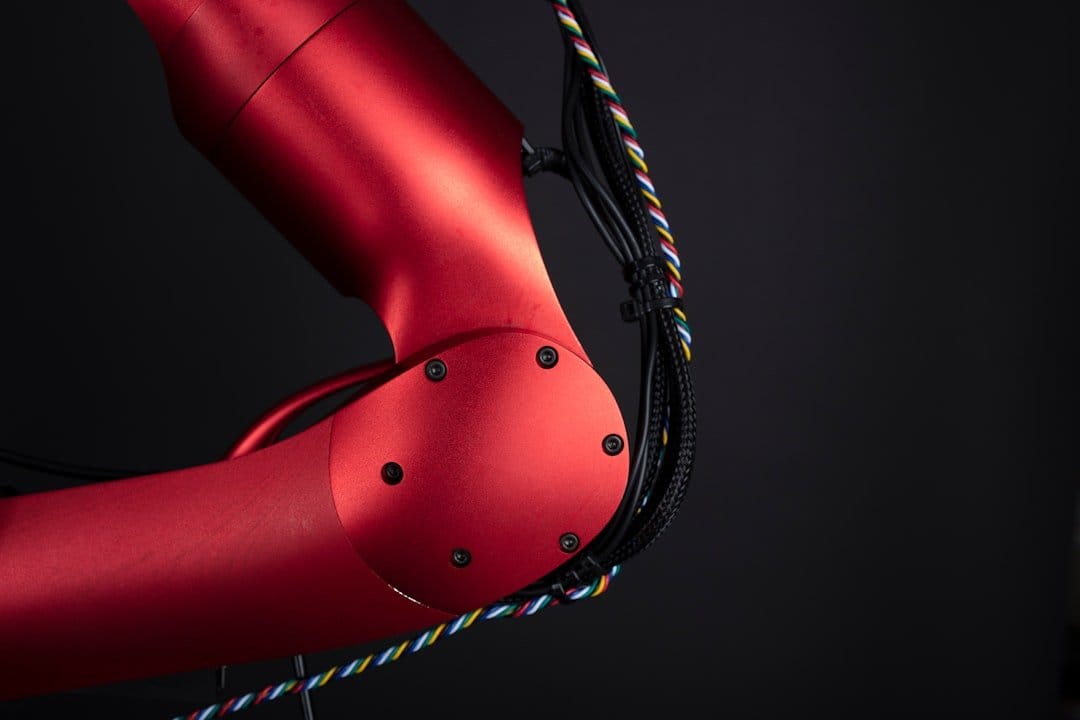
Physical AI made chatbots look like the easy mode of artificial intelligence. You type a prompt, get a clever answer, and it is tempting to think the hard problems are mostly solved. Then Jensen Huang lands in Tokyo and argues that the next frontier is the physical world, and suddenly the real platform battle comes into focus.
NVIDIA’s July 15 push in Japan around robotics, manufacturing, and physical AI is not just another chatbots versus robots debate. It signals a shift in where durable value may actually be created.
NVIDIA is not simply betting on robots. It is trying to turn physical reality into a software platform before the rest of the market fully grasps that the platform war has already started.
Anyone who has built products involving hardware, sensors, firmware, cloud services, safety rules, and real users knows why this matters. The hard part is rarely the polished demo. It is the messy operational layer where field behavior, edge cases, support demands, and deployment constraints collide.
Physical AI is that complexity at industrial scale.
Physical AI makes chatbots look deceptively simple
Chatbots distorted expectations because language is forgiving. If a model writes a weak summary, the cost is usually annoyance. If a robot in a factory misreads a gesture, clips a pallet, or freezes in the wrong place, the cost can be downtime, damage, or injury.
That is why Huang’s message in Tokyo matters. In NVIDIA’s announcement, he said: “The next frontier of AI is in the physical world, and this is a once-in-a-generation opportunity for Japan.” The first half of that statement is especially important. Physical AI is where overpromises meet real-world consequences.
Associated Press coverage underscored the seriousness of the event. Huang appeared alongside Fujitsu CEO Takahito Tokita and the leaders of Fanuc, Yaskawa Electric, and Kawasaki Heavy Industries. These are not hype-driven startups. They are industrial operators with real deployment environments and real constraints.
Just as important, there was no fantasy timeline. AP noted there was no specific schedule for robots entering daily life, and that the first phase of collaboration begins later this year. That restraint is a positive signal.
Embodied AI changes the success metric. A chatbot has to sound intelligent. A robot has to behave safely and consistently under bad lighting, worn floors, unstable connectivity, and unpredictable human behavior.
AP also quoted Huang saying: “Japan’s excellence is a philosophy, a way of life. ‘Made in Japan’ means the highest quality, the highest precision.” In physical AI, precision is not branding. It is operational survival.
The real opportunity is labor economics, not sci-fi
The strongest driver behind physical AI is not futuristic storytelling. It is labor math.
Japan is a clear case because it combines world-class manufacturing with one of the fastest-aging populations in the developed world. AP described the country as among the most rapidly aging societies, which turns demographics into an operational problem rather than an abstract policy issue.
Executives tied physical AI directly to labor shortages and support for elderly people living alone. That is a more durable use case than many of the consumer-facing AI narratives dominating headlines.
The long-term opportunity may be largest where labor gaps are structural and severe: factories, logistics networks, infrastructure systems, and elder care support. These are not glamorous categories, but they are economically urgent.
Japan’s government appears to understand the stakes. AP reported that Prime Minister Sanae Takaichi’s government announced a plan to drive more than 370 trillion yen, about $2.3 trillion, by 2040 into areas including physical AI, semiconductors, and data centers.
NVIDIA’s Japan announcement named the target sectors directly: manufacturing, mobility, infrastructure, and robotics. It also highlighted companies including Kubota, Hitachi, NEC, SoftBank, Sony, OMRON, Honda R&D, and Telexistence.
That company list matters because these are businesses connected to real supply chains and deployment environments. Telexistence is a useful example. Its focus on retail and logistics robotics is less theatrical than humanoid demos, but likely far closer to where sustainable value will be created.
In operational markets, reliability beats charisma. Procurement rewards systems that reduce friction, not products that merely look impressive on stage.
The workflow is the product, not the robot
When people hear about NVIDIA and robots, they often picture a humanoid machine doing something flashy. That misses the more important story.
The robot is not the product. The workflow is the product.
NVIDIA’s late-June announcement makes clear that it wants physical AI development across Omniverse, Cosmos, Alpamayo, Metropolis, Isaac, and Jetson to become agent-executable tasks. In simpler terms, NVIDIA wants the fragmented development pipeline behind physical AI to become programmable from end to end.
That matters because robotics still suffers from a familiar systems problem: fragmented tools, incompatible data, manual integrations, and cross-functional teams that only discover misalignment late in the process.
NVIDIA’s own Isaac GR00T material describes humanoid pipelines as “highly fragmented,” with “siloed software ecosystems, incompatible data formats, and manual integrations.” That diagnosis is credible because it reflects the reality of hardware-software systems across industries.
The GR00T workflow is also specific:
- Isaac Lab-Arena for simulation setup
- Isaac Teleop for demonstration data
- Isaac GR00T 1.7 for policy training
- Isaac ROS and Jetson Thor for deployment
That may not sound glamorous, but integrated pipelines are often the real bottleneck in robotics. The challenge is not just building a capable model. It is managing the handoff between simulation, synthetic data, training, evaluation, deployment, and real-world operation.
If developers and manufacturers build on NVIDIA’s simulation tools, world models, deployment hardware, and safety systems, the company can capture a large share of the market before consumers ever interact with the resulting machines.
World models matter because reality has consequences
If large language models digitized language, world models aim to digitize consequences.
That is the clearest way to interpret Cosmos 3.
NVIDIA describes Cosmos 3 as the first fully open omnimodel with reasoning across text, image, video, ambient sound, and action. The branding is ambitious, but the underlying goal is straightforward: create models that can simulate the world, reason through it, and predict what actions make sense inside it.
NVIDIA says Cosmos 3 uses a mixture-of-transformers architecture that combines a reasoning transformer with an expert generation transformer. For physical AI, this matters because systems need both understanding and generation. Recognizing an object is not enough. A machine also has to model movement, timing, spatial relationships, and likely outcomes.
According to NVIDIA, Cosmos 3 was trained on billions of multimodal samples and can reduce training and evaluation cycles from months to days. Vendor claims about timelines always deserve skepticism, but the strategic direction is sound. Embodied AI cannot scale without simulation and synthetic data.
Real-world data collection is too slow, too expensive, too dangerous, and too incomplete to support rapid iteration on its own.
Cosmos 3 Edge may be even more significant. NVIDIA says it is a 4-billion-parameter model built on NVIDIA Nemotron for on-device vision reasoning and robot policy deployment on Jetson Thor. That suggests NVIDIA is treating local, real-time reasoning as a core requirement rather than an afterthought.
That edge capability is critical. In physical AI, much of the value sits close to sensors, motors, and immediate decisions. If a robot depends on a fragile cloud round trip before reacting to a person stepping into its path, the design is fundamentally flawed.
NVIDIA also launched the Cosmos Coalition with companies including Runway, Skild AI, Agile Robots, and Black Forest Labs. In this context, ecosystem-building is not just branding. Physical AI needs enough shared momentum to avoid remaining fragmented and underdeveloped.
Still, simulation is not the same thing as operational competence. A world model can look impressive in a demo and still fail under fluorescent lighting, reflective surfaces, awkward layouts, and unpredictable worker behavior.
But without simulation, serious progress becomes much harder.
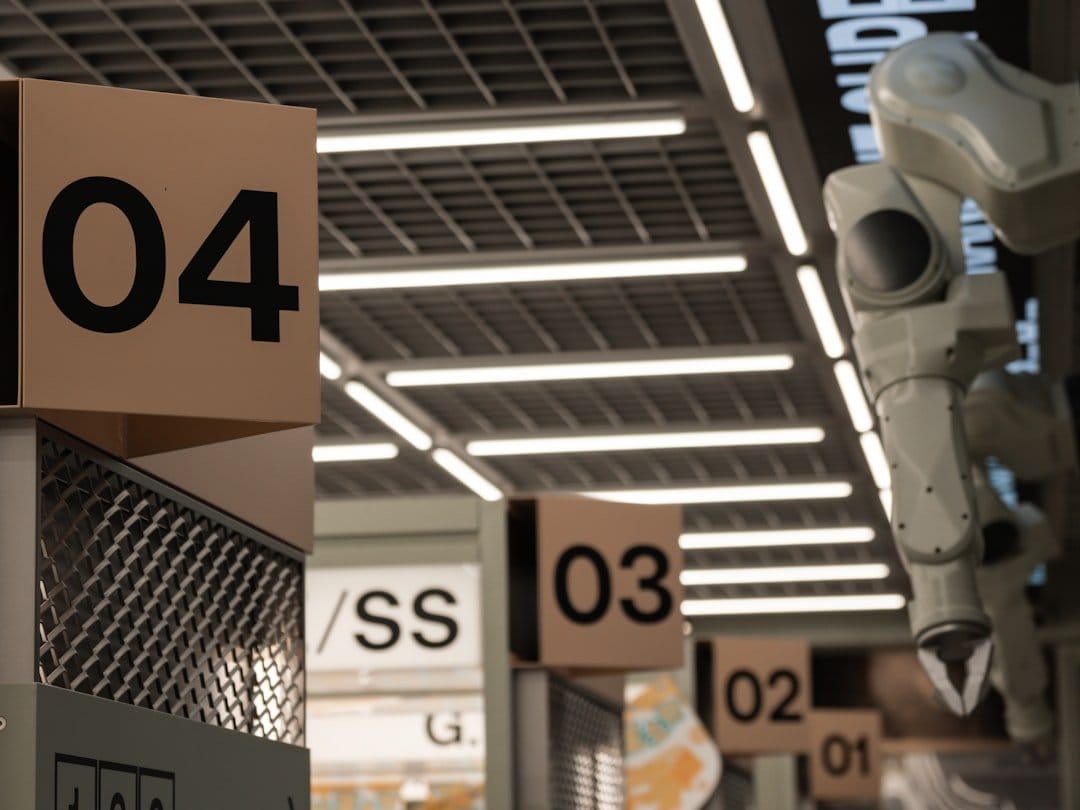
Safety is the business model for physical AI
Safety rarely gets the loudest applause in a keynote, but in physical AI it is not an optional feature. It is what makes commercial deployment possible.
A hallucinated paragraph is embarrassing. A hallucinated motion can injure someone.
That is why one of the most important parts of NVIDIA’s push has little to do with humanoid spectacle and everything to do with functional safety. NVIDIA’s June 22 technical post says NVIDIA Halos for Robotics extends safety work from autonomous vehicles into industrial robots, humanoids, and autonomous mobile robots.
NVIDIA’s automotive history matters here. The company says it has accumulated 18,000 engineering years on vehicle safety, assessed 21 billion safety transistors, produced 7 million lines of safety-assessed code, developed 22,000 platform safety monitors, published more than 330 AV safety papers, and issued more than 30 certificates and assessment reports.
For robotics teams trying to move from labs into workplaces, that kind of safety track record matters more than viral demo clips.
The standards matter too. NVIDIA points to ISO 26262, IEC 61508, and ISO 13849, with third-party assessments by TÜV SÜD. These frameworks may be less exciting than product launches, but they are essential for market access in factories, hospitals, and warehouses.
NVIDIA also says Agility Robotics is incorporating IGX Thor and Halos OS into its safe human detection system for Digit. That is a meaningful deployment signal because Agility is one of the more credible companies pursuing useful humanoid systems for industrial settings.
Huang acknowledged the core issue in Tokyo, according to AP: robots that move independently can be dangerous. That realism is important. In physical AI, quality, repeatability, and process discipline become competitive advantages, not just engineering preferences.
The companies most likely to endure after the hype cycle are the ones treating safety as infrastructure rather than marketing.
If this works, AI becomes infrastructure
The biggest implication of Huang’s thesis is that AI may stop being something people mainly access through a chat window and start becoming embedded infrastructure.
That changes where value accrues. It shifts from visible interfaces to invisible systems inside factories, hospitals, roads, buildings, supply chains, and care environments.
Most people will not encounter physical AI through a humanoid robot in the kitchen. They will feel it indirectly through better manufacturing output, fewer logistics bottlenecks, more resilient infrastructure, safer industrial operations, and stronger support for aging populations.
Look at the companies gathering around NVIDIA’s stack in Japan alone: FANUC, Fujitsu, Hitachi, Kawasaki Heavy Industries, NEC, SoftBank, Sony, and Yaskawa Electric. Then look more broadly at the ecosystem NVIDIA continues to connect across physical AI: Siemens, Foxconn, Pegatron, TSMC, Dassault Systèmes, Synopsys, PTC, and Delta Electronics.
This is not a consumer gadget story. It is industrial architecture.
AP also noted there is no joint venture yet in Japan. That is another sign this is still infrastructure-building time. The roads are being laid before the traffic arrives.
Over the next decade, the consumer-facing robot may be the least important part of the story. The larger opportunity is industrial deployment, where reliability beats charisma, simulation meets safety certification, edge compute meets procurement, and the machine does not need to be lovable.
It needs to work on Tuesday.
The chatbot boom taught the market to ask whether AI can sound intelligent. The next decade will ask a harder question: can it be trusted around forklifts, hospital beds, and elderly people living alone?
That is not an app question. It is an infrastructure question.
Sources
- Japan’s Robotics and Manufacturing Leaders Build on NVIDIA Cosmos to Advance Physical AI Frontier
- Fujitsu and leading Japanese robotics companies to use Nvidia technology in ‘physical AI’
- NVIDIA Releases Major Collection of Open Source Agent Tools and Skills for Physical AI
- NVIDIA Launches Cosmos 3, the Open Frontier Foundation Model for Physical AI
- Develop Humanoid Robot Policies End-to-End with NVIDIA Isaac GR00T
- Inside NVIDIA Halos for Robotics: A Full-Stack Functional Safety System for Physical AI