
How to Make Pasta: Get the Final Two Minutes Right
The box starts the clock, but glossy, al dente pasta comes from reserved cooking water and a fast finish in the skillet at home.
The short version
- Dried pasta becomes cohesive when it finishes in sauce with reserved cooking water instead of being rinsed.
- Package times vary from five to eleven minutes, so taste pasta before its final skillet finish.
- Pull pasta slightly early, transfer it directly to sauce, and add cooking water splash by splash.
I watched a friend drain spaghetti until it squeaked, rinse it under the faucet and crown it with sauce like ketchup on fries. I considered calling the Italian consulate.
He had asked me how to make pasta, and I had said, disastrously, “Just follow the box.” Growing up in Ivrea did not install pasta firmware in my brain. I learned by ruining dinners in tiny American rentals, where weak burners and my confidence formed a deeply unhelpful partnership.
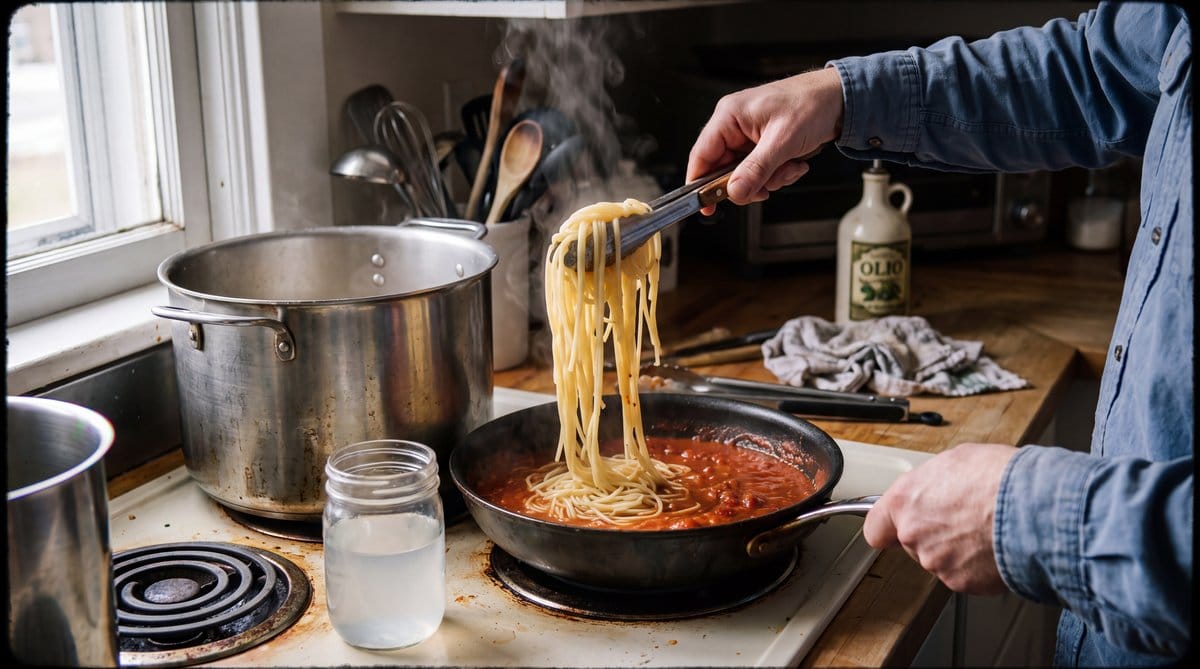
Boil dried pasta until slightly underdone, reserve some cooking water, then finish the pasta in its sauce for a minute or two. That final handoff gives you a cohesive dish. Otherwise, you get wet noodles wearing a sauce hat.
Use the package as your first alarm
Bring the water to a rolling boil, salt it, add the pasta and stir while it cooks. Before draining, save some cooking water. Skip the rinse for any hot pasta headed into sauce.
Barilla’s average guidance uses 1 liter of water per 100 grams of dried pasta, with 7 grams of salt per liter. The company repeats that ratio across its listed dried wheat, whole-wheat and gluten-free products. [Penne Rigate N°73; Spaghetti N°5] I use it as a calibration tool whenever I land in an Airbnb where the largest pot appears designed for one emotionally distant egg. The sauce matters too. Pecorino, olives or cured meat can bring plenty of salt, so I taste before throwing in more.
The basic chain is simple. Adding pasta after the water reaches a rolling boil promotes even cooking because the water is already at a consistent boil. Stirring keeps the pieces moving and helps prevent them from sticking together. Once the pasta is cooked, draining without rinsing preserves the starch on its surface. That starch, plus a little reserved cooking water, helps the sauce bind and emulsify around the pasta. Oil in the pot does little because, as chef Filippo de Marchi explained to CNET, it floats on the water and fails to coat the noodles effectively. The useful action happens later, when pasta meets sauce.
And yes, I understand the appeal of cooking pasta in seawater. It feels ancient, efficient and extremely Instagrammable. The strongest argument is obvious: the water is already salty, and boiling can remove some microorganisms. Chef Viviana Pisacane points out the problem. Untreated seawater may still contain contaminants after boiling, and you cannot control its salt level, so she recommends using only seawater filtered and treated for food use. Infectious-disease specialist Matteo Bassetti adds that microplastics and hydrocarbons can remain, especially in water collected around boats.
The seawater reports include no laboratory analysis of the specific water shown in Brooklyn Beckham’s video. Nobody has established whether he cooked with it or swapped it off camera. That leaves us with a social media clip, an unknown bucket of water and enough Italian outrage to power the national grid.
Bassetti’s verdict had the restrained energy Italians are famous for:
Certamente non devono essere gli inglesi a insegnare a noi come si cuoce la pasta
Translation: the English certainly should not be teaching Italians how to cook pasta. International diplomacy survives another day.
The skillet makes the sauce cling
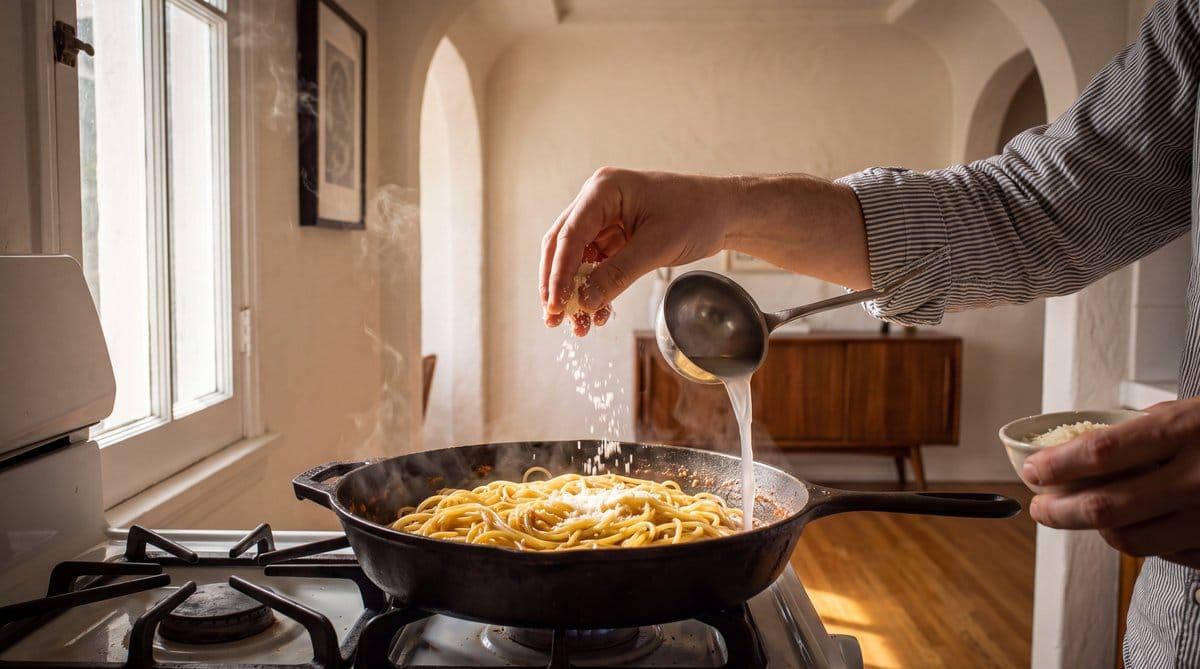
Transfer the pasta while it is still slightly firm, then let it cook with the sauce for 1 to 2 minutes after the package-guided boiling stage. Add reserved pasta water in small splashes while you toss.
Here is what happens in the pan. Water carried over by the pasta loosens the sauce so it can move around every strand or tube. Tossing distributes the sauce and keeps fat from pooling at the bottom. Surface starch from the pasta joins the starch in the reserved cooking water. Together, they help water and fat form a cohesive coating. The pasta keeps cooking during this process, so its center softens while the sauce tightens. Adding water gradually gives you control because you can always pour in another splash. Once you create pasta soup, however, you have entered the prayer and emergency cheese phase of dinner.
Heat matters here. For a tomato or oil-based sauce, I usually keep the pan moving over heat while the pasta finishes. Cheese needs a gentler landing because it can seize and clump in a very hot skillet. I take the pan off the burner before adding finely grated cheese, then toss with reserved water until the sauce looks smooth. Carbonara demands the same caution unless scrambled eggs were somehow the brief.
Chef Filippo de Marchi described the no-rinsing rule better than any stern Italian uncle could:
Think of it like a beautiful marriage, you want the sauce and the pasta to come together and live happily ever after, not to undergo a cold shower right before serving.
I’m annoyingly loyal to the splash-by-splash method. The first addition often disappears immediately. The next lets the sauce slide around the pan, and another may turn it glossy. I stop when the sauce grips the pasta while still flowing as I toss it. A dry pan needs water; a puddle needs more movement and time. Your eyes will tell you more here than a measuring cup ever could.
Al dente depends on what happens next
Pasta is al dente when it is tender outside and has a firm center without tasting raw or chalky. If it will spend another minute or two in a hot skillet, pull it from the pot slightly firmer than you want on the plate.
There is no universal pasta timer. Barilla’s package instructions run from 5 minutes for its thinner spaghettini to 11 minutes for its penne, a range tied to those specific shapes and products. [Penne Rigate N°73] Shape and thickness change the timing. Different brands or flour formulations can move it again. I treat the printed time as the moment when my attention becomes mandatory, then I bite a piece and check the center. If it is already perfect in the pot, the skillet can push it past perfect before I sit down. The timer has many talents, but chewing rigatoni remains outside its product roadmap.
I’ll concede something that mildly wounds my Italian ego: the evidence behind many sacred pasta rules is thinner than the confidence with which we repeat them. The supplied sources contain no primary, controlled comparison of water volume, stirring frequency, rinsing or finishing pasta in sauce. They also fail to establish one cooking time that works across brands, shapes, thicknesses and flour formulations. We have practical guidance backed by a clear causal chain; a definitive laboratory ranking of every method remains unavailable.
That uncertainty changes how I cook. I use the package, watch the pan and taste the pasta without defending one magic minute count like it came down from Mount Etna. Next pasta night, set your timer early and leave the colander across the kitchen. Lift the noodles straight into the skillet, add water by the splash and keep tossing.
After doing that once, sauce dumped onto naked spaghetti will look like a software bug you can never unsee.
Frequently asked questions
How do you make pasta so the sauce sticks?
Boil dried pasta until slightly underdone, reserve some cooking water, and transfer it directly into the sauce. Finish it in the skillet for one to two minutes, adding the reserved water in small splashes while tossing. The surface starch helps water and fat form a cohesive coating.
Should you rinse pasta after cooking it?
Hot pasta headed into sauce should not be rinsed. Draining without rinsing preserves surface starch, which combines with reserved cooking water to help the sauce bind and emulsify around the pasta. Rinsing removes that useful starch and interrupts the handoff from boiling water to the finishing pan.
How long should pasta cook before going into the sauce?
Package instructions provide a starting point, not one universal pasta timer. The cited Barilla products range from five minutes for thinner spaghettini to eleven minutes for penne. Taste near the printed time and drain slightly early when the pasta will cook another one to two minutes in sauce.
Sources
- Rachel Roddy’s recipe for spaghetti with semi-dried tomatoes, garlic, herbs and breadcrumbs
- Triple Olive Spaghetti
- Pasta with Fried Zucchini and Tomatoes
- Creamy Corn and Zucchini Pasta
- Spaghetti Carbonara
- Roman-Style Tuna Spaghetti alla Carrettiera