
F1 2026 Active Aero Rules Look Unfinished on Track
The F1 2026 aerodynamic regulations and active aero package already looks like a public beta, and teams are developing like they know it.
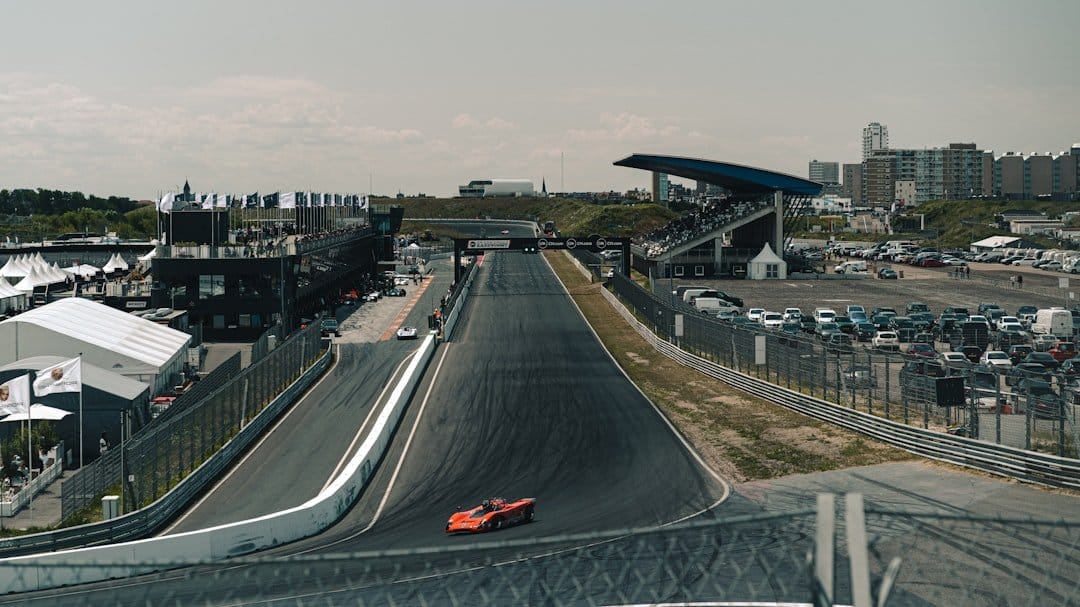
F1 2026 aerodynamic regulations and active aero were always going to be disruptive, but what’s happening now looks less like a polished new era and more like a public beta. The racing will probably get worse before it gets better, and the strongest clue is that the teams are already behaving like they know they’re debugging the formula in public.
I love weird F1 engineering. I’m exactly the kind of idiot who should be defending the 2026 package like it’s some tiny-batch olive oil from a village in Puglia that only three people have heard of and all three are unbearable.
But come on. When the FIA is adding and removing straight-mode zones like patch notes in a rushed software rollout, and teams are showing up every Friday with upgrade lists long enough to qualify as literature, this does not look clean. It looks like version 1.0. Not the sexy startup version 1.0 either. The one where everyone smiles in the launch video, then spends six months apologizing in Slack.
That’s the whole point. The 2026 rules were never going to arrive polished. Formula 1 made a trade: accept some short-term mess for a long-term technical reset. Fine. But it is worth being honest about what that means for the racing. This is the awkward phase, and awkward phases rarely produce the best product.
I’ve seen this movie outside racing too. The problems never show up in the keynote. They show up at the seams. That’s exactly what I see in the 2026 Formula 1 aero changes: seams everywhere.
The FIA 2026 aerodynamic regulations already need babysitting
The official pitch for the FIA 2026 aerodynamic regulations sounded smart enough. Better energy use. Lower drag on straights. A more modern aero concept. Less dirty air. Fresh engineering challenge. Bellissimo, on paper.
In practice, it already feels like the FIA is babysitting the formula circuit by circuit because the baseline package does not naturally behave the same way everywhere. And that is the tell.
According to PlanetF1’s race-by-race list, the number of F1 straight-mode zones has varied wildly: Japan 2, Miami 3, Monaco 0, Hungary 4, Belgium 5. That is not a tiny calibration issue. That is the rule set changing personality depending on the venue.
Monaco is the funniest example, and by funny I mean slightly ridiculous. Zero active-aero zones. The sport spent all this time introducing a headline system, then got to Monte Carlo and basically said, “Actually, not here.” If your shiny new feature has to be functionally shelved at one of the most famous tracks on earth because the layout is too awkward for it, that is not elegance. That is a workaround in a tuxedo.
Spa went the other way. Five straight-mode zones, the joint-highest count with Australia earlier in the season. If you keep increasing intervention to help the racing, you are not proving the package works. You are proving it needs help.
Then Hungary got four zones, including extra ones on the uphill run to Turn 4 and between Turns 11 and 12, with the overtake mode detection point at the final corner entry and activation on exit. That level of precision is impressive. It is also a little desperate. This is supposed to be a coherent formula, and instead every weekend feels like race control is adjusting the dosage.
That does not mean the concept is dead. It means the sport is doing what F1 always does with a big technical reset: accept ugliness now and trust the engineers to make it look intentional later. My nonna would call that buying green tomatoes and pretending dinner is handled.
Active aero is not the problem. The patchwork is
I’m not morally offended by movable wings. This is not some old-man “real racing died in 2004” routine. Active aero in F1 2026 could absolutely work. What bothers me is when a system is clearly clunky and everyone insists on calling it refined.
Because once you look at how specifically the FIA is tuning this thing by circuit, it stops feeling like one elegant regulation and starts feeling like a growing pile of exceptions. In software terms, too many if-statements. In founder terms, “works great, except for a few edge cases,” which is usually code for “please don’t use it in public.”
I know that pain well. In IoT, one customer has an ancient router, another has weird carrier restrictions, another has a cursed Android skin that only breaks in one country with one ISP under a full moon. When your feature needs that many environment-specific fixes, you do not have a universal system. You have a system plus a list of apologies.
That is where F1 is. Monaco gets none. Spa gets five. Hungary gets four with track-specific deployment logic. That is not one story. That is three.
And yes, more zones can create more opportunities. But “more opportunities” is not the same thing as “better racing.” Sometimes it just means the cars do not naturally create enough overtaking without external assistance. That matters. Drivers are not only mastering a machine anymore. They are mastering a machine plus a venue-specific operating manual.
Messy is fine. Pretending it is not messy is the annoying part.
The paddock is talking like this is an arms race, not a settled rules era
The clearest sign that the F1 2026 aerodynamic regulations and active aero are still in their chaotic phase is not fan discourse. It is how team bosses are talking when the PR glaze slips for half a second.
Andrea Stella said it plainly on Formula1.com:
I think what we see in 2026 is a Formula 1 operating at a level that has never been the case before.
That is not normal language. That is a man politely telling you the development intensity has become completely unhinged.
He also described the pecking order in a way that matters more than people realize:
Mercedes is the fastest car. Ferrari, Red Bull, and McLaren follow, and in this group of three cars, then the upgrades are what make the difference.
That line is the whole story.
If upgrades are deciding the order this aggressively, the package is still highly sensitive and there is still easy lap time available for whoever finds it first. Stella even said it directly:
So it’s a race of upgrades.
Exactly. A race of upgrades is thrilling if you are an engineer and often a bit mediocre if you are just trying to watch good racing on Sunday. Immature regulations tend to create two separate products: insane factory innovation and compromised spectacle.
He pointed to Ferrari’s upgrades plus the engine upgrade in Austria, Red Bull’s “quite impressive” volume of updates there, and said Cadillac had been “most significantly upgraded” at that circuit, with more competitive lap times as a result. That is real volatility. Real movement. Real signs that nobody thinks the cars are done.
I usually enjoy this phase more than I should. I’m a nerd. I like visible engineering chaos. But even I’ve caught myself during some of these weekends wondering whether I’m more interested in the technical debugging than the actual race.
That is not ideal for a racing series.
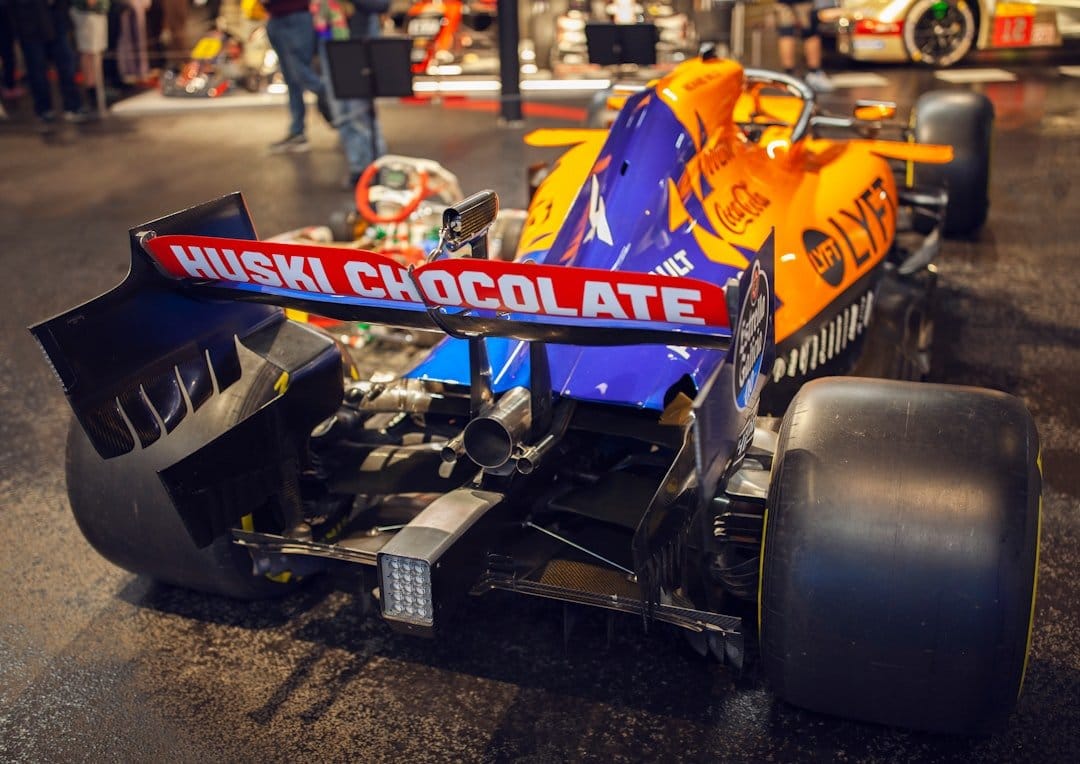
Red Bull’s rear wing mess is the most honest thing about 2026
If you want the cleanest case study for why this formula will probably get worse before it gets better, look at Red Bull. Not because Red Bull is incompetent, obviously not, but because when a top team with Verstappen, serious resources, and Pierre Waché-level technical firepower still gets caught by weird aero behavior, that tells you the system has more failure modes than the brochure advertised.
PlanetF1 reported that Red Bull ran into an airflow reattachment issue with the rear wing, and that it was blamed for Max Verstappen’s accidents in Austria and Britain.
That is not a small detail. That is the detail.
People talk about active aero like the wing just opens and closes, nice and simple, as if it is a fancy toy. It is not. It changes how the air reconnects to the surface, how it feeds the rest of the car, how stable the platform feels at speed. If that reattachment does not happen predictably, the whole car can feel wrong in a very violent way. And if a modern F1 car starts breathing wrong at 280 km/h, auguri.
Red Bull then reverted to its previous-spec rear wing in Belgium. That matters more than any polished quote. Reverting mid-season is not the behavior of a team serenely in control of the concept. It is damage control. It is saying, “This might be faster in theory, but right now we would prefer the car not try to kill our driver.”
Apparently the problematic wing was fixed, and the so-called “Macarena” rear wing could return in Hungary. Maybe it works. Maybe it is brilliant. But that whole cycle (introduce, discover instability, pull back, fix, maybe reintroduce) is the most honest snapshot of the 2026 aero era you could ask for.
This is what beta looks like when the beta costs millions and can launch Max Verstappen into the scenery.
The cost cap did not remove the chaos. It just redistributed it
People still talk about the cost cap like it automatically makes everything sensible. I wish. In a shaky new formula, the cost cap does not remove chaos. It sorts chaos.
The big teams still suffer. They just suffer with better tools.
Formula1.com quoted Red Bull boss Laurent Mekies saying:
We’ve decided to make the big push as early as we could from an engineering and engineering resource perspective.
That is a very elegant way of saying they front-loaded development because the gains were too big to ignore. Again, not mature-formula language. Gold-rush language.
Mekies also said:
We are very large organisations now, very different structures… and who has managed to somehow unlock a bit more capacity. And yes, it will be a player.
Exactly. Capacity becomes performance.
That is the sneaky part of this era. If you are Mercedes, Ferrari, Red Bull, or McLaren, you can absorb a messy rule set by iterating faster, making fewer expensive mistakes, and recovering more quickly when you do get something wrong. If you are weaker structurally, every wrong turn hurts more because every correction steals resources from something fundamental.
James Vowles put that pain in brutally clear terms when he talked about Williams dealing with a lack of investment for 20 years and needing to spend under the cap not on car parts, but on basic systems, processes, and fundamentals. Then came the killer line:
I feel the pain every day.
That is the part fans do not always see. The ugly phase of 2026 will not be shared equally. Some teams can brute-force their way through the beta period. Others are choosing between solving this weekend’s instability and building the infrastructure they should have had a decade ago.
Fernando Alonso, naturally, said it in the funniest way possible. Talking about the endless Friday upgrade lists, he joked:
Apparently there is no money to bring upgrades, unlimited upgrades like the other teams do… maybe they have the money machine set in the minus one in the factory.
Dry. Petty. Very Fernando. Also not entirely wrong.
So when the racing feels patchy under the FIA 2026 aerodynamic regulations, part of the answer is simple: this puzzle is expensive, and some teams are much better positioned to solve it fast.
The annoying part is that this might all work beautifully later
Here is the uncomfortable truth: I actually think the concept may end up being good. That is what makes this so irritating.
I am not arguing that active aero is inherently stupid or that the whole formula should be set on fire behind Monza like a bad Vespa. I am saying the current version is exposing its unfinished state in public, and the teams are the ones doing the cleanup.
Formula1.com noted that with the rules not changing, most development work for the 2026 car can carry over into 2027. That is the whole plot right there. Teams are not just solving this season. They are building the stable version that comes next. The pain now is being justified by the promise of later.
You can see that logic everywhere:
- Aston Martin has been waiting for a major package around the summer break instead of drip-feeding tiny parts forever.
- Red Bull front-loaded development.
- McLaren is talking not just about finding pace, but, in Stella’s words, needing to out develop and out deliver rivals.
That phrase is revealing. The challenge is not only inventing the fix. It is getting the fix to the track fast enough to matter.
That is how awkward regulations become normal. The teams domesticate them. They turn a clumsy idea into a usable race car, then into a good one, then eventually into something people act like was obvious all along. By version three, everyone forgets how weird version one felt.
I grew up in Ivrea, the town of Olivetti, where engineering culture is basically in the tap water. One thing that stuck with me from building products is that first drafts are brutally honest. They expose all your assumptions. Later versions hide the scars so well the product starts looking smarter than the people who made it.
That is where F1 is heading. Right now we can still see the scars.
So yes, maybe by 2027 the F1 2026 aerodynamic regulations and active aero will feel natural. Maybe the overtaking logic will be smoother, the wing behavior more predictable, the setup windows better understood, and the weird failures much rarer. I am open to that. I would actually love that.
But if that happens, we should be honest about why. It will not be because the rules were born great. It will be because the teams spent two seasons rescuing them.
And that is the real question for fans. Not whether active aero can work. It probably can. The question is whether people are willing to sit through Formula 1’s startup phase while the engineers rewrite the product in public: one rear wing, one Friday upgrade sheet, and one Verstappen-sized consequence at a time.
Frequently asked questions
Why do the F1 2026 aerodynamic regulations and active aero feel unfinished?
The rules feel unfinished because the FIA is adjusting active-aero deployment track by track, teams are relying on constant upgrades, and even top cars are encountering unstable aero behavior. Those signs point to a formula that still needs heavy real-world refinement before it becomes coherent.
Is active aero itself the main problem in F1 2026?
Active aero itself is not presented as the core problem. The article argues that the bigger issue is the patchwork of circuit-specific exceptions, deployment zones, and reactive fixes that make the system look improvised rather than naturally integrated into one stable rules package.
Why might the 2026 F1 rules improve by 2027?
The rules may improve by 2027 because teams can carry much of their 2026 development forward, giving them time to understand setup windows, stabilize wing behavior, and reduce the visible flaws. The likely improvement would come from team-led refinement rather than from a perfect rules launch.
Sources
- Why the 2026 development race shows F1 teams are operating at a level never seen before
- FIA 2026 F1 Regulations - Section F [Operational] - Iss 07 - 2026-04-28
- FIA makes key decision ahead of Hungarian Grand Prix