
Caprese Salad Recipe: The 5-Minute Italian Test
This caprese salad recipe shows why great tomatoes, drained mozzarella, and restraint matter more than any trendy upgrade.
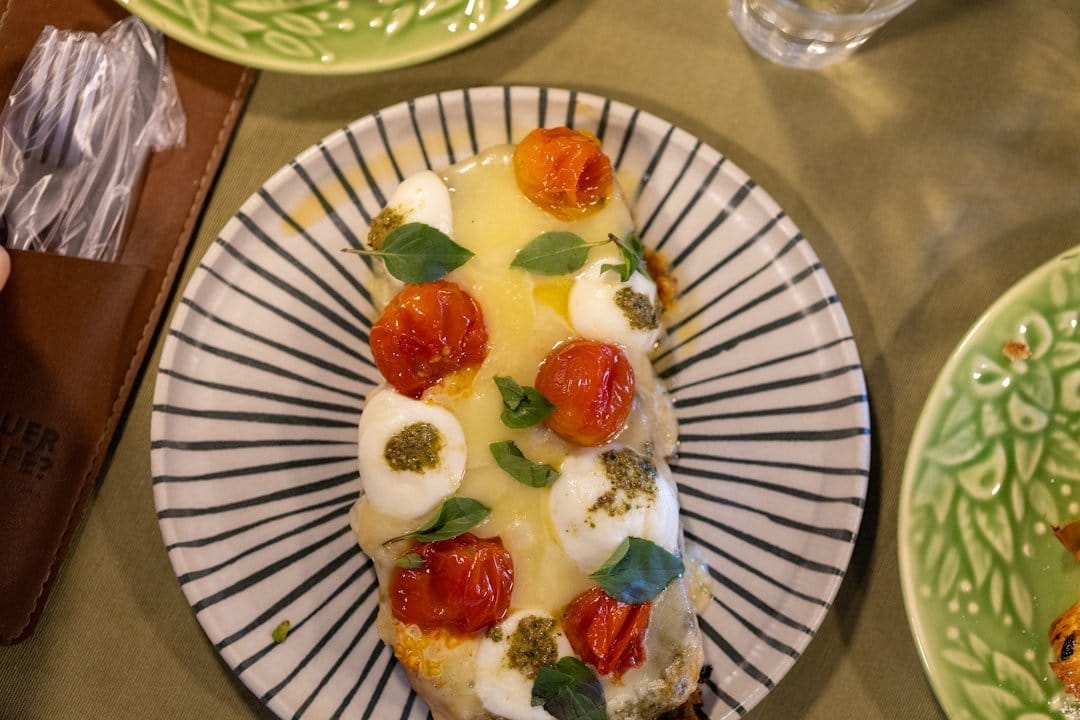
A good caprese salad recipe should take five minutes and ruin your tolerance for bad tomatoes. That’s the whole problem.
Every summer in America, I watch caprese get absolutely mauled. Balsamic glaze everywhere. Avocado for no reason. Pesto, chicken, quinoa, whatever somebody found in the fridge and wanted to call “elevated.” At that point it’s not caprese. It’s a cry for help on a serving platter.
I grew up in Italy with the standard rules: tomato, mozzarella, basil, olive oil, salt. Fine. Done. Caprese is simple in that very annoying Italian way where simple does not mean easy. It means there’s nowhere to hide. If your tomato tastes like refrigerated sadness, everybody knows. If your mozzarella leaks all over the plate, everybody knows that too.
A month ago in Milan I had a caprese that reminded me why I get so obnoxious about this. No foam, no stacking, no “deconstructed” nonsense. Just ripe tomatoes, mozzarella that had actually been drained, basil that smelled like basil, and olive oil with some personality. One bite and I was immediately mad at half the internet.
What is the best caprese salad recipe?
The best caprese salad recipe is sliced ripe tomatoes, fresh mozzarella, basil, extra-virgin olive oil, and salt, served at room temperature. Use the best tomatoes you can find, drain the mozzarella well, salt right before serving, and add balsamic only if the tomatoes truly need contrast.
Maybe black pepper. Maybe a few drops of balsamic if the tomatoes need help. But if you’re adding seven “upgrades,” what you’re really saying is the ingredients weren’t good enough in the first place.
Caprese is not a cooking test. It’s a judgment test. Buying the right tomato is the skill. Knowing when the mozzarella is too wet is the skill. Resisting the urge to “put your spin on it” like you’re pitching a startup in Silver Lake is also, somehow, a skill.
Bon Appétit recently called caprese one of those no-cook dinners for when the last thing you want is to turn on the stove, and yes, exactly. Sometimes not cooking is not laziness. It’s competence. In July, when tomatoes are finally doing their job, caprese makes more sense than half the hot food people force on themselves out of habit.
The tomato is the whole game
Caprese is basically a tomato quality test disguised as a salad. If the tomato is bland, mealy, or fridge-dead, the whole thing collapses. I’d rather eat bread and olive oil than fake my way through sad caprese made with supermarket baseballs in February.
That’s why I like using mixed tomatoes when I can find them. Heirlooms, small sweet ones, something with acidity, something a little floral. One tomato can be great. A mix gives you more texture and more range. It tastes less flat. More alive.
And yes, sometimes even a pretty tomato is a liar. I’ve bought gorgeous ones in Los Angeles that looked like they belonged in a still life and tasted like expensive disappointment. That’s part of the game too.
When I first moved between Italy and the US, I got lazy and snobby about this. I’d do the whole “American tomatoes are terrible” routine, which felt righteous and was also not fully true. The reality is simpler: I had to learn where to shop. Farmers market in August? Great. Random cold tomato from a chain store in winter? Ciao.
Why most caprese fails: too much water
Most caprese doesn’t fail because of flavor. It fails because of water.
People slice tomatoes, pull mozzarella straight from the container, throw salt on everything too early, and then act surprised when the plate turns into a small swamp. Water kills the texture, mutes the flavor, and leaves the olive oil floating around like it regrets being there.
So this is what I do. I let the tomatoes and mozzarella come to room temperature. I drain the mozzarella well. If it’s especially wet, I pat it dry. I salt close to serving, not twenty minutes earlier while I answer emails and forget I’m making lunch.
Cold ingredients are another silent killer. Cold tomatoes lose aroma. Cold mozzarella tastes tighter and duller. Then everything warms up on the table and starts sweating, and suddenly people call the puddle “rustic.” No. It’s just wet.
If the mozzarella is very soft, I tear it instead of slicing. It looks better, honestly, but more important, it eats better. The edges catch oil and salt nicely, and the whole thing feels less stiff. But again: tear it after draining it. Otherwise you’ve just created dairy weather.
Should you use balsamic on caprese salad?
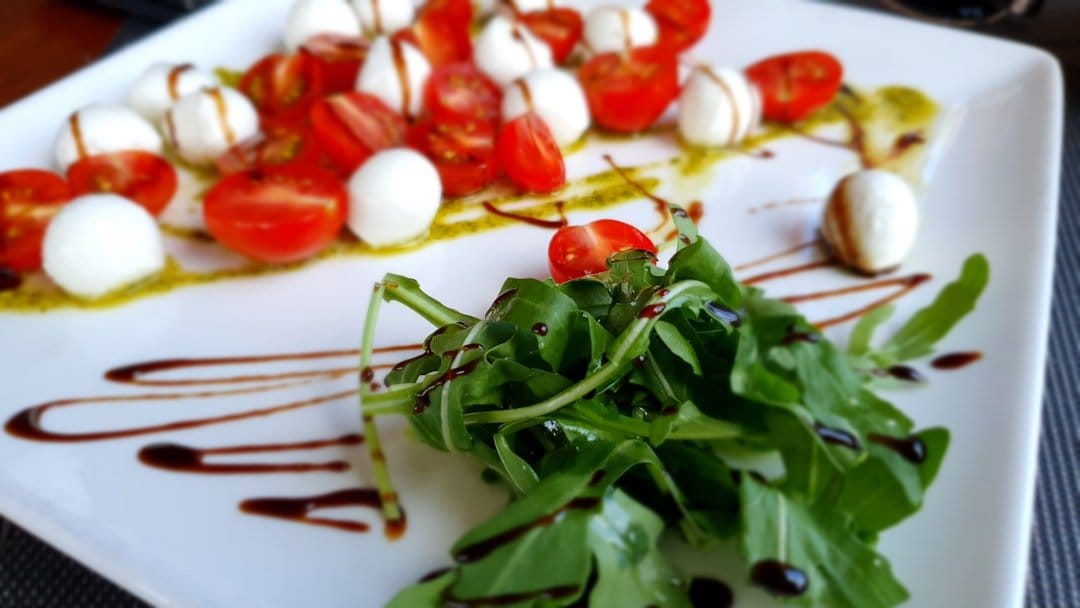
Yes, but lightly. Use a few drops of good balsamic only if the tomatoes need acidity or contrast. Skip thick balsamic glaze in most classic versions, because it is usually too sweet and heavy and covers up the tomato instead of helping it.
This is where I become unpopular at cookouts. Americans are weirdly attached to balsamic glaze, like every tomato is begging to be shellacked. Most of the time it’s too sweet, too heavy, and way too much. It bulldozes the tomato, which is the one ingredient that’s supposed to matter.
A few drops of good balsamic can work if the tomatoes need contrast. Fine. I’m not a fanatic. But caprese is not improved by turning it into dessert with basil.
Balsamic makes more sense in variations where the fruit is sweeter and more watery. Watermelon caprese? Sure. That has a logic. Classic tomato caprese? Easy. Don’t drown it.
The only caprese upgrades I respect
I’m not against changing things. I run a tech company. I build products for a living. I’m very familiar with the difference between useful innovation and pointless feature creep, and food has the exact same disease.
If a caprese variation solves a real problem, I’m in. If it exists because someone needed a new Reel, I’m out.
A chopped caprese served in glasses at a barbecue? Smart. It solves serving. A crostini situation on the side? Also smart. Bread acts like garnish, utensil, and cleanup crew for the tomato juices. Useful. A cucumber version for extra crunch and better buffet survival? Fine. Approved.
Watermelon caprese also gets a pass from me because it changes the equation enough to justify itself. The sweetness is different, the texture is different, the balsamic actually has a job.
What I don’t respect is loading caprese with avocado, pesto, grilled chicken, quinoa, pickled onions, and a balsamic reduction thick enough to patch drywall, then still calling it simple. No. You made a different salad wearing caprese’s clothes.
That said, I do like treating caprese as a flavor logic instead of a museum object. Tomato, basil, mozzarella, olive oil, acidity. Those flavors can move into other dishes just fine. Crispy gnocchi with caprese vibes? I’d eat that happily. Chicken with tomato, basil, mozzarella in peak summer? Sure. I’m not the Vatican. I’m just asking for some discipline.
Can caprese salad be dinner?
Yes. Caprese salad can absolutely be dinner if you make the portion generous and serve it with good bread. Use more mozzarella, plenty of tomatoes and basil, olive oil, salt, and something crunchy on the side so it eats like a full meal instead of a garnish.
This should not be controversial, but America still acts like dinner needs a protein spreadsheet and a quarterly review. In Italy, if it’s hot enough, tomatoes, mozzarella, bread, olive oil, maybe some fruit, maybe a glass of something cold: that is dinner. Nobody files a complaint.
Caprese becomes a real meal the second you stop treating it like garnish. Use more mozzarella. Add good bread. Make the portion generous. Build the plate like you mean it.
My favorite version for dinner is a big platter with thick tomato slices, torn mozzarella, lots of basil, olive oil, flaky salt, and grilled bread on the side. Done. If I want more texture, I chop everything more roughly and eat it with crostini so every bite gets juice, crunch, salt, and a little chaos.
If I’m extra hungry, I’ll put a bowl of crisped gnocchi nearby and call it a beautiful life.
And if I’m feeding friends in LA after a day of pretending traffic on the 10 is spiritually enriching, this is exactly what I want to make: cold, sharp, low effort, no apology.
How do I make pasta from scratch, and why am I bringing it up here?
If you’re asking how do I make pasta from scratch, mix flour with eggs or water, knead until smooth and elastic, let the dough rest, then roll and cut it. The real skill is learning the texture so the dough feels supple, not sticky, dry, or overworked.
Because the same people searching for a how to make pasta from scratch recipe are usually chasing the same fantasy they have about caprese. Simple Italian food. Rustic. Romantic. A little cinematic. Very “I lit a candle and became my nonna.”
I support the dream. I really do. But the internet sells too much nonna-core and not enough truth.
If you ask me how do I make pasta from scratch, the short answer is this: mix flour with eggs or water, knead until smooth, let it rest, then roll and cut it. That’s the process. The real part is learning the feel. The dough has to be smooth, elastic, not sticky, not dry, not overworked. You knead until it’s right, not until some influencer’s timer goes off.
That’s what pasta and caprese have in common. Both punish overcomplication. Both expose bad judgment instantly. Bad tomato? You taste it. Wet mozzarella? You see it. Overworked pasta dough? You chew it for the next three business days.
When I serve pasta with caprese, I keep the pasta simple on purpose. Pomodoro. Aglio e olio. Butter and Parmigiano. Nothing that tries to out-sing the tomatoes. Definitely not some heavy sauce that lands on the table like a winter coat in July.
What is durum wheat semolina pasta, and should beginners use it?
Durum wheat semolina pasta is made from hard durum wheat, which gives pasta more structure, chew, and a rougher texture. Beginners can use it, especially for water-based doughs and sturdy shapes, but it behaves differently from softer flours and can feel firmer and less forgiving.
Durum wheat semolina pasta is pasta made with hard durum wheat, which gives it more structure and chew. It’s great for many water-based doughs and certain shapes, especially in southern Italian traditions. It just behaves differently from softer flours, so don’t expect every dough to feel the same.
Plain English: semolina is firmer, rougher, more stubborn. In a good way.
If you’re making delicate northern-style egg pasta, I usually prefer a softer flour in the mix. If you’re making shapes that benefit from bite and texture, semolina makes total sense. This is one of those areas where people online get very dramatic about “authenticity,” as if Italy has ever agreed on anything besides coffee being better than Starbucks.
I grew up in Piemonte. Go two regions over and somebody’s grandmother will tell you your flour is wrong, your shape is wrong, and your entire childhood was a misunderstanding. That’s normal. Benvenuti.
The reason this matters here is texture. Ingredient choice changes texture more than people realize. Semolina changes pasta the same way tomato choice changes caprese. You can’t separate Italian food from feel. It’s physical first, ideological later.
How to make pasta Alfredo sauce from scratch without embarrassing yourself
To make pasta Alfredo sauce from scratch, emulsify butter, starchy pasta water, and finely grated Parmigiano-Reggiano into a glossy sauce. You do not need heavy cream for the cleanest version. The goal is a smooth emulsion that coats the pasta, not a thick dairy blanket.
If you want to know how to make pasta Alfredo sauce from scratch, the cleanest version is butter, starchy pasta water, and finely grated Parmigiano-Reggiano emulsified into a glossy sauce. That’s the move. Not a vat of cream. Not a dairy panic attack.
I know. This is where people get emotional.
But the same instinct that ruins caprese also ruins Alfredo. More cream, more cheese, more thickness, more “wow.” It’s the culinary version of adding ten filters to a photo because you don’t trust your own face.
A good Alfredo-style sauce is about emulsion, not excess. Butter. Cheese. Pasta water. Movement. Restraint. If the sauce could be used to insulate a garage, we’ve lost the plot.
And yes, this connects directly back to caprese. Insecurity makes simple food worse. People see a perfect tomato and think, cool, but what if I added six more things? Same with pasta. Same with half the “Italian” food that goes viral. The real flex is stopping earlier.
That took me an embarrassingly long time to learn. Years ago, when I cooked for friends, I used to keep adding things because I wanted the dish to feel impressive. More ingredients, more complexity, more proof that I knew what I was doing. It turns out confidence in Italian cooking often looks like leaving the food alone.
My actual caprese salad recipe
Here’s the version I make most often.
Ingredients
- 3 to 4 ripe tomatoes
- 1 to 2 balls fresh mozzarella
- A handful of fresh basil
- Extra-virgin olive oil
- Flaky salt or kosher salt
- Black pepper, if I feel like it
- A few drops of good balsamic, only if the tomatoes need it
Method
- Slice the tomatoes and arrange them on a plate or platter.
- Drain the mozzarella well, then tear or slice it and tuck it between the tomatoes.
- Add basil leaves.
- Drizzle with olive oil.
- Salt right before serving.
- Add pepper if you want.
- Taste it. If the tomatoes need a little contrast, add a tiny amount of balsamic.
That’s the whole caprese salad recipe. No glaze spiral. No pesto puddle. No motivational speech.
Serve it at room temperature with bread, and if the tomatoes are good, it tastes like summer is doing its job for once.
The hill I will die on at every summer barbecue
Caprese is one of the few dishes that still embarrasses people in a useful way. It asks whether you actually trust ingredients, or whether you need to perform. Whether you can buy one great tomato instead of six mediocre ones. Whether you can stop before content-brain tells you the plate needs a drizzle, a swirl, a tower, a hack.
That’s why I still care about this humble little caprese salad recipe. As summers get hotter and everybody looks for food that doesn’t involve turning the kitchen into a sauna, the best Italian cooking in America is going to get simpler, not more elaborate.
So here’s my challenge: make it once with restraint. Buy the best tomatoes you can find. Drain the mozzarella like you mean it. Use good olive oil. Salt properly. Then stop.
Can you handle making something that simple with nowhere to hide?
Sources
- Think of this caprese salad as a savory summer parfait
- 8 Produce-Packed Recipes to Make the Most of the Farmers Market
- 29 No-Cook Dinners for a Summer Heat Wave
- 23 Easy Weeknight Dinners for July
- These 14 Delish-Exclusive Summer Sides Are The Best Way To Win The BBQ
- Wildly Delicious July Weeknight Dinners