
Justin Pearson vs. Elon Musk’s AI Empire — POLITICO
Memphis neighbors put AI’s physical costs on the map as Pearson confronts Musk’s gas turbines, pollution claims and breakneck buildout.
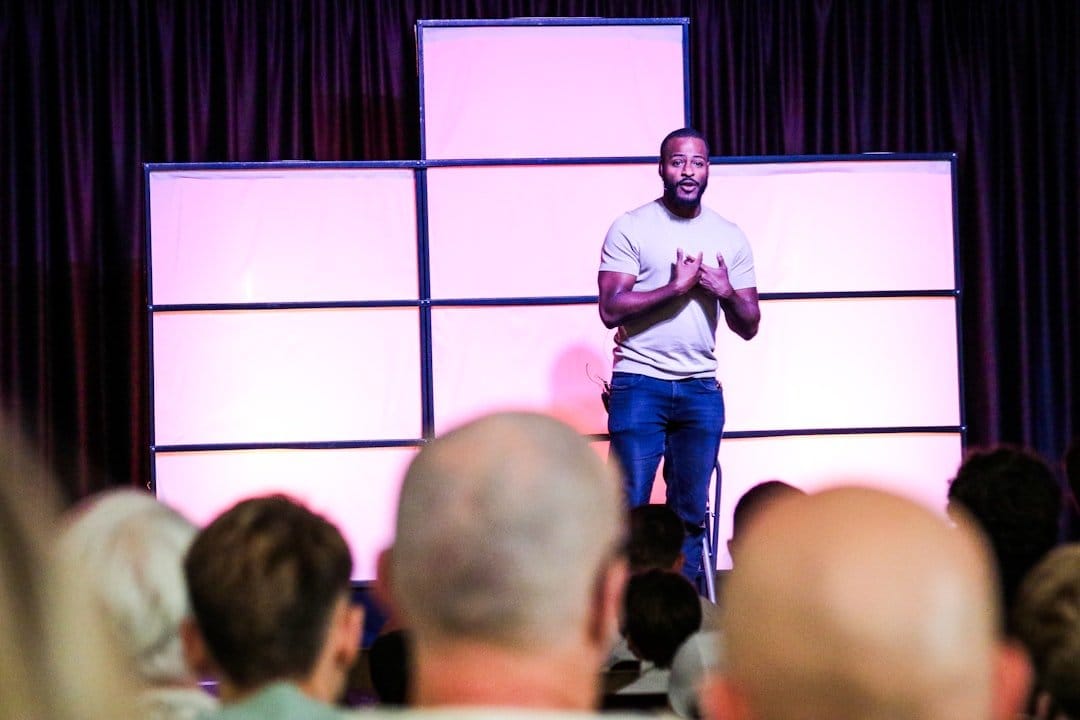
Sarah Gladney showed members of Congress the Valero refinery and rows of gas turbines—“the future of AI”—across the fence. The image stuck. In Memphis, Justin Pearson is challenging Elon Musk’s AI empire with Alexandria Ocasio-Cortez, Ayanna Pressley, Summer Lee and residents familiar with industrial pollution. POLITICO frames it as Pearson versus Musk. On the ground, startup speed has hit democratic consent, which refuses to behave like a loading screen.
My Italian ancestors may forgive the AI work; telemetry inside coffee equipment remains under review.
Speed matters. I’ve watched slow teams turn good products into expensive archaeology.
Founders call outside constraints “bureaucracy,” especially when others bear the downside. Musk’s Memphis buildout is founder mythology at industrial scale: secure GPUs, improvise power, let paperwork catch up.
The launch dazzles. Then speed debt arrives.
Pearson is fighting the physical internet
Pearson understands AI’s physical footprint better than most Washington or Silicon Valley debaters. Models occupy buildings, draw electricity through substations, burn fuel and make noise near bedrooms.
AI feels weightless on a Brooklyn MacBook. In Boxtown, it is heavy industry.
Roughly 1,200 people attended Pearson’s July 19 rally at New Direction Christian Church in Hickory Hill. MLK50 reported that Ocasio-Cortez, Pressley and Lee endorsed his congressional run as Tennessee Republicans moved to split Memphis’ 9th Congressional District into thirds.
Ocasio-Cortez told the crowd:
“It seems very clear to me that the people turning back the clock on our rights are afraid of you.”
Earlier, Pearson and the lawmakers joined residents on a Southwest Memphis “Toxic Tour” past Colossus 1, the Valero Oil Refinery and other Boxtown industrial sites.
Residents see SpaceXAI as another industrial neighbor in a community burdened by decades of pollution. A glossy data-center rendering cannot Photoshop away the refinery.
Gladney joined the tour and held a Pearson campaign sign through much of the rally. Tennessee’s redrawn map prevents her from voting for him, though she lives near the infrastructure driving his campaign.
She told MLK50:
“He’s not gonna give up on the people, period.”
Gladney can breathe the emissions, hear the noise and endure the effects while losing direct electoral influence over a leading critic. Grotesquely efficient.
Pearson translates politics: “AI competitiveness” becomes a child’s inhaler; “compute capacity,” the utility carrying its load; “rapid deployment,” who was asked before the turbines arrived?
Move fast and leave the turbines running
Musk saw a grid moving at utility speed and brought a power plant. I recognize the founder’s instinct—and the later invoice.
Colossus 1 launched within months using mobile natural-gas turbines. It later joined the grid and, according to Axios on July 27, 2026, now sells compute to Anthropic. Musk compressed years of infrastructure work.
I’ll concede something uncomfortable: part of me admires the execution.
One late component can freeze a launch. Bulldozing a dependency and shipping still gives me a founder’s dopamine hit.
Aerial imagery showed up to 35 methane-gas turbines at the original Colossus site; Shelby County later permitted 15. Local authorities considered equipment present for fewer than 365 days temporary. An EPA rule published in January 2026 clarified that large portable combustion turbines may still be stationary sources.
TechCrunch reported on July 31 that SpaceXAI’s legal theory partly depends on keeping the turbines on shipping trailers. Critics say federal rules concern size and use, wheels or not.
Apparently environmental law has a road-trip setting.
The NAACP, represented by the Southern Environmental Law Center and Earthjustice, sued in April 2026 over turbines operating without permits and pollution controls the groups say federal law requires. The Department of Justice later backed SpaceX, calling it a matter of “national, economic, and energy security.”
A utility-queue shortcut now involves civil-rights groups, state regulators, the EPA, federal litigation and the DOJ. I’ve seen cleaner Jira boards after outages.
A Sentinel-5P satellite dashboard records a nitrogen-dioxide anomaly beginning in July 2024. That alone cannot establish liability: location, weather, baseline and nearby sources matter. It still warrants direct monitoring and a complete operating history.
The cloud has a tailpipe now
Colossus 1 draws roughly 300 megawatts from the Tennessee Valley Authority and uses about a dozen on-site turbines, according to WPLN’s July 2026 reporting. TVA serves around 10 million people across seven states. One AI facility demands plenty.
Across the Mississippi border, 59 gas turbines give Colossus 2 about 1.4 gigawatts of generating capacity.
That is a power plant wearing a data-center badge.
The Southern Environmental Law Center calculated that both sites’ turbines could release 7 million to 8 million tons of carbon dioxide equivalent annually at full-time operation. WPLN equated the lower estimate to nearly 1 million homes’ annual energy use or one year’s emissions from about 1.6 million gasoline vehicles.
Those estimates model turbine specifications, permit data and continuous operation; they do not prove every unit ran at full load every hour. The distinction matters because sloppy environmental claims are gifts to corporate lawyers.
Still, TVA’s 2.4-gigawatt Cumberland coal plant emitted about 9.4 million tons of CO₂ equivalent in 2023; Shawnee emitted 5.8 million. Under SELC’s assumptions, SpaceXAI falls between them.
Patrick Anderson, an SELC attorney, told WPLN:
“What is happening in Mississippi is on an unprecedented scale. There is nothing else like this out there.”
NOx raises immediate local stakes. SpaceXAI’s data implies about 4,400 tons annually; an Environmental Integrity Project analyst estimated nearly 5,300 tons from turbine models visible in aerial images. Cumberland emitted 3,921 tons.
Nitrogen oxides contribute to smog and are associated with asthma, lung disease and cardiovascular harm. The American Lung Association gives Shelby County an “F” for ozone, and Memphis repeatedly ranks among difficult American cities for asthma sufferers.
SpaceXAI says current monitoring shows local air quality meets or exceeds EPA standards. Fine. Publish transparent, continuous data so residents need neither an environmental attorney nor YouTube satellite lessons.
Companies describe best-case operations. Neighbors need data from the machine running at 2 a.m.

Alt text: Gas turbines at Colossus as Justin Pearson challenges Elon Musk’s AI infrastructure expansion.
The AI “cloud,” seen from above: gas turbines supplying power to the Colossus data-center buildout near the Tennessee-Mississippi border.
Off-grid AI brings utility-scale consequences
The electricity crunch predates Musk. His workaround exposed it.
Cleanview identified 59 proposed data centers planning behind-the-meter generation totaling roughly 90 gigawatts. Occam Edge tracks 12 primarily on-site-powered projects totaling about 10.6 gigawatts.
The logic is clear: grid connections take years, Nvidia GPUs depreciate when the next generation appears and idle compute earns zero. Gas turbines skip the queue and start billing.
I understand the temptation. Policy cannot rely on founder restraint. Asking ambitious founders to slow voluntarily is like asking my nonna to use less olive oil. Lovely thought. No chance.
The workaround also cracks operationally. Axios reported that a Virginia off-grid data center lost its gas turbines for 24 hours and used diesel generators while Canadian wildfire smoke degraded local air. Residents reported burning lungs and noise around 60 decibels.
OpenAI’s Stargate facility in Abilene, Texas, reportedly suffered days-long outages from power and cooling failures. New Mexico’s state land commissioner rejected a gas pipeline for Oracle’s 2.5-gigawatt Project Jupiter, risking years of delay.
Money is nervous. S&P Global Ratings cut Oracle’s long-term issuer rating from BBB to BBB-, one step above junk, amid concern over enormous data-center spending and infrastructure commitments.
Energy investor Jigar Shah told Axios that off-grid AI is a flimsy deployment model. Occam Edge founder and CEO Christian Okoye compared prospective “Dark Gigawatts” to dark fiber left after the dot-com crash.
Both see infrastructure desperation dressed as ingenuity. Some projects will work. Others will learn that running a private utility requires more than turbines and server-rack poses.
Benchmark leaderboards omit failed pipelines, diesel backup events and credit downgrades.
The balance sheet won’t.
Replacing 69 turbines with 41 keeps the gas flowing
SpaceXAI agreed with Mississippi regulators to remove all 69 temporary mobile turbines from Southaven, starting as early as August 2026 and finishing by July 2027.
SpaceXAI stated:
We will begin removing temporary turbines from the site as early as August 2026. All temporary turbines will be removed by July 2027.
A permitted 1.2-gigawatt natural-gas plant with 41 permanent turbines will replace them. Mississippi granted its Clean Air Act permit in March 2026 after more than seven months’ review.
SpaceXAI describes it:
The 1.2 GW permanent power plant currently under construction will consist of 41 permanent turbines authorized under a Clean Air Act permit, granted to SpaceXAI in March 2026.
The change may improve emissions controls. SpaceXAI says mobile units will receive selective catalytic reduction systems and permanent turbines will use newer technology. It is also spending millions on sound walls, silencers and other noise controls.
I want those improvements finished. The result remains a large, permanent gas plant. Calling it a fossil-fuel exit requires heroic arithmetic.
SELC litigation director Kym Meyer disputed the claim that SpaceXAI was “rapidly” removing temporary units:
“In reality, the opposite is true: the company has been continually expanding its already-enormous Colossus Gas Plant, adding nine new polluting gas turbines in July and bringing the current total number of turbines to 69.”
SpaceX’s plans extend beyond one Memphis settlement. Its IPO filing proposes $2.8 billion in gas-turbine purchases over three years. Musk also bought temporary-power specialist APR Energy.
TechCrunch found archived APR Energy materials showing an apparent turbine fleet unlike the permanent models in Colossus permits. Musk may have acquired the ability to repeat mobile power elsewhere.
My dated bet: by the end of 2028, another large SpaceXAI campus will launch on temporary on-site gas before gaining a conventional grid connection. I’d love to lose. The $2.8 billion list suggests otherwise.
Community consent has no post-launch patch
SpaceXAI promised upgrades at four schools near its Memphis data centers. A July 2026 Daily Memphian investigation found work at two: beautification at John P. Freeman School and an estimated $3.6 million gym and locker-room renovation at Fairley High School.
A $5 million cap narrowed the proposal, and the agreement expired in June. A company building immense compute infrastructure within months found school renovations use another operating system.
I’ve made announcement-culture mistakes: promising timelines before dependencies were fixed, then spending nights forcing reality into a slide deck’s cheerful arrow. I was embarrassed. Deservedly.
Promises get applause. Procurement gets Tuesday meetings.
The work may still benefit Fairley High. But four announced schools versus two with completed or active improvements shows why community-benefit agreements need enforceable funding, deadlines and public reporting.
The response extends beyond Memphis. Tom’s Hardware reported coordinated protests at 142 locations across 42 states. More than 69 jurisdictions imposed bans or moratoriums, delaying around $130 billion in data-center projects during 2026’s first quarter.
Calling it all NIMBYism is lazy. Questions about power prices, water, noise and farmland are due diligence developers owed before their press conferences.
Texas shows bipartisan opposition. JLL projects it will surpass Northern Virginia as the world’s largest data-center market by 2030. Rural Republicans increasingly fear water and road impacts, power bills and ranchland becoming industrial campuses.
Critics include Republican Texas Agriculture Commissioner Sid Miller. Giles Dalby, a Republican county commissioner and cattle rancher whose family has worked its land for 125 years, told the Associated Press that data centers concern everyone.
Democratic gubernatorial candidate Gina Hinojosa campaigns on the issue. Sherrod Brown attacks Ohio expansion; Wisconsin candidate Francesca Hong campaigns against new projects. New York Gov. Kathy Hochul’s moratorium won praise from AOC.
Climate Power’s July poll found 64% of Latino respondents weighted cost control and pollution limits equally when considering data-center energy demand. Industries dismissing opposition as niche environmentalism should remember that number.
Pearson offers a portable template: billionaire infrastructure approved at extreme speed, concentrating local costs in less-powerful communities. Benefits arrive first as announcements, later as crews.
He needn’t close Colossus to hurt Musk’s strategy. Every future mayor, regulator or commissioner asking harder pre-construction questions changes its economics.
Democracy gets a clock too
By 2028, investors will track megawatts deployed without local revolt as closely as GPU supply. I’d bet money—though less than Oracle borrowed for data centers.
Before approval, AI companies should publish expected electricity demand, water use, emissions and permanent jobs. Community agreements need legal teeth; public dashboards need raw local-monitoring data and equipment uptime.
Founders must price permitting into their models. Treating residents as latency creates speed debt, repaid through lawsuits, moratoriums, elections and delays.
Musk built Colossus to the AI race’s clock. Pearson is putting another on the wall.
By decade’s end, the best AI infrastructure teams will hold public hearings before the first turbine leaves its trailer. The rest will spend billions learning that neighbors were always a hard dependency.
Frequently asked questions
Why is Justin Pearson opposing Elon Musk’s AI data center in Memphis?
Pearson opposes the speed and local impacts of SpaceXAI’s Memphis buildout, including gas-turbine emissions, noise, grid demand and limited community consent. He translates abstract claims about AI competitiveness into questions about asthma, utilities, permitting and whether residents had a meaningful say before industrial infrastructure arrived.
How are the Colossus AI data centers powered?
Colossus 1 draws roughly 300 megawatts from the Tennessee Valley Authority and uses about a dozen on-site turbines. Colossus 2, across the Mississippi border, is served by 59 gas turbines with about 1.4 gigawatts of generating capacity. SpaceXAI plans to replace its temporary mobile units with permanent turbines.
Is SpaceXAI removing the gas turbines from Colossus?
SpaceXAI agreed to begin removing all 69 temporary mobile turbines at its Southaven facility as early as August 2026 and complete removal by July 2027. A permitted 1.2-gigawatt natural-gas plant containing 41 permanent turbines will replace them, so the site will continue using substantial gas generation.
Sources
- Justin Pearson Is Taking On Elon Musk's AI Empire â POLITICO
- SpaceXAI's Greater Memphis Area Site Updates
- SpaceX won’t remove all of xAI’s unpermitted turbines for another year
- This data center rivals TVA’s largest coal plant for climate pollution
- What happened to SpaceXAI's promise to renovate Memphis schools?
- Cracks appear in the vision of off-grid AI data centers