
Canada’s conditions give it leverage over Cohere, not proof of a good deal
Cohere closed an undisclosed portion of its Series E, while its investors reveal a larger sovereign AI…
The short version
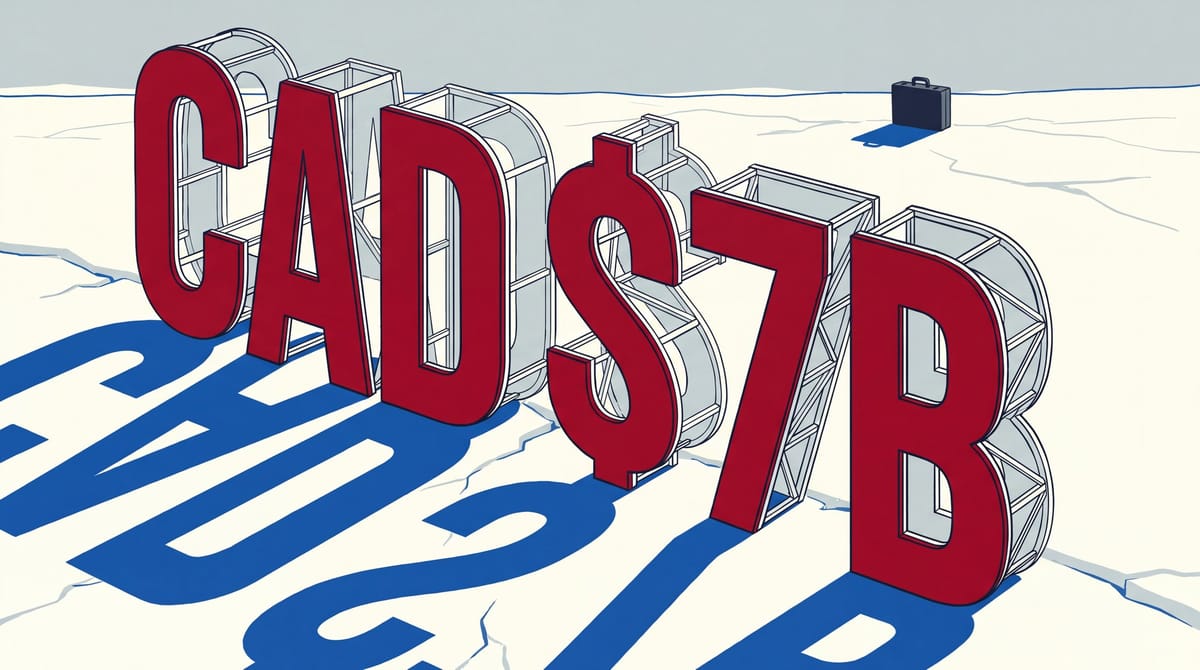
- Cohere completed an initial Series E close, but the amount raised remains undisclosed and CAD $7 billion is only the target.
- The full target would imply a CAD $35.7 billion valuation, while Canada’s staged commitment reaches CAD $1.6 billion.
- The financing links model development and compute expansion to customer-controlled deployments, Canadian infrastructure, jobs, and regulatory requirements.
Cohere has closed an undisclosed slice of a much larger financing plan. The investors around the table tell me more than the giant headline.
Cohere raised CAD $7 billion on October 29, 2026, if you believe the version that conquered the internet before anyone finished the announcement. It actually completed an initial Series E close. Nobody outside the deal knows how much was committed or received.
CAD $7 billion is the target. Cohere says closing the full round would imply a CAD $35.7 billion valuation. That is very different from seven billion Canadian dollars landing in a Toronto bank account beside a pallet of GPUs and a CFO living on cold brew.
I fell for it too. As a founder, I should know fundraising language is not cash, but I want Canada and Europe to build serious AI companies. My optimism outran my reading comprehension until “initial close” returned me to Earth.
The financing still matters because of its investors and their expectations. Schwarz Group is leading. Canada plans to invest in stages. Cohere says the money will fund model development, regulated-industry products, long-term compute infrastructure and international expansion. The cap table looks like an early blueprint for a Canadian-European sovereign AI network.
how much has Cohere actually raised?
Cohere has not disclosed the initial close’s size, a final closing date, the eventual mix of financing instruments or the valuation terms if the round stops below its ceiling. Anyone calling the full target cash received has skipped several pages of paperwork.
An initial close means Cohere completed one portion while pursuing the wider target. It can use the undisclosed proceeds already received. Later closings may raise the total, and Canada’s commitment will arrive in stages as Cohere reports against its obligations. The headline is the maximum Cohere hopes to assemble. Preferred equity or structured financing could change the economics behind the press-release valuation, but Cohere has not revealed the final mix. Investors and curious founders like me can see the destination while somebody covers the fuel gauge with a thumb.
Venture Capital Tracker makes the useful distinction: Cohere disclosed an initial close; the full target remains a target. A round can be advanced while leaving major questions about cash proceeds, dilution and investor rights. Sadly, those details are less clickable than “biggest thing ever.”
Canada’s participation shows why this matters. Ottawa announced an equity commitment of up to CAD $1.6 billion, invested in stages with regular reports on Cohere’s progress. Adding it all to Cohere’s current bank balance would be creative accounting, and I’m Italian. I’ve watched football clubs explain transfer budgets.
The valuation needs equal care. Cohere says reaching the full target would imply a CAD $35.7 billion company value. Until then, it describes a planned transaction dependent on undisclosed terms.
Maybe Cohere closes every dollar. I hope so. Today, nobody outside the room can calculate how many training runs, acquisitions or expansion years the initial proceeds will fund.
sovereign AI becomes a deployment question
“Sovereign AI” often sounds like someone taped a national flag to a server rack and issued a press release. Cohere’s pitch becomes useful as one operational question: can a bank, ministry or industrial company run an effective model while keeping sensitive information inside systems it controls?
Cohere says its efficient models can run on an organisation’s infrastructure. Prompts and internal documents stay in-house while customers control where the system operates and who accesses it. Buyers also retain more control if a provider changes prices, access rules or product priorities. For regulated institutions, deployment choices attract lawyers, who magically turn architecture diagrams into budget meetings. A brilliant model is useless if the institution cannot approve its data handling. Cohere’s sovereign AI proposition therefore covers the full deployment chain, from model access to the servers running it.
Marjorie Janiewicz expressed the importance of that control:
I don’t want to get disconnected. I want to own my model.
Schwarz Group gives the strategy a European anchor. The German group is leading the financing while Cohere expands internationally and sells secure AI to regulated industries. For European buyers nervous about data location, a regional investor with serious infrastructure interests beats another venture fund carrying a podcast and fleece vest.

Canada adds different leverage. Its money carries domestic job and infrastructure commitments plus regular reporting. The investor is also shaping where Cohere hires and builds, making this cap table more interesting than the usual funding-announcement logo collection.
The commercial logic is clear. Cohere gets capital for models and long-term compute, then builds vertical AI products for customers whose deployment rules determine purchasing. Efficient models on customer-controlled systems can lower costs and keep data in-house. More deployments can turn sovereign AI into recurring revenue. International expansion then requires buyers willing to pay for that control. Every part must work; sovereignty cannot make a weak product charming.
Arthur Mensch described the principle this way:
be a tool for empowerment, not dominance.
Cohere still owes buyers proof from live deployments. We do not know whether the models and vertical products financed by this round will deliver competitive performance, lower costs or stronger security. In-house data sounds excellent. Customers renew only if the software also works Tuesday morning when compliance uploads a horrible spreadsheet from 2009.
Canada bought leverage with conditions attached
Canada is acting as a strategic investor because it wants Cohere’s headquarters, technical jobs and compute infrastructure anchored domestically. The government gets equity through a staged commitment, though unpublished terms make the investment price impossible to judge.
The structure creates accountability. Ottawa releases capital over time while Cohere reports against its obligations. Cohere says the financing will fund long-term compute infrastructure for training frontier-level enterprise models and product development. Its efficient models can then run within an organisation’s chosen systems, keeping sensitive information under its control. The government sees that control as giving Canadian businesses and public institutions more choice over AI adoption. Canada also gets potential equity upside while steering spending and employment into its economy. The mechanism makes sense, though its strength depends on undisclosed enforcement terms.
Cohere has committed to create at least 1,000 high-paying Canadian technical jobs by 2030. These are future jobs under the agreement, not people already at Toronto desks wondering why the office espresso tastes like dishwater.
It must also invest at least CAD $1.7 billion in additional Canadian computing infrastructure by the same deadline. Again, this is a commitment. The data centres and hardware still need financing, construction and operation.
Prime Minister Mark Carney was unusually direct about the political motivation:
We’re not waiting for the future of AI to be decided somewhere else by those we don’t know or those we don’t trust. We are building it right here, the right way.
I understand the objection. Taxpayers are exposed to a richly valued private AI company without a public term sheet, disclosed revenue multiple or clear downside protection. Staging the investment and adding measurable obligations gives Ottawa leverage, but cannot prove Canada negotiated a good price.
Industrial policy and investment performance can diverge. Ottawa may accept weaker financial terms because it values Canadian infrastructure and a nearby strategic AI supplier. That can be legitimate if the government eventually shows what it bought and enforces the commitments after the press photos become political archaeology.
Cohere still owes everyone commercial proof
Cohere’s reported growth is impressive and maddeningly incomplete. The company says annual recurring revenue grew 165% year over year but has not disclosed ARR in dollars. A huge percentage on an unknown base remains an unknown business wearing a nice jacket.
Customer count offers more texture. Cohere says its global base grew twentyfold to 300 customers over the previous year. That shows adoption but reveals little about contract size, retention or how many deployments escaped pilot purgatory.
Here is how financing becomes a durable business. Cohere funds model development and the compute needed to train enterprise systems. It builds vertical products for regulated industries where deployment control can determine approval. Customers run efficient models on their systems or other approved infrastructure, keeping sensitive data under tighter control. Successful deployments create renewals and reveal where products break in real workflows. That feedback improves later releases while international partners open doors. Sustained revenue must eventually cover the stack’s enormous cost, because sovereign AI consumes electricity and GPUs, not maple syrup and patriotic speeches.
Cohere’s opportunity lies where remote American APIs create legal headaches or expose buyers to another company’s policy changes. Banks and governments may pay for control, especially when sensitive material would otherwise cross infrastructure governed elsewhere. Cohere does not need every benchmark crown, but it needs reliable products customers keep buying.
Nobody knows whether this round gets Cohere there. The final amount and closing date remain open, as do ARR in dollars, sustained revenue growth and the products’ eventual cost and security performance.
On the first morning of 2031, I’ll look for the promised Canadian jobs, working compute infrastructure and regulated customers renewing because they control where Cohere’s models run. If those receipts exist, the giant Series E headline will feel quaint. If not, Canada will own a very expensive lesson in how easily sovereignty becomes branding.
Frequently asked questions
How much did Cohere raise in its Series E?
Cohere has not disclosed the amount committed or received in its initial Series E close. CAD $7 billion is the target for the full round, not confirmed cash already raised. Cohere says reaching that target would imply a CAD $35.7 billion valuation, subject to the transaction’s undisclosed terms.
What does sovereign AI mean for Cohere’s customers?
A sovereign AI deployment lets an organisation run models on infrastructure it controls, keeping prompts and internal documents in-house while controlling system location and access. For regulated banks, ministries and industrial companies, that deployment model can address data-handling requirements and reduce dependence on a provider’s changing prices or policies.
What conditions are attached to Canada’s investment in Cohere?
Canada’s equity commitment is worth up to CAD $1.6 billion and will be invested in stages with progress reporting. Cohere has committed to create at least 1,000 high-paying Canadian technical jobs and invest at least CAD $1.7 billion in additional Canadian computing infrastructure by 2030.
Sources
- Who Gets to Build the Frontier for AI
- Cohere Announces Series E Fundraise Targeting CAD $7 Billion to Meet Surging Global Demand for Secure, Sovereign AI
- Canada announces landmark investment in Cohere to scale secure, sovereign AI
- Prime Minister Carney announces landmark investment in Cohere to scale secure, sovereign AI
- Ottawa takes stake in Cohere as AI company opens $4.9 billion funding round
- Canada, Nvidia Back Cohere at Over $20 Billion Valuation