
Ducati’s 850cc prototype opens commanding gap over Yamaha
Bulega beat Fernández by one second at Misano, but unknown fuel, tyres and run plans make Ducati’s advantage impossible to diagnose.
The short version
- Ducati’s one-second Misano advantage over Yamaha is striking, but uncontrolled private-test variables prevent a sound engineering verdict.
- Aragón provided clearer causality: Márquez recovered from a ride-height-device error, managed rear grip, then increased pace around lap ten.
- Comparable fuel, tyres, run plans, telemetry and long-run data are needed before the prototype gap can be attributed to hardware.
Ducati’s 850cc prototype opened a one-second gap over Yamaha at Misano, so the internet has awarded Bologna the 2027 championship. Send the trophy with a ribbon and nice mortadella.
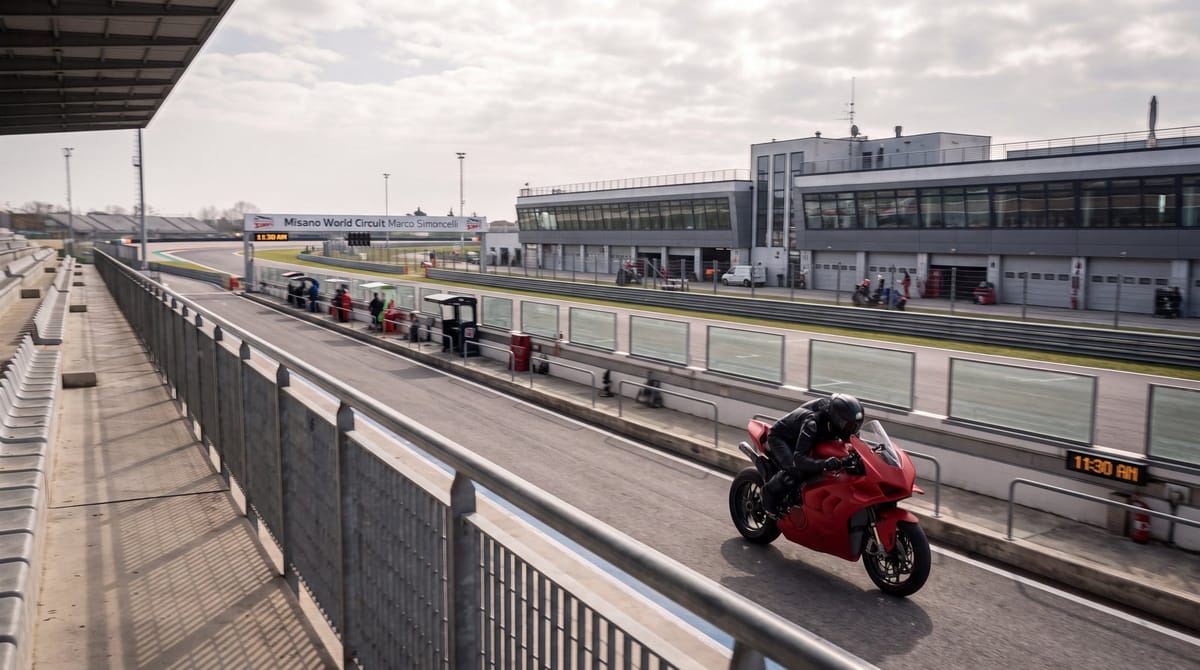
Nicolò Bulega’s reported 1:31.7 on the Ducati beat Augusto Fernández’s 1:32.7 on Yamaha’s prototype during the private two-day test. In MotoGP, one second is a small geological era. The published information does not explain it.
Fuel loads, tyres, engine modes, aerodynamic configurations, track time or run plans may be hiding inside that gap. GPOne warned that Ducati and Yamaha followed their own programmes and methods, making the timing sheet juicy and any engineering verdict wildly premature.
Aragón offers a reality check. Marc Márquez made a ride-height-device mistake, lost positions, recovered and beat Pedro Acosta by about two seconds over the Grand Prix. Racing loves turning neat technical stories into soup.
Misano gave Ducati the screenshot
Ducati ran Bulega alone at Misano; Yamaha had Fernández and Andrea Dovizioso working on its prototype. That staffing difference suggests two factories collecting different information. Nobody arranged a clean shootout for us, sadly.
A controlled comparison changes one meaningful variable and holds the rest stable. We do not know whether Bulega and Fernández used equivalent tyres, fuel loads or engine modes. Their setup priorities and track windows may also have differed. Bulega could have chased a low-fuel lap while Fernández completed a longer validation run, though the public record confirms neither. Even matching fuel would leave the riders and run plans unresolved. The stopwatch bundles every variable together, then politely refuses to name the culprit. Crediting Ducati’s hardware with the entire second is engineering fan fiction in a team polo.
Shibani Ahuja said:
Every boardroom is asking whether it’s moving fast enough. Two years into the agentic shift, the answer from the data is that the advantage was never in starting first; it’s in starting deliberately. The organizations getting real returns got specific about a shortlist of things before conditions were perfect: the data they made trustworthy for the job, the point where a person stays in the loop, and the guardrails they built before they needed them.
No supplied source identifies a prototype component behind Ducati’s advantage. Nothing published connects its aerodynamic package, chassis or electronics to the Misano time. We have no sector analysis showing whether Bulega gained under braking or on corner exit, nor telemetry, race-distance simulation or repeatable head-to-head runs separating motorcycle from rider.
That missing mechanism limits what the lap tells us. Aerodynamics tailored to Misano might lose their edge elsewhere; a bike friendly over repeated laps might matter more than one spectacular time. Both fit the available evidence. Choosing one confidently is seasoning data like an Italian uncle who stopped measuring salt around 1998.
I have committed this sin. I once saw a magnificent analytics traffic spike and briefly assumed I had become a genius overnight. Search Console revealed that roughly all of it was bots, so the prosecco stayed refrigerated.
Yamaha deserves equal restraint. A prototype programme needs repeatable behaviour before somebody chases a screenshot circulating through Italian motorcycle Twitter and three family WhatsApp groups. The slower lap looks bad because racing runs on clocks. But no evidence says Yamaha structured its test around beating Bulega’s best time.
Aragón showed how pace becomes a win
Marco Bezzecchi put Aprilia on pole at Aragón, beating Márquez by less than a tenth of a second on current MotoGP machinery. Sunday’s podium featured three manufacturers: Ducati won, KTM finished second and Aprilia took third. Several garages had serious pace.
Márquez complicated his afternoon immediately. He left the rear ride-height device engaged after Turn 1, slowing him through the next two corners and letting Bezzecchi and Jorge Martín past. He recovered to second before the opening lap ended, then retook the lead from Bezzecchi on lap six. Acosta passed Bezzecchi and stayed close; around half distance, less than a second covered the leading trio. MotoGP’s race report says Márquez later increased his pace while Acosta and Bezzecchi could not answer. The device error cost positions, overtaking repaired the damage and later speed created the winning margin. That causal chain we can follow.
One technical factor cannot explain everything. Bezzecchi’s qualifying speed delivered track position, but not enough full-race pace. Márquez had to recover without abusing the rear tyre, then preserve enough grip to attack. Acosta’s KTM stayed close through the controlled phase and kept Márquez working.
Every rider used medium Michelin Power Slicks at both ends on Sunday, so compound choice does not explain the leaders’ gaps. Identical labels still produce different outcomes. Suspension setup changes how the motorcycle loads the rubber; engine delivery affects rear spin. The rider decides how aggressively to spend grip on each exit. A shared compound removes one variable, not every difference between machines.
Márquez said afterward that he managed tyre wear before starting his push around lap ten. His account matches the race: Acosta stayed close early, then lost contact when Márquez raised the pace. Private testing rarely provides such a visible sequence.
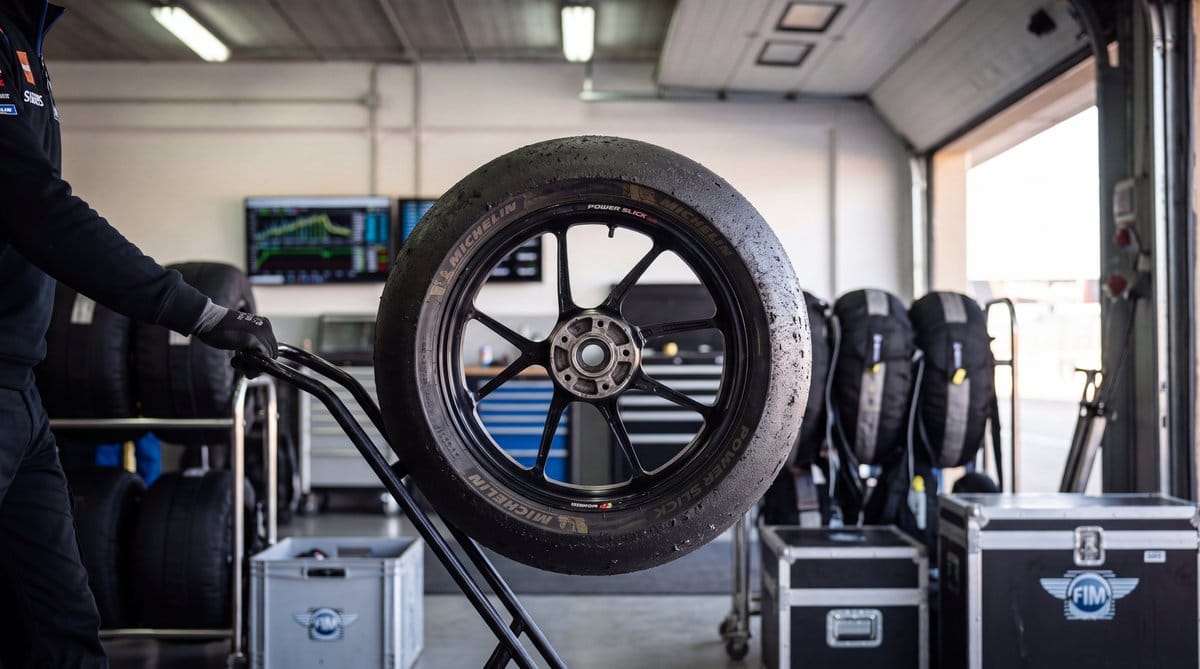
Image caption: Bulega’s private Misano prototype test and Márquez’s Aragón victory invite an easy comparison, although they involved different motorcycles, events and objectives.
Rear grip dictated the attack
A racing tyre has a limited temperature and grip window. Hard acceleration creates heat and wear, especially when the rear spins instead of driving forward. As the tyre changes, the rider may wait longer before opening the throttle or accept more movement. That hesitation repeats at every important exit. Spend too much rear grip early and the leader disappears when the tyre stops cooperating. Márquez managed the opening half, then raised his pace when those behind had less performance available. Acosta’s second place shows KTM also handled the race well; Márquez and his Ducati had more left for the decisive phase.
Francesco Bagnaia ruins any lazy claim that Ducati had universally solved rear grip. He struggled to follow the group ahead, particularly under acceleration, then crashed out. The other side of the Ducati Lenovo garage had a completely different Sunday on the same motorcycle brand.
So Aragón cannot settle the prototype debate. The new Ducati must prove itself over long runs, at different circuits and with more than one rider. Yamaha faces the same work, plus a slower Misano time hanging over its garage like an unpaid electricity bill.
Misano and Aragón involved different motorcycles doing different jobs. The private test used the coming prototypes; Aragón used current MotoGP bikes racing on Michelins. No published technical explanation shows how Ducati’s Misano pace would transfer to MotorLand Aragón, and nobody has controlled a comparison between the two prototypes there.
The next test needs receipts
I want comparable fuel loads, matched tyres and repeated runs from both factories. Sector breakdowns would locate the gap. Telemetry could show whether it appears under braking, through corners or during acceleration. Disclosed run plans would reveal whether either rider chased a headline lap. Race-distance simulations would expose degradation and consistency. A second comparison at another circuit would show whether the result travels beyond Misano. Until then, the reported second remains a mystery box made from expensive carbon fibre.
Scott Spencer said:
Banks have spent decades building digital infrastructure. The next competitive advantage is building an intelligence infrastructure for AI.
There is a fair case for taking Ducati seriously. Fast laps still require a motorcycle capable of delivering them, and Yamaha would obviously rather lead this spreadsheet. Bologna posted a strong number. I would rather defend that advantage than explain why my prototype is one second slower.
Calling the gap engineering-led exceeds the evidence. We have no telemetry tying it to Ducati’s aerodynamics, no simulation showing better tyre life and no controlled Aragón test. GPOne itself declined to judge the Misano times because each manufacturer followed its own programme.
Here is my receipt: Yamaha will erase most of the headline gap before the 2027 season begins, while Ducati will reach the opening race with the more repeatable long-run package. Comparable testing may cook this prediction beautifully, and I will open the prosecco if it does.
For now, Bologna owns the screenshot. Sunday will decide who owns the future.
Frequently asked questions
What does Ducati’s one-second advantage over Yamaha at Misano mean?
At Misano, Nicolò Bulega’s reported 1:31.7 on Ducati’s 850cc prototype beat Augusto Fernández’s 1:32.7 on Yamaha’s prototype. The result establishes Ducati recorded the faster published lap, but it does not isolate whether hardware, tyres, fuel, engine modes, riders or different run plans caused the gap.
Why can’t private MotoGP test lap times be compared directly?
Private MotoGP tests are not controlled shootouts unless factories use equivalent tyres, fuel loads, engine modes, track windows and objectives. At Misano, Ducati and Yamaha followed separate programmes, so the stopwatch combined motorcycle performance with rider differences and undisclosed test methods.
What evidence would confirm Ducati’s prototype advantage over Yamaha?
A reliable comparison requires matched tyres and fuel, comparable run plans, repeated laps, sector breakdowns, telemetry and race-distance simulations. Testing at another circuit would also indicate whether Ducati’s advantage travels beyond Misano, while long-run data would expose tyre degradation and consistency.
Sources
- Primary trending article
- Misano: Bulega e la Ducati 850 rifilano 1 secondo a Fernandez e Yamaha
- MotoGP, a Misano altri due giorni di test per le nuove 850cc: Bulega il più veloce
- Nicolo Bulega back on Ducati’s 2027 MotoGP prototype at Misano
- Bulega volverá a subirse a la Ducati MotoGP 850cc de 2027 en Misano
- La MotoGP fa già tappa a Misano: Bulega e non solo in azione per una giornata di test