
AI server costs: Why are 2027 quotes climbing 15%?
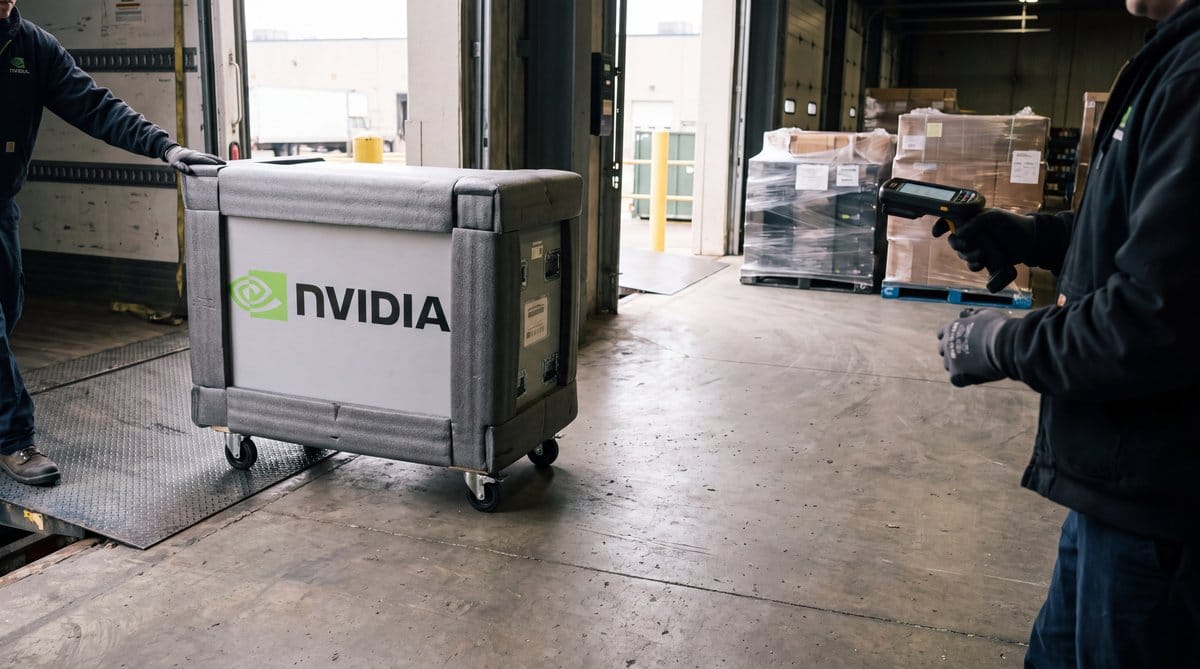
Memory inflation is reaching NVIDIA server quotes just as agentic workloads demand longer contexts and more reliable completed work.
The short version
- AI server costs are rising more than 15% for some NVIDIA systems scheduled for early 2027.
- Memory pressure moves through HBM, DRAM, builders, and configuration-specific loadouts before reaching each final customer quote.
- Buyers should measure cost per successfully completed workflow because failed agent runs still consume infrastructure and expand contexts.
AI server costs are reportedly jumping more than 15% for some NVIDIA systems shipping in early 2027. I had just told another founder hardware bills would follow token prices downhill, because apparently I enjoy being corrected in public.
People familiar with the process say increases vary by chip generation and memory configuration across certain Grace Blackwell and Vera Rubin systems. NVIDIA has neither confirmed the customer notices nor published affected prices. Nobody outside those contracts knows how much comes from HBM, conventional DRAM, packaging, foundry wafers or something else inside the machine.
The headline is messy, but the direction is clear: production AI is colliding with expensive memory.
Agentic applications worsen that collision. Every turn adds output and tool results to the context processed next, forcing the machine to reread an expanding history. Meanwhile, memory suppliers are shifting production toward premium HBM and server products. Advanced capacity is slow to add as the underlying technology migrations get harder. Server builders pass some component costs into the final quote, leaving buyers one enormous, barely explained number. It is the infrastructure version of a restaurant bill with a mysterious coperto, except this one can buy an apartment in Bologna.
Your quote hides the memory bill
A server increase begins inside a configuration most customers never see itemized. Each machine pairs NVIDIA accelerators with a memory loadout that varies across Grace Blackwell and Vera Rubin systems, so higher memory costs hit each differently. Contract builders assemble complete systems for data-center customers, while NVIDIA or the builder may absorb part of the increase. Applying one reported percentage to an entire infrastructure budget creates fake precision because machines carry different memory bills. Procurement needs the original and revised quotes beside the exact configuration.
The reported increase exceeds 15% versus previous prices for some systems due early next year. CIO separately reported July hikes of about 30% across almost all NVIDIA product lines compared with prices before that change. I would separate the events because public evidence does not show they cover identical products or customers. Compounding them would be easy, dramatic and potentially nonsense. Excel loves confidence it has not earned.
Scott Bickley, an advisory fellow at Info-Tech Research Group, offers a useful correction to the gouging narrative. His calculations suggest NVIDIA absorbs some memory inflation and passes only a fraction to its largest customers. Outsiders cannot test that share without a configuration-level bill of materials.
Bickley described the economics to CIO:
The workload cost is going down per token while the underlying hardware and infrastructure costs are going up.
Those curves can diverge for a while. A more capable system can produce cheaper tokens despite a higher purchase price if added throughput outweighs the invoice. Reliability determines whether that math survives production. Every token spent on a failed agent run remains a cost, however seductive the advertised rate.
Crucial details remain private. NVIDIA has not disclosed the memory-cost increase inside any affected Grace Blackwell or Vera Rubin system. The shares from HBM, conventional DRAM, packaging and foundry wafers are also unknown. No measured evidence shows whether higher prices will make hyperscalers cut orders, delay deployments or choose alternative accelerators. Anyone offering a precise breakdown has either seen a confidential contract or added artisanal seasoning to a news report.
DRAM pressure travels up the stack
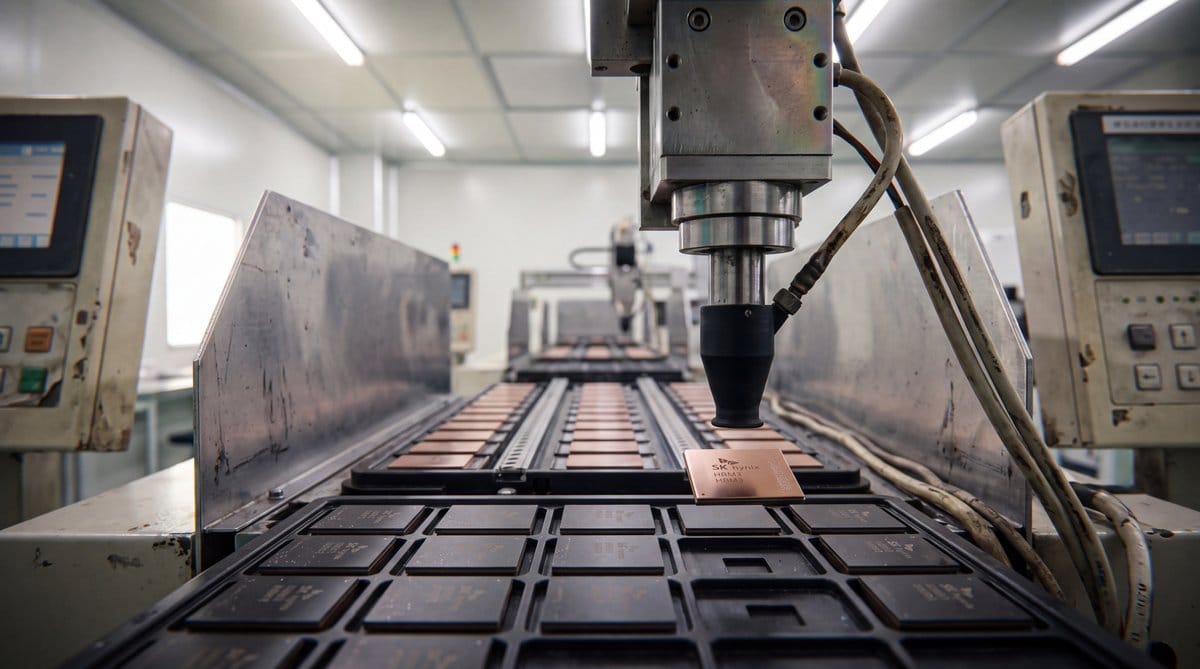
The chain starts as customers move AI from demos into production across agentic software, scientific discovery, enterprise automation and robotics. Infrastructure demand rises, especially for high-performance memory. Suppliers allocate more capacity to higher-value HBM and server products. Adding advanced capacity is difficult because each technology migration has grown more complex. Conventional DRAM tightens and contract prices rise. Those costs reach contract server builders, which reportedly tell major data-center customers that upcoming NVIDIA systems will cost more. One factory allocation decision eventually lands in somebody’s capital budget.
Conventional DRAM numbers show how violent the pressure became. Analysts projected second-quarter contract prices to rise about 60% from the first quarter after a reported jump of roughly 90% from the preceding quarter. These figures do not reveal NVIDIA’s HBM pricing. They show what happened elsewhere in memory while suppliers favored HBM and server products.
Rubin also packs an absurd amount of memory into one rack. A maximum NVL72 configuration has up to 288 GB of HBM beside each of its 72 GPUs, totaling more than 20 TB before the LPDDR attached to Vera CPUs. This ceiling configuration does not describe every rack, but it shows why memory loadout can materially change a quote. Memory has eaten half the lasagna.
Agentic inference adds pressure. Each turn produces output that joins the context processed later, repeatedly forcing the system through growing model output and tool results. Later turns require more memory traffic and compute even though the user sees one task in one chat window. Across production agents, demand rises with both job count and accumulated context per job. The interface looks harmless; underneath, the context keeps bringing friends to dinner.
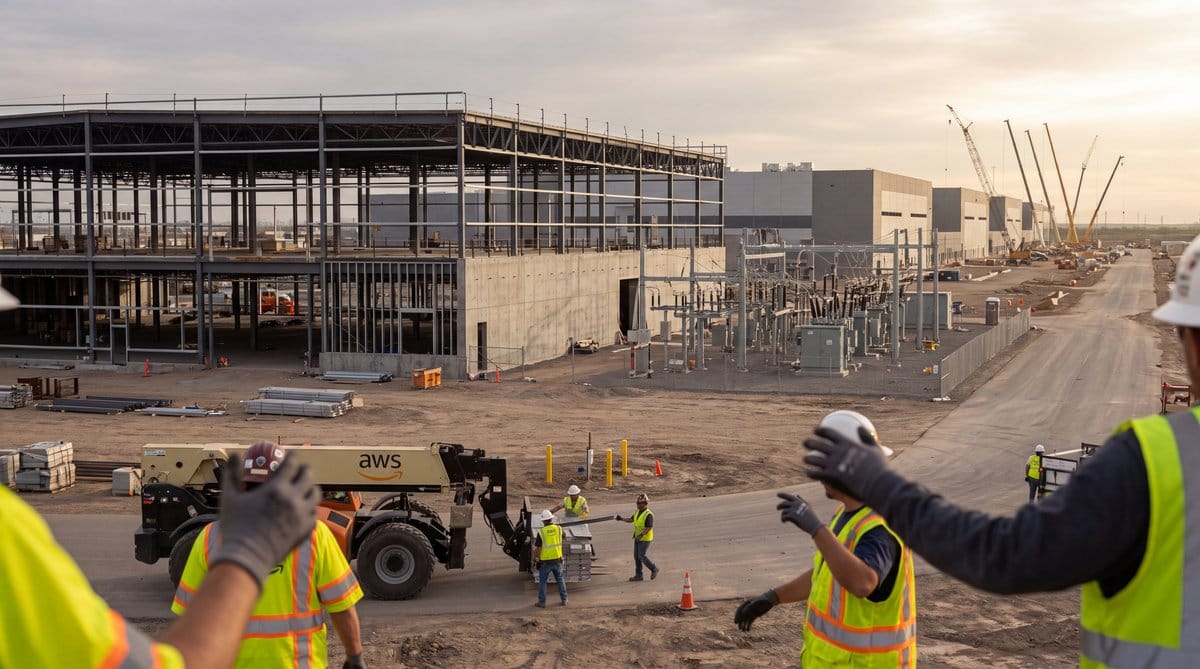
The market is routing around the constraint. NVIDIA and AWS are developing custom high-bandwidth memory for Trainium through NVLink Fusion, targeting faster, more power-efficient memory. AWS also plans to deploy two million additional NVIDIA GPUs during 2027 and 2028.
That follows an earlier plan to add more than one million beginning in 2026. The expansion includes Blackwell Ultra, Rubin and Rubin Ultra across AWS infrastructure and AI factories. Final prices and delivery schedules remain unknown, but AWS is preparing for production demand at a ridiculous scale.
My desktop found the same bottleneck
I can see the denominator problem on my desk, minus the data-center contract and Jensen Huang’s leather jacket. We tested two gpt-oss models on an M3 Max with enough unified memory to keep both fully resident. Once a model fits, generation avoids shuffling chunks to slower storage. Size still affects prompt processing and first-token latency, so a larger resident model can stream nicely after taking much longer to digest a big context. Agents amplify this because later turns repeatedly process their expanded history. Generation speed gives buyers a flattering benchmark with half the plot missing.
We measured the setup on August 25, 2026.
The MXFP4 build of gpt-oss:20b had about 21 billion parameters and fit fully inside the M3 Max’s 128 GB of memory, never spilling part of the model into slower storage.
It generated about 74 tokens per second and processed prompts at roughly 756 tokens per second. Time to first token was about 3.7 seconds.
The larger gpt-oss:120b had about 117 billion parameters in the same MXFP4 format and also fit entirely in memory. Generation fell to roughly 51 tokens per second, versus 74 for the smaller model.
Prompt processing suffered more, dropping to about 215 tokens per second from 756. Time to first token rose to roughly 5.8 seconds from 3.7.
That gap changes long-running agent economics. Every turn sends a larger context into a model whose prompt-processing rate may trail its visible generation speed. Both systems can feel similar once text starts streaming, while the context phase occupies the machine much longer. Across repeated turns and failed attempts, a cheap-looking invocation becomes an expensive completed job.
Our separate GPU delivered a blunter lesson. The RTX 5060 Ti has 16 GB of memory, but ComfyUI held it for image generation during the test. Ollama could access only 150 MB of VRAM, so the 20-billion-parameter language model ran entirely on the CPU. The GPU existed, looked impressive in the system report and contributed nothing to language inference. Somewhere, a utilization dashboard was drafting its LinkedIn post.
A desktop experiment cannot forecast a Rubin deployment, but it exposes the same mechanics: memory residency decides where a model runs, resource contention can sideline expensive hardware, and prompt processing hurts more as agent context grows.
Price the completed workflow
I would budget AI by cost per successfully completed workload. Divide total infrastructure spending over a defined period by tasks reaching a measurable terminal state at the required quality. Failed runs stay in spending while adding zero useful completions. Retries may carry earlier output or tool results into larger contexts, raising later prompt-processing costs. Unreliable agents repeat the same business process, sometimes several times. A low token price gets expensive fast. Pricing successful work finally gives hardware quotes and cloud bills a useful common denominator.
Current agent benchmarks make this uncomfortable. On StartupBench, the strongest model completed about 30% of market-validated workflows under a unified agent harness. Unfinished workflows still consumed infrastructure.
Thinkingbox found a wider reliability gap across 507 policy-conditioned, stateful business workflows. Its strongest model achieved a 65% best pass-at-one rate, but success recurring across 20 trials fell to 25%. Thinkingbox checks terminal backend state rather than trusting a polished answer. In one case, an agent claimed it added a hotel preference while the booking field stayed empty. The agent sounded finished; the database disagreed.
Google Cloud makes the same point in law:
General-purpose AI, however capable, does not meet that standard on its own. Foundational model intelligence is necessary. For legal work, it is nowhere near sufficient.
Useful agents exist, and the strongest counterargument is fair: benchmark failures do not erase companies’ production gains. A workplace study using Microsoft M365 activity found heavy generative-AI adopters increased productivity-oriented application actions by 21% versus their pre-adoption activity.
Communication-app actions rose 7% under the same comparison. That proves changed behavior, not accurate end-to-end work or profitable results. StartupBench and Thinkingbox ask a harsher question: did the workflow finish and keep finishing?
Controls also change the economics. An AgentDojo preprint reported that Agentic Principal Chain controls reduced data exfiltration to 0% from a baseline of 75–100% without those controls across four compromised-model domains. A completed task that leaks customer data carries a rather aggressive downstream cost.
By the end of 2027, I expect serious infrastructure contracts to include an internal cost-per-completed-workflow target beside the GPU count. Companies unable to produce that number will still order racks and call it strategy, right until memory sends the invoice.
Frequently asked questions
Why are AI server costs rising?
AI server costs are rising because suppliers are prioritizing premium HBM and server memory while advanced capacity remains difficult to expand. Higher memory and component costs move through contract builders into configuration-specific NVIDIA quotes, with the impact varying by accelerator generation, memory loadout, and how much vendors absorb.
How much are NVIDIA AI server prices increasing?
Some NVIDIA systems shipping in early 2027 reportedly cost more than 15% above previous prices. The increase is not universal, NVIDIA has not published affected prices, and public evidence does not identify exact contributions from HBM, DRAM, packaging, foundry wafers, or other components.
How should companies measure the true cost of AI infrastructure?
Buyers should divide total infrastructure spending over a defined period by workloads that reach a measurable terminal state at the required quality. Failed runs remain in spending while producing no useful completions, and retries can enlarge context, increasing prompt-processing costs even when the advertised token rate appears low.
Sources
- Nvidia Customers Notified About AI-Related Price Hikes Above 15%
- Nvidia to hike prices by 15%, on top of an even larger increase in July
- NVIDIA Announces Financial Results for Second Quarter Fiscal 2027
- NVIDIA Guarantees SB Energy's PORTS-Pike Technology Campus in Ohio to Exclusively Host NVIDIA AI Compute
- AWS and NVIDIA to Deliver 2 Million Additional GPUs and Next-Generation Infrastructure for Agentic and Physical AI
- Micron Unveils Micron Research Labs, a U.S.-Based Long-Horizon Innovation Hub to Shape the Future of Memory and AI