
13 Days Under the EU AI Act — Startups Pay the Bill
Europe’s AI rules reach foreign giants, but rushed guidance, fixed compliance costs and scarce compute leave local startups paying first.
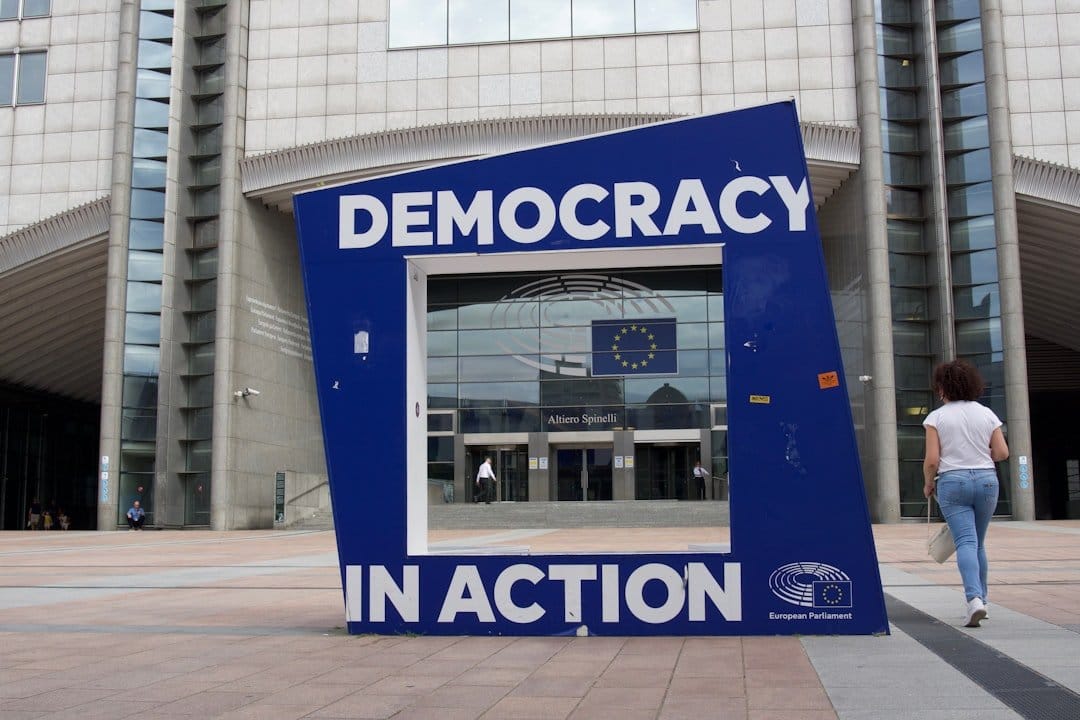
Europe’s AI rules apply worldwide. The companies closest to Brussels, with the least compute, capital and compliance staff, may still pay the highest price.
Brussels gave AI companies thirteen days between publishing its final Article 50 guidance on July 20, 2026, and enforcing the rules on August 2.
Thirteen days.
I’ve survived bad API migrations, surprise App Store reviews and one truly cursed payment-provider update.
Now imagine implementing “effective, reliable, robust and interoperable” machine-readable markings for AI-generated text in thirteen days. The underlying technology remains unsettled. The fine can reach €15 million.
Madonna mia. That’s a production incident with lawyers.
If you want to know whether the EU AI Act is helping or hurting European startups in practice, ignore the speeches for a minute and look at what product teams must ship. Transparency is a good principle. This calendar feels designed by somebody who has never deployed on Friday and spent Monday apologizing to customers.
I began this analysis ready to blame Brussels for kneecapping European AI. I’m passionately pro-EU, but love should survive criticism. Mine has already survived Italian bureaucracy, Trenitalia delays and several airport panini that qualified as crimes against the republic.
Then the evidence complicated my rant. American and Chinese providers fall within the Act when they serve Europe. Their scale and infrastructure let them absorb the costs much more easily.
Europe already suffers from scarce compute, fragmented growth capital, expensive energy and dependence on foreign platforms. The AI Act piles fixed compliance costs and late technical guidance onto those weaknesses. European scale-ups feel the extra weight first.
Thirteen days to ship an unsolved feature
From August 2, providers of chatbots, AI agents and avatars must tell users that they are interacting with AI. The European Commission’s Article 50 FAQ says that disclosure should happen during the first interaction. Burying it inside a privacy page three clicks deep won’t do.
Good. People deserve to know when a machine is speaking to them, especially as voice agents become convincing enough to fool my mother and customer-support bots remain irritating enough to fool nobody.
The Commission also requires covered generative systems to add machine-readable markings to synthetic text, audio, images and video. That takes considerably more work than adding a cute “✨ powered by AI” badge.
Enzai’s July 20 analysis of the final 51-page guidance found that providers relying on markings created by a foundation-model vendor or third-party tool still need evidence that those markings are effective and reliable. They also need to demonstrate robustness and interoperability.
For generated text, Enzai says tamper-resistant machine-readable marking remains technically limited. In founder language: the market hasn’t reliably solved the feature companies are now required to prove works.
Whenever somebody calls a new requirement “easy,” I reach instinctively for my wallet. Easy usually means six engineering tickets, two vendor calls and a lawyer billing in ten-minute increments.
The Commission did provide narrow escape routes. Standard spelling and grammar corrections can qualify for exemptions when they don’t substantially alter the input. Certain public-interest text also receives an exemption after human review under editorial responsibility.
The deadline stayed put.
According to the Commission FAQ and Enzai’s analysis, Article 50 violations can trigger penalties of up to €15 million or 3% of worldwide annual turnover, whichever is higher. The Commission says penalties should be proportionate for SMEs. That reassures me about as much as a waiter saying the fish is “probably fresh.”
Other parts of the Act received more breathing room after industry complaints. As The Register reported on July 20, standalone high-risk systems moved to December 2, 2027. High-risk AI embedded in regulated products moved to August 2, 2028.
Article 50 received no comparable delay.
Henna Virkkunen, the European Commission executive vice-president responsible for tech sovereignty, defended the guidance in the Commission’s July 20 announcement. She said it would make chatbots, agents and AI content “more transparent and trustworthy,” while supporting providers and deployers in meeting their obligations.
I agree with Virkkunen’s objective. I cannot defend thirteen days of implementation time when the required technology itself remains shaky.
Compliance doesn’t shrink with headcount
A disclosure flow needs product work. Machine-readable output markings require engineering and testing. Somebody has to chase Microsoft, Anthropic, Mistral or whichever model provider sits underneath the product and collect evidence from them.
Those jobs exist whether a company employs 80 people or 80,000.
Microsoft can spread the expense across Azure, Copilot Studio and millions of enterprise users. A 70-person startup spreads it across the budget already paying engineers, inference invoices and the salesperson desperately trying to close Deutsche Bank before quarter-end.
Axipro put useful numbers behind this problem. The compliance consultancy analyzed 3,519 English-language LinkedIn job advertisements published from June 1 through July 1, 2026, across eight EU countries.
It found 3,004 positions focused on building AI systems and 446 governance jobs. That works out to 6.7 builders for every governance hire.
Sweden had 16 AI-building vacancies per governance position. France had 11.4. Ireland had the most balanced ratio at 3.5, which still leaves the governance person attending several meetings that should have been emails.
Even the governance postings revealed a strange disconnect. Axipro found that 71.5% failed to mention the EU AI Act explicitly. Italy led the countries studied, yet only 45% of Italian governance vacancies named the law.
I’m from Ivrea, the town of Olivetti, and I studied computer engineering at Politecnico di Torino. I would love to interpret Italy’s lead as proof that we are Europe’s organized adults.
My experience with Italian paperwork suggests we’ve simply developed an advanced survival response.
Companies with 30 to 300 employees face the ugliest squeeze. They’re established enough to sell into banks, insurers and public institutions. Their payroll rarely includes separate legal and AI-governance departments.
Ali Hayat, Axipro’s founder and CEO, described it perfectly in a July 2026 EU-Startups article: “Large enterprises have compliance departments. Small companies mostly fall outside scope. The exposed group is the 30 to 300-person firm: regulated like the big players, staffed like the small ones.”
Those businesses feel the AI Act before any regulator sends an email. A July 2026 analysis from the International Association of Privacy Professionals found that European procurement teams were already asking vendors for AI inventories, logs, validation records and monitoring evidence.
A statutory deadline can move. A contract renewal with Allianz cannot.
Hayat made the commercial stakes clear: “Everyone’s pricing this as a fines question, and I think that’s the mistake. Yes, enforcement will be selective – but selective enforcement still needs examples, and nobody controls whether they’re chosen. The bigger shift is commercial. Compliance is becoming a product feature.”
That feature costs money before it generates any.

The funding data ruined my clean argument
European startup funding is having a strong year. This is the best evidence against my initial rant, and yes, I find it mildly annoying.
According to Crunchbase’s July 2026 data, European startups raised $24 billion in the second quarter, their strongest quarter in four years. First-half funding reached $42 billion, up 50% year over year. European AI companies alone raised more than $10 billion in Q2.
Four companies closed rounds of at least $1 billion: Isomorphic Labs, Stegra, Neura Robotics and Ineffable Intelligence.
Other European rounds covered by EU-Startups included €1.7 billion for Nscale, €200 million for Skello and €64.7 million for Viktor. NeuralTrust raised €17.2 million specifically to secure and govern enterprise AI agents.
Capitalism rarely wastes a good headache.
Deployment data also challenged me. A 2026 SAS readiness study reported by TechRadar found that European small businesses were ahead of North American peers in moving AI beyond pilots and into production.
SAS executive John Carey wrote, “Organisations treating governance as a foundation rather than an obstacle are often the ones best positioned to execute.”
I believe him. Clear records force teams to understand their own systems. That’s healthy because startup architecture diagrams have a mysterious tendency to become historical fiction.
Enterprise buyers care about model testing and data handling. They also want to know who takes responsibility when an automated decision goes sideways. A European vendor with clean answers can beat an American competitor whose governance package amounts to “trust us, bro.”
I was too dismissive of that advantage at first. There, I said it.
The funding numbers still split sharply by company size. Crunchbase found that 65% of all European funding in Q2 went to just 42 companies raising at least $100 million. Seed deal activity declined while late-stage rounds grew.
North American startups raised $392 billion in the first half of 2026. Europe raised $42 billion. I can enjoy an excellent plate of agnolotti without claiming it has the same mass as the Piedmontese Alps.
The SAS data carries a similar warning. Only 9% of surveyed businesses had fully embedded AI into their strategy, operations and decision-making. Compliance, security and risk management were the leading obstacle for 24% of respondents.
Well-funded European companies selling to regulated enterprises can turn governance into a sales advantage. Younger startups must finance the feature long before any procurement director rewards them for it.
Europe’s bottleneck has a power cable
Blaming the AI Act for every European AI weakness would be lazy. I enjoy blaming bureaucracy as much as the next Italian, but a compliance memo cannot train a frontier model.
The European Commission’s Expert Forum on Frontier AI brought together more than 100 people from model developers, industry, academia and government. Its 2026 findings put compute and the energy required to run it at the center of Europe’s immediate problem. Inadequate growth-stage capital sat close behind.
The forum described frontier models progressing in roughly three years from struggling with basic tasks to approaching the limits of current benchmarks. Its members warned that the next one to two years could determine whether Europe achieves a position of strength.
That timeline is brutal.
A startup can negotiate a legal bill. It cannot negotiate GPUs into existence after Microsoft, Google, Amazon and Meta have booked the capacity. Cheap, reliable energy has the same unforgiving quality.
According to the Commission’s forum, Europe produces world-class research and trains a major share of global AI talent. Frontier-model development remains concentrated overseas because European computing infrastructure and growth capital haven’t reached the required scale.
I see the dependency while working between Torino and Los Angeles. A European founder incorporates at home and hires excellent engineers in Paris or Milan. Then the product runs on AWS, calls an American model through an API and pays NVIDIA somewhere beneath the stack.
The logo on the pitch deck stays European. The margin quietly travels abroad.
The European Investment Bank and all 27 EU governments have effectively admitted the capital problem through the second European Tech Champions Initiative. Announced in 2026, ETCI 2.0 targets up to €15 billion in commitments and aims to mobilize as much as €80 billion for more than 1,500 European scale-ups.
The initiative plans to support over 100 funds, including up to 45 mega-funds. Average investment tickets for individual scale-ups could reach €200 million.
EIB President Nadia Calviño called it “a decisive step to address the funding gap for scale ups, making sure that ideas, technologies and innovative firms born in Europe can stay and thrive in Europe,” in the EIB’s 2026 announcement.
An intervention targeting €80 billion tells you how long this gap has been growing.
Foreign companies already own the road
American and Chinese companies have no blanket exemption from the AI Act.
Under Article 3 and the Commission’s Article 50 FAQ, providers outside the EU fall within the rules when they place systems on the European market or when their systems’ outputs are used inside the Union. A US company without a European office can still face the same Article 50 penalty tier: €15 million or 3% of worldwide turnover.
The asymmetry comes from economics.
A hyperscaler can build one compliance layer and distribute it across thousands of products. Contract terms push some configuration duties onto customers. Enterprise tooling then turns governance into another paid feature.
A European startup using that platform inherits two bills. One pays for tokens or infrastructure. The other pays its own team to prove that the upstream markings work.
The Microsoft-Mistral partnership announced on July 21, 2026, captures Europe’s sovereignty dilemma almost too perfectly. The companies announced a multibillion-dollar infrastructure expansion using thousands of NVIDIA Vera Rubin GPUs. Mistral Medium 3.5 and OCR 4 also joined Microsoft Foundry.
Customers will be able to deploy across Azure’s cloud, connected environments and fully disconnected setups. That matters for European banks and public institutions with strict data requirements.
Arthur Mensch, Mistral’s co-founder and CEO, explained the upside in Microsoft’s July 21 announcement: “With Microsoft as our partner, our models reach enterprises and public institutions at global scale – delivered through a platform trusted for the most demanding, regulated workloads and available everywhere our customers operate.”
I want Mistral to win. Europe desperately needs companies like it.
I also see the dependency inside Mensch’s sentence. One of Europe’s strongest AI champions reaches global scale through an American distribution platform, running NVIDIA hardware and packaged through Microsoft’s compliance machinery.
Microsoft is investing in Europe and gives Mistral access to customers it would take years to reach alone. Its position also lets it commercialize the regulatory burden from above the application layer, where smaller European companies pay rent.
China applies pressure from another direction. A July 21 Le Monde analysis pointed to DeepSeek, Moonshot and Zhipu AI as providers of near-frontier performance at dramatically lower costs than many American alternatives.
At Xi Jinping’s July 17 conference in Shanghai, representatives from 29 countries signed the founding document for a World AI Cooperation Organization. China is pairing cheaper models with state-backed diplomacy, especially in markets where price matters more than a marginal benchmark advantage.
Le Monde landed the warning with unusual precision: “Without industrial ambition to match its principles, Europe’s rules risk binding no one but itself.”
I’d tape that sentence to every desk in the Berlaymont.
American companies own much of the cloud and model distribution. Chinese companies are making capable AI cheaper abroad. European startups get PDFs asking them to demonstrate interoperable text markings.
Bold.
Turn compliance into public infrastructure
I want Europe to keep high standards. I also want Brussels to stop making every startup build the same disclosure flow and evidence format from scratch.
Shared technical components would cut EU AI Act startup compliance costs immediately. The Commission could publish reference implementations for chatbot disclosures and open testing tools for output markings. It could define one vendor-assurance format accepted across the bloc.
“A robust and interoperable marking” is a legal instruction. Developers need a working library and test suite, plus documentation containing actual examples.
National implementation makes this urgent. A Vorp Labs tracker compiled on July 11 from Future of Life Institute and Commission sources found that only nine of 27 member states had clearly designated both principal AI Act authorities.
Twelve countries had partial arrangements. Six remained unclear, despite an August 2025 deadline for designating authorities.
The substantive law may be uniform, yet a French startup, an Italian regulator and a German enterprise buyer can encounter very different levels of institutional readiness. Local companies are also easier to inspect than a distant provider with no European office and several floors of international counsel.
The Commission already has pieces of a better approach. Companies signing the Article 50 Code of Practice receive a presumption of conformity for relevant marking and labeling duties. Founders then have a clearer route than proving an independent method from scratch.
A Commission feasibility study is also evaluating an EU-level registry for text-and-data-mining opt-outs. The proposed system could use work identifiers, content fingerprinting and metadata to help AI developers detect protected material reserved by rights holders.
I like this approach because compliance becomes shared infrastructure. One registry can remove ambiguity for thousands of model developers.
Article 50 needs the same treatment. Europe should fund open marking tools, maintain test environments and run an EU help desk that answers operational questions within days. The planned €80 billion scale-up program should include this plumbing. Giving founders capital so 1,500 companies can solve the same regulatory problem independently would be peak Europe, and I say that with affection.
Enforcement needs visible symmetry too. If Article 50 reaches foreign providers, the Commission and national authorities should publish evidence showing that large non-EU platforms receive the same scrutiny as locally established scale-ups.
Founders will otherwise assume that proximity to Brussels increases their odds of becoming the convenient example.
I’ll judge Brussels by one boring test on August 2, 2027: can a 50-person startup comply by installing the EU’s tools, or is it still paying lawyers to interpret a PDF?
Europe’s AI sovereignty will live inside that answer.
Frequently asked questions
Is the EU AI Act helping or hurting European startups?
In practice, the EU AI Act can help mature European vendors sell governance to regulated buyers, but its fixed compliance work, late technical guidance and infrastructure demands weigh most heavily on smaller scale-ups. Foreign hyperscalers face the same rules yet can distribute compliance costs across far larger platforms and customer bases.
What does Article 50 require AI startups to do?
Article 50 requires providers of chatbots, AI agents and avatars to disclose AI interaction during the first interaction. Covered generative systems must also add machine-readable markings to synthetic text, audio, images and video, with evidence that those markings are effective, reliable, robust and interoperable.
Why are smaller European AI companies more affected than large providers?
Disclosure flows, output markings, testing and vendor evidence create fixed work regardless of company size. A hyperscaler can spread that expense across many products and millions of users, while a 30-to-300-person company often lacks separate legal and AI-governance departments and must fund compliance from its existing operating budget.
Sources
- Transparency obligations under Article 50 of the AI Act
- AI Office publishes frontier AI expert findings on EU competitiveness, sovereignty and security
- Europe has no answer if China follows the US in limiting its AIs
- EU's AI experts urge bloc to triple AI compute share
- EU gives more wiggle room on labelling AI deepfakes
- Europe’s AI enforcers pick up their tools at critical time