
China Robotics Supply Chain Turns Demos Into Power
Shenzhen’s robot spectacle matters less than the factories behind it, where China is building a robotics supply chain at industrial speed.

A robot doing kung fu on a trade-show floor is not the story. The China robotics supply chain is the story: the factory three subway stops away making the motors, reducers, batteries, sensors, and control boards that turn a goofy demo into a real product.
That’s what I kept thinking while watching clips from the Shenzhen robot fair covered by Wired Italia. Everybody online was doing the usual routine: wow, creepy, lol, Black Mirror, rinse, repeat. Fair enough. A humanoid waving at people and shadowboxing for cameras does look a little like CES got drunk and started quoting sci-fi. My first reaction was basically: bella roba, but is this useful or are we all getting hypnotized by expensive animatronics with better posture than me?
Then I stopped looking at the robot and looked at the machine behind the robot.
That changes the whole picture.
Because China is not treating these fairs as pure spectacle. It’s using spectacle as marketing for something much bigger: an entire robotics supply chain, backed by factories, local governments, standards bodies, deployment partners, and capital markets that know how to turn awkward prototypes into cheap, available, good-enough systems at terrifying speed.
I’ve seen enough startup theater to know the sexiest demo rarely wins. The winner is usually the one that controls distribution, drives costs down, survives integration hell, and keeps shipping while everyone else is still polishing the keynote. In other words: operations. The least romantic word in tech, and the one that matters most.
That’s why China’s robot boom matters. Not because a humanoid can wave, jog, or make small talk in two languages. Because this looks a lot like an attempt to industrialize embodied AI the same way China industrialized EVs.
And if that sounds dramatic, good. It should.
The Shenzhen robot fair is theater. The real business is the China robotics supply chain
The Shenzhen robot fair did what trade fairs are supposed to do. It created clips. Crowds. Noise. Social posts. The kind of visual chaos that makes the internet decide, for 48 hours, that robotics is either the future of civilization or a complete joke.
Neither reaction is very useful.
The important question is not whether the demo looks cool. It’s whether somebody can mass-produce the boring parts: actuators, motor controllers, batteries, cooling systems, machine vision modules, reducers, deployment software, maintenance services. If one company has a charming humanoid and another country has the entire component stack plus the factories to make it cheaper every quarter, I know where I’m putting my money. I like cool demos as much as the next overcaffeinated founder, but I like being right more.
That’s also why a lot of Western commentary feels weirdly shallow to me. We treat the spectacle as the point. China seems to treat the spectacle as customer acquisition for an industrial strategy.
MERICS has been pretty direct about this: China wants to turn its strength in industrial robots and EV supply chains into an embodied-AI advantage. That’s the line that matters. Not “China likes robots.” Not “investors are excited about humanoids.” This is a country trying to stack new capability on top of capability it already spent years building.
That compounds.
And the base is already huge. The International Federation of Robotics said China had around 2 million industrial robots in operational stock, the largest in the world. IFR also reported 166 robots per 10,000 manufacturing workers in 2024, up 17% year over year. Those are not vanity stats. That’s infrastructure.
Infrastructure changes the game in hardware because hardware learns through contact with reality. You don’t get better robots by tweeting harder. You get better robots by putting them in factories, breaking them, fixing them, sourcing better parts, shrinking costs, and repeating the loop until version 1.7 is less embarrassing than version 1.2.
That loop is where China is dangerous.
Bloomberg framed it the right way: the real question is not who has the flashiest demo, but who can bridge the gap between “look what this robot can do on stage” and “this thing is useful in warehouses and factories.” Exactly. Demo-to-deployment is the whole sport.
And China, love it or hate it, is unusually good at that conversion.
We keep mocking the robot demo. China keeps improving the hardware
I get why people laugh at janky robot videos. I laugh too. If a humanoid falls over, crashes into a barrier, or walks like it spent all night in Navigli on cheap Negronis, the internet is going to have a field day. That’s just the law.
But using those clips as proof that the category is fake is lazy analysis.
Hardware gets better through ugly iteration. Always has.
The best example is probably China’s robot half marathon in Beijing, which sounds ridiculous enough to trigger instant mockery. A humanoid race? Come on. Of course people dunked on it. AP reported that one robot fell flat at the start and another bumped into a barrier. If you wanted content for a smug podcast segment about how humanoids are overhyped, the material was right there.
But the trajectory matters more than the bloopers.
According to AP, the winning humanoid from Honor completed the 21-kilometer race in 50 minutes and 26 seconds. Important caveat: it was not fully autonomous. That matters. I’m not here to cosplay as a fanboy. If the robot needed help, the robot needed help.
Still, Semafor noted that last year only 6 of 21 robots finished, and the fastest took 2 hours and 40 minutes. This year, the winner came in under 51 minutes. That is a massive jump. Not “nice progress.” A real jump.
That tells me the engineering loop is working.
In hard tech, ugly progress is usually the only kind you get for a long time. Then one day the thing works well enough and everybody pretends the outcome was obvious from the start. Same movie every time.
I think a lot of software people, especially in the US, judge robotics like they judge polished consumer launches. Clean UI, perfect demo, instant magic. Factories do not work like that. Real deployment is thermal issues, firmware patches at midnight, weird calibration bugs, replacement parts stuck in transit, and one exhausted engineer saying things that would get him exiled from LinkedIn forever.
That’s why one AP quote from Honor engineer Du Xiaodi jumped out at me:
Looking ahead, some of these technologies might be transferred to other areas. For example, structural reliability and liquid-cooling technology could be applied in future industrial scenarios.
There it is.
Not the race. Not the applause. Structural reliability and liquid cooling. The most unsexy phrase imaginable. Which is exactly why it matters. The public event is the wrapper. The business is whatever gets transferred into industrial use.
So no, the robot falling over does not reassure me. It does the opposite. It tells me the public demo is functioning as a stress test with branding attached.
Silicon Valley would call that a launch.
This is not just a startup trend. It’s industrial policy with a battery pack
Here’s where the conversation stops being fun internet content and starts being serious.
China is not “bullish on robotics” in the vague VC sense where five investors hear the same pitch at dinner and suddenly a whole category is hot. It has made humanoids and embodied AI a strategic priority. That changes everything: timelines, funding, incentives, pricing, and how much pain companies can absorb while they scale.
Jamestown says Beijing wants a world-class robotics supply chain ecosystem by 2027. Read that again slowly. Not a few breakout startups. Not “innovation leadership.” A supply chain ecosystem. Those words are doing real work. They imply coordination between capital, manufacturing, standards, policy, and deployment.
Jamestown also notes that the 15th Five-Year Plan (2026–2030) identifies embodied AI and humanoid robots as critical “new tracks.” Once something enters that language, you are no longer watching an ordinary market story. You are watching a state-backed industrial bet.
And when a state makes that kind of bet, it can build ladders that startups alone usually can’t.
Unitree is a good example. Jamestown reported that the Shanghai Stock Exchange accepted Unitree Robotics’ $610 million IPO application on March 20. The same report says Unitree disclosed RMB 76 million in tax incentives in the first nine months of 2025, plus RMB 32 million in direct government grants between 2022 and September 2025. That is not subtle support. That is policy with a giant arrow pointing at the company.
Jamestown’s description of China’s “little giant” enterprise system sounds almost adorable, until you realize it’s basically a mechanism for funneling subsidies, tax breaks, and regulatory advantages toward firms the state wants to scale. Local governments are a big part of that engine. Which makes sense. China has done versions of this before in other industries.
It builds ecosystems, not just companies.
Meanwhile, in the US, we still cling to this almost religious belief that every frontier industry will somehow sort itself out through startups, cloud credits, and one charismatic founder in suspiciously expensive sneakers. I say this as a founder: I love startups. I do not love startup mythology.
A while ago in New York, I had dinner with another founder who kept insisting, “The best product wins.” I nearly choked on my pasta. No, amico. The best shipped product wins. At the right price. With the right integration path. Inside the right procurement environment. The rest is TED Talk wallpaper.
That’s why China’s robotics push feels less like a trend and more like a supply-chain land grab.
Yes, China still has a software gap. That may not save anyone
To be clear, this is not one of those “China wins everything” pieces. That genre is as dumb as the robot-dunking.
There are real bottlenecks.
MERICS points to familiar constraints: dexterity, precision, reliance on Nvidia for important software and compute layers, and the still-high cost of commercial deployment. Semafor made a similar point: China’s software still lags the US, even as its hardware momentum looks strong. That sounds right to me.
Software matters. A lot. A humanoid that can move but can’t generalize, manipulate reliably, adapt to messy environments, or operate economically is still mostly a very expensive intern. Enthusiastic. Impressive in interviews. Not someone you leave unsupervised.
Bloomberg’s framing helps here too. The real threshold is whether progress in learning, actuation, and general-purpose control gets good enough to make robots useful in factories and warehouses. Not entertaining. Useful.
But here’s the part I think people underestimate: software gaps can close faster when one side has more real-world deployment loops.
Embodied AI is not pure software. Intelligence here gets shaped by contact with friction, heat, timing, clutter, broken components, inconsistent materials, and humans who refuse to behave like benchmark datasets. Reality is rude. Very Italian aunt energy. It does not care about your roadmap.
So if China keeps putting robots into factories, warehouses, pilot programs, and public events at scale, it generates something incredibly valuable: industrial data and implementation experience. Not just training data in the abstract. Failure data. Maintenance data. Sensor data. Human-robot interaction data. Edge cases. The stuff that actually makes systems better in the real world.
That’s why Du Xiaodi’s quote stuck with me. He wasn’t talking about some sci-fi fantasy. He was talking about structural reliability and liquid-cooling transferring into industrial settings. Boring words. Dangerous words, if you’re a competitor.
Because boring is where dominance starts.
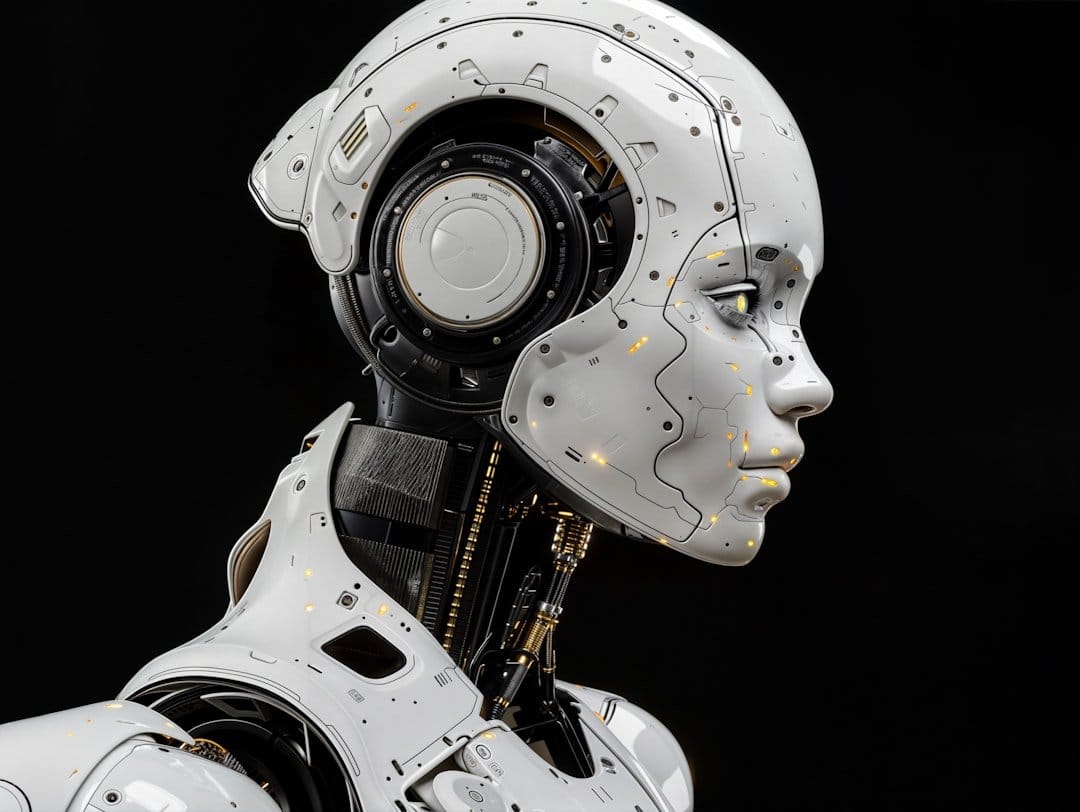
The winners in robotics may look less like Tesla and more like Foxconn with AI
This is the part people hate because it’s not glamorous.
The most dangerous robotics companies often stop looking exciting right before they become serious. When they’re still doing viral demos, everyone pays attention. Once they start talking about systems integration, service contracts, OEM relationships, implementation timelines, and maintenance networks, normal people tune out immediately.
Big mistake.
That boring layer is where market power hides.
One of the most revealing moves here came from Agile Robots, which Automation World reported acquired thyssenkrupp Automation Engineering assets in Europe and North America, with thyssenkrupp operations continuing as Krause Automation. That brings more than 75 years of engineering and implementation experience into the picture. If you care about actual industrial adoption, that matters a lot more than another humanoid doing a backflip for the timeline.
Agile Robots CEO Zhaopeng Chen said the goal is this:
Complete manufacturing systems where every element is intelligent, interlinked and continuously learning.
That’s the real ambition. Not “look at my robot.” More like: I want to sit inside your factory architecture and become hard to remove.
That’s a much stronger position.
And honestly, the winning category may not even be “humanoids” in the sci-fi way people imagine. It may be broader physical AI systems: robot arms, mobile platforms, vision systems, workflow software, and specialized humanoid form factors where they actually make sense. Less I, Robot. More machine labor stack.
AP’s Hong Kong coverage points in that direction too. At two exhibitions in the Hong Kong Convention and Exhibition Centre, more than 100 robots were on display. One standout was AGIBOT’s X2 Ultra, speaking Mandarin and English, describing people in the crowd, doing the whole “friendly helper, definitely not unsettling” routine every social robot has to learn.
Calvin Chiu, COO of Novautek Autonomous Driving and AGIBOT’s agent in Hong Kong, said:
It would be like a friend.
Sure. Personally, I already have enough friends who disappear when their battery is low.
The more important part of that AP report was Omdia’s ranking: AGIBOT, Unitree, and UBTech were the only first-tier vendors globally by shipment numbers. All three shipped more than 1,000 units, with AGIBOT and Unitree above 5,000 units. Shipment numbers are not everything, but they are not nothing. Units in the field beat vibes on stage every single time.
My hot take is that the eventual winners in robotics may look less like Tesla and more like some cursed hybrid of SAP, Foxconn, and a systems integrator you’ve never heard of until it quietly owns half the workflow.
Not sexy. Very powerful.
The dual-use part is not a footnote
We should also stop pretending this is purely commercial.
I’m not saying every warehouse robot is secretly a military project. Let’s not do Cold War fan fiction. But if a state builds robotics standards, elite-firm support systems, component self-sufficiency, manufacturing capacity, and broad deployment know-how, the line between civilian and defense relevance gets blurry fast.
Jamestown is pretty blunt about this. It argues that newly established standardization committees are positioned to “harvest commercial innovations” and integrate them into the state’s broader defense apparatus. That’s not some paranoid aside buried in a footnote. It’s part of how serious policy watchers understand the ecosystem.
The same report says civilian robotics support may deepen links between commercial firms and defense-related priorities. That doesn’t mean your factory bot is marching off to war tomorrow. It means embodied AI is strategic infrastructure. The manufacturing base matters. The software stack matters. The standards process matters. The deployment know-how matters. Modern states think in systems.
AP’s Hong Kong report also noted that Beijing’s latest five-year plan explicitly vows to “target the frontiers of science and technology”, with humanoid robots included in that push. It cited official data showing China had more than 140 humanoid-robot manufacturers and more than 330 models in 2025.
Those numbers are kind of insane.
Not because all 330 models matter. Most won’t. But scale like that creates experimentation, supplier demand, competition, failure, and eventually consolidation. That’s how ecosystems get built. Messily first, then suddenly.
And this is where Western observers get uncomfortable, because it forces a bigger admission: we are not just watching product development. We are watching capability formation. Industrial capability. National capability. Strategic capability.
I used to think robot geopolitics was a little overcooked, to be honest. Too much chest-thumping, not enough shipping. I cared more about product-market fit than flags. But the deeper I get into this category, the harder that separation becomes. If embodied AI ends up inside factories, warehouses, logistics, infrastructure, elder care, and defense-adjacent systems, then this is not some niche hardware story.
It’s a power story.
And the West has a bad habit here. We laugh at the early demos, outsource the ugly middle, then act shocked when someone else owns the mature supply chain. We did versions of this with solar, batteries, and chunks of EV manufacturing. We love invention. We get bored by scaling, standardizing, financing, and integrating, which is unfortunate, because that’s where the winners get made.
So my bet is simple: the biggest robotics winners of the next five years won’t look like sci-fi companies. They’ll look like supply-chain companies with AI attached.
That’s the thing hiding in plain sight at the Shenzhen robot fair. The dancing robot is not the product. The robot is the billboard.
The product is the operating system for physical labor.
And if we keep treating this as meme content instead of industrial reconnaissance, we’re going to wake up one day and realize the circus wasn’t a circus at all. It was the ribbon-cutting.
Sources
- Embodied AI: China’s ambitious path to transform its robotics industry
- Policy Support for Robotics Firms Shows Defense Integration
- Why Humanoid Robots Are the Ultimate AI Frontier
- China’s robot half marathon shows off humanoid advances
- A humanoid robot sprints past the human half-marathon world record in Beijing race
- Humanoid robots show off their language and boxing skills in Hong Kong