
Apple Ecosystem Lock-In Makes Control Feel Premium
Apple no longer just sells devices. It sells a seamless permission system that turns convenience, repair limits, and platform power into luxury.
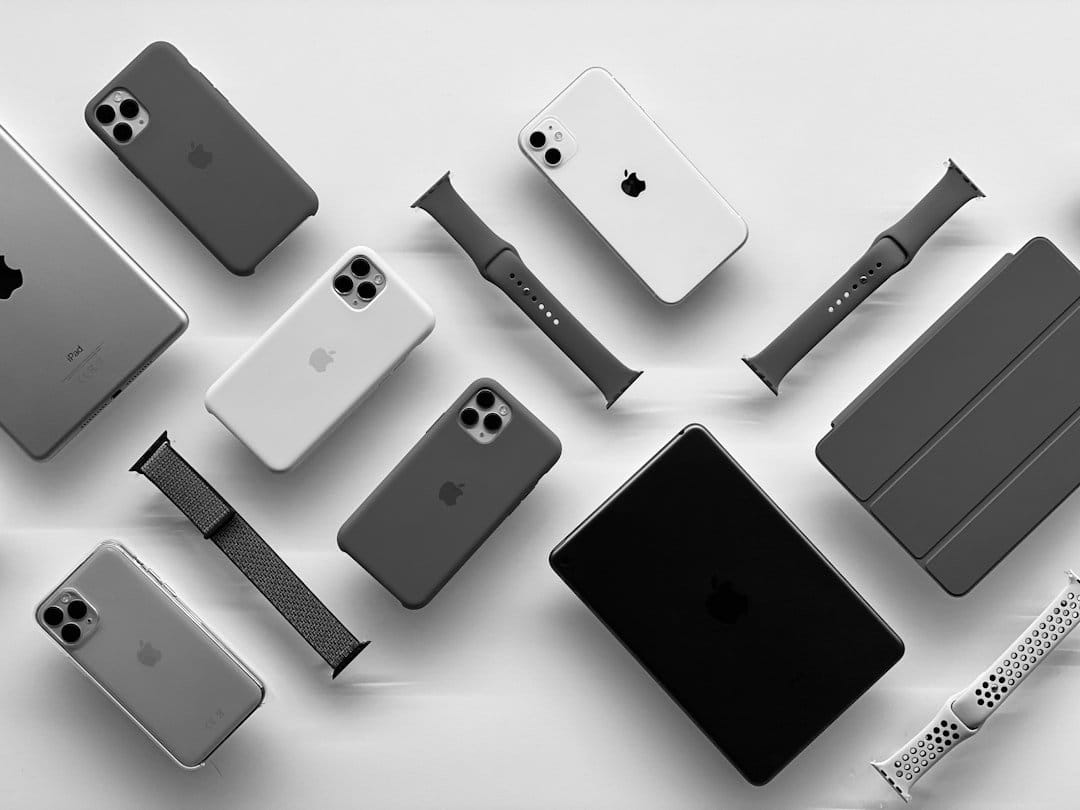
I complain about Apple constantly, then I buy the thing anyway. Not always on launch day — I still have some dignity, più o meno — but close enough to make my complaints sound fake.
That’s what makes Apple interesting right now. Not “the cameras are better” or “the chip is faster.” Boring. Apple ecosystem lock-in is the real story. Apple figured out how to make control feel like good taste. It turned ecosystem lock-in into a lifestyle choice.
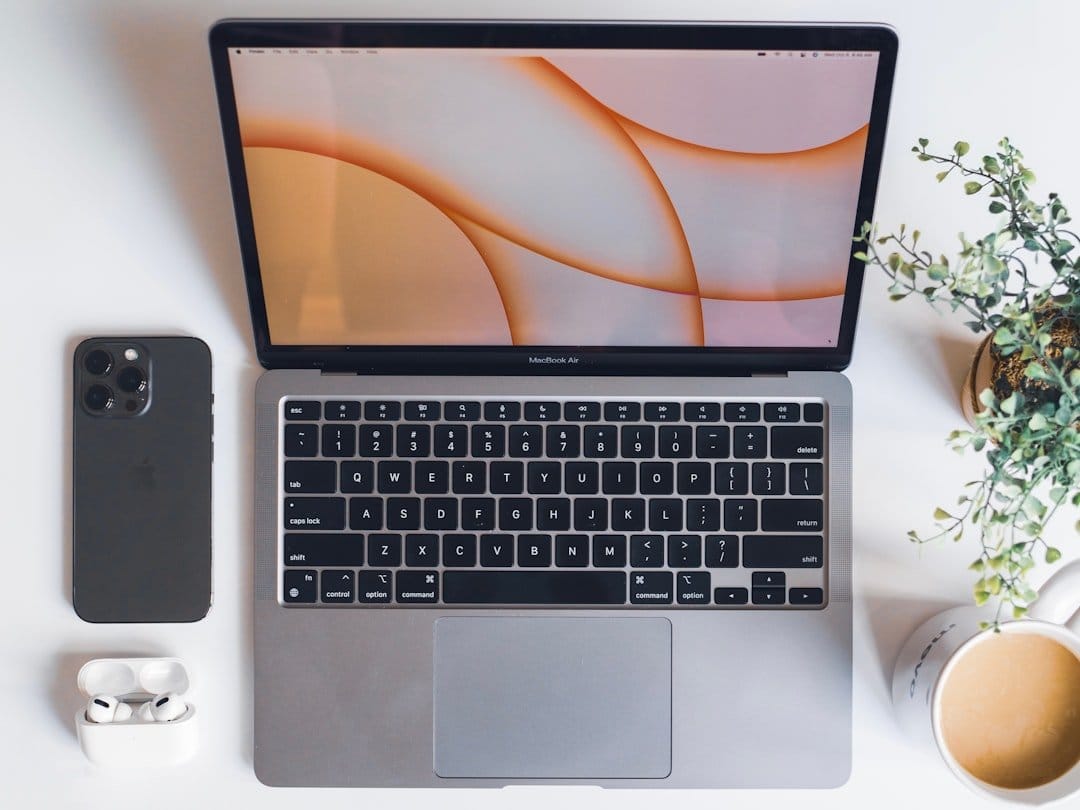
A few weeks ago in Milan, I watched a friend unlock his MacBook with his Apple Watch, answer a call on AirPods, pay for coffee with Apple Pay, then AirDrop me a file without pausing the conversation. It was smooth. Elegant. Slightly disgusting. And I had the same thought I always have when Apple stuff works exactly the way Apple wants it to work: the fence is invisible, so we call it convenience.
The Apple ecosystem lock-in is the product
Apple’s moat in 2026 isn’t raw innovation. It’s orchestration.
That sounds less sexy than “revolutionary breakthrough,” sure. But it’s the truth. Apple doesn’t need to invent teleportation if your iPhone, Mac, AirPods, Watch, payments, photos, passwords, and subscriptions already behave like one continuous object. The magic isn’t any single device. It’s the handoff between them.
The AirPods Max 2 are a good example. Ars Technica reported that Apple added the H2 chip, with active noise cancellation “up to 1.5 times more effective” than the original, plus adaptive audio, Conversation Awareness, voice isolation, and live translation tied to Apple Intelligence. None of that alone changes the world. Together, inside the Apple ecosystem, it changes behavior. You stop thinking about alternatives because the default path gets too frictionless.
That’s the trick. Apple doesn’t really sell me one feature anymore. It sells me the feeling that everything in my life has already been approved to cooperate.
As a founder, I respect the hell out of that. Anyone who has ever tried to make a bunch of products play nicely together knows how ugly it gets. APIs break. Sync fails. Permissions go weird. Half your roadmap becomes couples therapy for systems that were never supposed to be in the same room. Apple avoids that by arranging the marriage at birth.
The numbers tell the story. In Apple’s 2025 services update, the App Store had more than 850 million average weekly users globally, and developers had earned over $550 billion since 2008. That’s not some cute side business attached to the iPhone. That is the business. Hardware gets you in the door. Services make sure you keep living there.
And once you try to leave, you realize how much of your life is actually built on tiny Apple habits. Not just the obvious stuff like iMessage or AirDrop. I mean passwords autofilling without drama, notes showing up where you need them, Find My saving your ass, Apple Pay muscle memory, copy-paste between devices, your watch unlocking your laptop when you’re too lazy to type. You don’t lose a phone. You lose rhythm.
That’s why I think the Apple ecosystem is the real product now. The iPhone is just the front door.
Apple repairability: luxury means you’re not supposed to open it
Here’s where the polished Apple story gets funny in a dark little way.
Apple wants praise for design, sustainability, and long-term value. Then you try to repair the damn thing and suddenly you’ve committed a crime against the crown.
The PIRG Education Fund’s Failing the Fix 2026 report gave Apple a C-minus for laptop repairability and a D-minus for cell phone repairability, the worst scores among major brands in the study. Ars Technica covered it pretty plainly: Apple landed at the bottom.
And before the Apple defenders start typing “actually,” the methodology wasn’t random. PIRG used the French repairability index, then weighted heavily for physical ease of disassembly, along with repair documentation, spare-parts availability, spare-parts affordability, and other product-specific criteria. In normal-person language: can a human being, or an independent repair shop, fix this thing without summoning a Cupertino priest?
That’s always been Apple’s sore spot. The company loves the idea of durability. It loves using words like “built to last.” But repairability as a lived experience? Madonna. Then it’s glue, serialization, parts pairing, controlled channels, and a general vibe that if you wanted to open your own laptop, maybe you’re the problem.
PIRG also deducted 0.5 points for membership in trade groups like TechNet and the Consumer Technology Association, both linked to opposition to right-to-repair legislation. Which matters, because repair isn’t just a design choice. It’s political. Apple isn’t only making products that are hard to open; it has also benefited from a system that keeps users dependent on approved repair paths.
That part gets brushed aside too often. We talk about these companies like they’re weather systems. “Oh well, the market evolved this way.” No. Someone made decisions. Someone lobbied. Someone decided that ownership should stop the second you reach for a screwdriver.
Yes, there’s nuance. Ars noted the MacBook Neo as “a step in the right direction.” Great. Sincerely. But Apple usually improves repairability the way a teenager cleans his room when he hears his mother on the stairs. Not from conviction. From pressure.
My nonna would kill me for this comparison, but Apple’s sustainability story sometimes feels like luxury fashion. Beautiful materials. Careful packaging. Big talk about longevity. Then the quiet assumption that you, peasant, are not supposed to alter the garment.
That’s the whole Apple repairability problem in one line: Apple wants the moral credit for products lasting longer without giving up much control over who gets to keep them alive.
The App Store is basically a border checkpoint
If hardware is where Apple’s control feels physical, software is where it starts feeling governmental.
Apple says the App Store supports 44 currencies across 175 storefronts. Read that again. Forty-four currencies. One hundred seventy-five storefronts. That’s not just a store. That’s infrastructure with nicer typography.
In June, Apple announced App Store pricing updates for Egypt, Ivory Coast, Nepal, Nigeria, Suriname, and Zambia, tied to tax and VAT changes. Ivory Coast got 18% VAT. Nepal got 13% VAT plus a 2% digital services tax. Zambia got 16% VAT. Apple also updated its agreements to clarify where it collects and remits those taxes.
I’m a founder, so this gives me two emotions at the same time: gratitude and low-grade nausea.
On one hand, this is real work I absolutely do not want to manage myself. Cross-border pricing is chaos. Tax compliance is chaos wearing a blazer. If Apple wants to normalize prices, process currencies, and handle local tax weirdness, bene. That saves startups a ton of pain.
On the other hand, convenience always comes with a transfer of power. Apple doesn’t just distribute apps. It sets commercial conditions, interprets tax shifts, manages proceeds, decides how storefront pricing behaves, and controls the rails. If you build on iOS, you’re not just shipping software. You’re negotiating with a private government that also happens to sell titanium phones and meditation playlists.
The scale is what makes this impossible to ignore. Apple’s 2025 services update said Apple Pay is now in 89 markets, has prevented well over $1 billion in fraud, and generated more than $100 billion in incremental merchant sales globally. Those are not “nice feature growth” numbers. Those are system-level numbers.
And I don’t think Apple is lying when it talks about trust, safety, and simplicity. I think that story is just incomplete. A system can genuinely protect users and still become a toll booth.
That’s the genius of Apple’s strategy. The toll booth is beautiful. The line moves fast. The staff are polite. So most people stop asking why there’s a toll booth at all.
Apple sustainability is real — and still very convenient for Apple
I don’t want to do the lazy internet thing where any company bigger than a bakery is automatically fake when it talks about climate. Apple’s sustainability work is real.
In its April 2025 environmental update, Apple said it had passed a 60% reduction in global greenhouse gas emissions versus 2015 levels. Its Apple 2030 plan targets a 75% reduction before carbon credits. The company says there are now 17.8 gigawatts of renewable electricity online in its global supply chain, plus 99% recycled rare earth elements in all magnets and 99% recycled cobalt in all Apple-designed batteries.
Those are serious numbers. Not keynote confetti. Not a green leaf icon slapped on a slide between drone shots of California. Real supply-chain work. Expensive work, too. Nobody is trying to impress a date in Brooklyn by talking about recycled cobalt sourcing. This is operations. Apple actually did it.
And that’s what makes the tension more interesting, not less.
If you’re serious about reducing waste, why are Apple repairability scores still so bad? Why is recycling always framed as heroic, while independent fixing still feels like something Apple tolerates only when regulators are breathing down its neck? Why does the company seem much more comfortable taking products back into its own loop than letting a broader repair economy exist around them?
Apple’s Earth Day push invited customers to recycle devices in-store with a special offer through May 16. Useful. Smart. Better than landfill. Also very on-brand. Apple would often rather reclaim the old device itself than let the messy aftermarket have too much agency over what happens next.
That’s the pattern. Apple sustainability is not just environmental policy. It’s lifecycle management. Cleaner energy, cleaner materials, cleaner messaging — all inside a system where Apple still wants to decide the next move.
I’m not saying that’s evil. I’m saying it’s not neutral.
Accessibility is where Apple’s closed model actually wins
This is the annoying part, because here Apple’s control often produces genuinely better outcomes.
When hardware and software are tightly integrated, accessibility features don’t feel bolted on. They feel native. And if you rely on those features, “native” is not some marketing adjective. It’s the difference between confidence and chaos.
Apple’s own updates show how broad that approach has become. In Apple Music, Lyrics Translation and Pronunciation can break down language barriers inside the app. In Maps, Preferred Routes and Visited Places use on-device intelligence. In Wallet, Apple says Apple Intelligence helps users track orders more easily. Not all of that is accessibility in the narrow legal sense, but it’s part of the same pattern: assistive, context-aware computing built into the platform itself.
That consistency matters more than the internet likes to admit. A fragmented ecosystem can eventually offer similar features, sure. But “eventually” is doing a lot of work there. Patchwork accessibility is still patchwork.
Take voice isolation on the AirPods Max 2. For me, that’s a convenience feature because I take too many calls from cafés where the espresso machine sounds like a Ducati having a panic attack. For someone else, cleaner audio processing can be the difference between staying in the conversation and dropping out of it. Same feature. Very different stakes.
I’ve seen this firsthand with a family friend in New Jersey who relies heavily on Apple’s accessibility settings across iPhone, iPad, and Mac because the consistency lowers cognitive load. She doesn’t want twelve workaround apps from developers who may or may not still exist next year. She wants the same logic, the same gestures, the same reliability, everywhere. Apple is unusually good at that.
And this is why the Apple debate never stays simple. The same instinct for control that limits openness can also create more humane computing for the people who need dependable systems most. I hate admitting that because it ruins my clean anti-Apple rant, but life is rude like that.
Tim Cook built the most polite monopoly in tech
We’re at a weird moment for Apple, which makes this the right time to ask what Tim Cook actually built.
Ars Technica reported that John Ternus will replace Tim Cook as CEO, with Cook becoming executive chairman. That’s a huge symbolic shift. It also forces a question people weirdly avoid because Cook is so calm and untheatrical: what is his real legacy?
Andrew Cunningham at Ars put it perfectly when he wrote that under Cook, Apple became “hugely successful, if not always surprising.” Exactly. Cook didn’t build his reputation on sci-fi spectacle. He built it on operational discipline, ecosystem expansion, margin protection, and making Apple’s power feel tidy.
Less glamorous than the Steve Jobs mythology. Probably more impressive.
Under Cook, Apple kept extending its authority outward: hardware, software, payments, privacy, media, subscriptions, health, maps, identity, commerce. Even the smaller stories point the same way. Ars recently reported that Apple fixed a strange storage behavior that had let police access remnants of deleted Signal chats after the app was removed. Signal said it was “very happy” Apple fixed it. Good. Obviously good. It’s also a reminder that trust in modern computing increasingly depends on platform stewardship by a tiny number of companies nobody elected.
Then there’s monetization. Ars also reported that Maps ads are coming. Of course they are. Once you sit in the middle of enough daily behavior, advertising stops looking like a side business and starts looking like the tax that was always going to arrive.
This is Cook’s masterpiece, honestly. He turned Apple into a company that can sit in the middle of nearly everything I do with technology and still feel premium instead of predatory. That’s hard. Meta often feels extractive. Google often feels sprawling. Microsoft feels like it wants to help but also might trap you inside an enterprise licensing spreadsheet until you die. Apple feels protective. Curated. Chic. Like the responsible adult in the room.
And that feeling is worth billions.
So yes, I’ll say it plainly: Tim Cook built the most polite monopoly in tech. Not monopoly in the cartoon-villain sense where one company literally owns every market. Monopoly in the modern sense — control the most valuable chokepoints, then convince everyone the arrangement is mostly for their own good.
John Ternus inherits more than product lines. He inherits a worldview. Apple doesn’t need to own every category if it can own the permission structure around them.
That’s a weirder kind of power, because half the time it feels like relief.
A few years ago, I would’ve told you openness always wins. More choice, more tinkering, more freedom. Very internet-brained opinion. Very me at 24, fueled by cold brew and ideology. Now I’m less pure about it, and I don’t love that. I’ve become exactly the kind of user I used to mock: the guy who values convenience enough to rent back pieces of his own autonomy.
That’s the part that sticks in my throat. Maybe the real question isn’t whether Apple is too controlling. Maybe it’s whether the rest of us are so exhausted by bad software, broken integrations, scammy hardware, and general digital chaos that we now prefer benevolent control to actual freedom.
If Apple keeps making the fence prettier — greener, smarter, more accessible, more secure — people will keep choosing it. Honestly, I probably will too.
Which means the wall isn’t getting torn down anytime soon.
It’s getting better lighting.
Sources
- Apple and Lenovo have the least repairable laptops, analysis finds
- Latest News
- Apple surpasses 60 percent reduction in global greenhouse gas emissions
- What’s New In Apple Accessibility September 2025
- Apple’s AirPods Max 2 bring H2 chip, boosted ANC in April for $549
- Category: Apple