
UK Airlines Consolidate Flights Amid Deepening Fuel Crunch
Carriers are merging same-day departures to save fuel and reduce chaos. It may be the rare airline move that helps passengers more than it hurts.
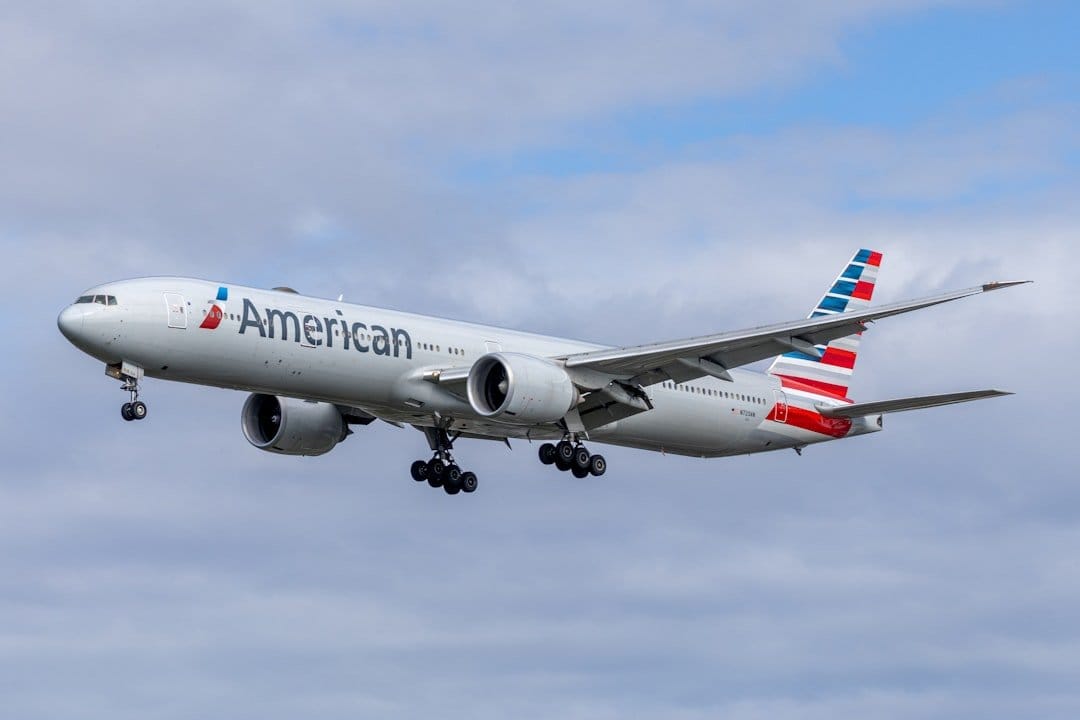
UK airlines consolidate same-day flights as fuel crunch deepens, and honestly, that might be the first sane thing this industry has done in years.
I got one of those “Your flight has been updated” emails the other day. You know the type. Subject line written by a robot, emotional impact of a tax audit. And weirdly, my first reaction was relief.
Because if UK airlines consolidate same-day flights as fuel crunch deepens, I’d rather get the bad news two weeks early than find out at Gate B27 on a Saturday morning while eating a deeply depressing Pret mozzarella baguette and watching 180 people rage-refresh an app like it’s going to generate kerosene out of vibes.
That’s basically my whole thesis. This isn’t really a fuel story. It’s an honesty story.
For years, airlines have sold timetables like they were sacred. In reality, a lot of those schedules were closer to optimistic fiction with a booking engine attached. Now fuel pressure is forcing everyone to admit something extremely unsexy and very true: planned inconvenience is better than fake reliability.
And yes, that does sound like something an exhausted operations manager would mumble into a Costa flat white at Heathrow. Still true.
The schedule was always a little fake
The headline, UK airlines consolidate same-day flights as fuel crunch deepens, sounds dramatic because we’re trained to think a published timetable means certainty. It never did. It meant intention. Maybe aspiration. Sometimes delusion.
The UK government is publicly saying there’s “no current need” for passengers to change travel plans. At the same time, ministers are planning contingencies after the effective closure of the Strait of Hormuz and monitoring the situation closely. Which is government language for: please remain calm while we quietly move the furniture.
The actual policy is pretty simple. Airlines can combine underfilled same-day flights on the same route, and they can give back a limited share of airport slots without automatically losing them next season. That matters because under normal slot rules, realism gets punished. If carriers trim weak flights too early, they risk future access. So instead they keep zombie services on life support until the whole thing collapses in public.
The Guardian reported that airlines are expected to cancel flights at least two weeks in advance where possible and move passengers onto similar services. That’s the part that matters. Cancel early. Rebook early. Let people salvage their plans before they’ve already paid £7.45 for sparkling water and crossed the point of no return.
Rob Bishton, chief executive of the UK Civil Aviation Authority, said the quiet part out loud: relaxing slot rules gives airlines more flexibility, and regulators expect them to give passengers as much notice as possible. Read that again. The goal is no longer pretending disruption won’t happen. The goal is moving disruption earlier, when it’s still manageable.
Bene. Finally.
Last summer I had a flight out of Gatwick that stayed “on time” right up until it very spiritually wasn’t. First it was a crew issue. Then paperwork. Then “operational reasons,” which is airline code for something is broken and we don’t feel like explaining it. I would have taken a cancellation email ten days earlier in a heartbeat. Instead I got six hours of fluorescent-light humiliation and a voucher that barely covered a Diet Coke.
That’s the scam. Not that schedules change. That they pretend not to.
Ghost flights were the dumb part
If you want my less diplomatic opinion, the weirdest thing in aviation isn’t consolidation. It’s that airlines have been nudged into running ghost flights because the rules made honesty expensive.
At airports like Heathrow and Gatwick, slots are gold. Under normal rules, if an airline doesn’t use enough of them, it risks losing them in the next season. So carriers end up flying routes they probably shouldn’t, sometimes half full or worse, because protecting the slot matters more than admitting the flight is pointless.
Travel Weekly was explicit that the new move is meant to avoid ghost flights and same-day airport chaos. The Guardian put it even more clearly: airlines can hand back a limited proportion of takeoff and landing slots without losing the right to operate them next season. For once, the system is not rewarding theater.
And this matters a lot more when fuel gets tight. The UK imports around 65% of the jet fuel it uses, according to The Guardian, with a lot of that linked to Middle East flows. So every underfilled flight stops being a harmless scheduling vanity project and starts looking like what it is: a bad use of a scarce resource.
The government itself said flights that “have not sold a significant proportion of tickets” may be cancelled to avoid wasting fuel on near-empty planes. Good. That sentence should not be controversial. My nonna would still accuse me of defending airlines and probably revoke my citizenship, but she’d also understand that sending a half-empty Airbus into the sky to satisfy a bureaucratic attendance policy is idiotic.
There’s also a brutal operational truth here. When the system is under stress, every unnecessary flight steals flexibility from a necessary one. Fuel, crews, aircraft time, stands, rerouting options, recovery margins: it’s all connected. Passengers see one cancellation. Operations sees a domino line.
I learned this the hard way when I was doing too many London-Milan runs and pretending that was “efficient” rather than a symptom of my inability to pick a continent. The 7:05 looked useful. The 9:20 looked convenient. The 12:10 looked like optionality. But if the airline only had enough slack to run two of those credibly, the third wasn’t consumer choice. It was decorative.
That’s why ghost flights annoy me so much. Not because empty planes look bad, although they do. Because they preserve the fantasy of abundance when the inputs don’t support it.
The least-worst option is still an option
Consolidation sounds bad because nobody likes being told their 8:15 is now a 10:40. I don’t like it either. I’m irrationally attached to my chosen departure time, like a toddler with a specific spoon.
But from a passenger perspective, this can be the least-worst outcome by a mile.
If two lightly booked flights become one fuller service, the airline preserves fuel, crew time, aircraft utilization, and recovery capacity. That last one matters more than people think. Recovery capacity is the difference between “slightly annoying morning” and “the whole network is on fire by 4 p.m.”
IATA said March 2026 total demand was up 2.1% year over year while total capacity was down 1.7%, with load factor at 83.6%. So this is not a story about people suddenly refusing to fly. Demand is still there. The scarce thing is resilience.
Willie Walsh at IATA said demand kept growing despite disruptions in the Middle East, and forward bookings had not deteriorated. Which makes sense. People are still trying to go to Mallorca, Mykonos, Orlando, wherever. Nobody is cancelling summer because they suddenly got interested in maritime chokepoints.
But the regional numbers are ugly. IATA also reported a 60.8% drop in traffic by Middle East carriers. That’s not a blip. That’s a system shock. And when one region gets hit that hard, the ripple effects don’t politely stay in their lane.
Walsh also said everybody is watching jet fuel supply and pricing. Same. Though in my case I’m doing it while trying to decide whether trusting a 6:30 a.m. departure from Stansted counts as optimism or self-harm.
As someone who travels constantly, I’d much rather lose a preferred departure time than gamble on a same-day operational collapse. Give me one believable flight over two fake ones. I can answer emails from a lounge for an extra hour. I cannot manifest a crew, a fuel truck, and an intact rotation once the day starts unraveling.
More flights are only better if they’re real.
Your passenger rights in the UK still matter. Don’t panic-click.
This is where people make their lives dramatically worse.
When a flight gets cancelled, most passengers don’t get burned because they have no rights. They get burned because they react too fast.
According to the CAA, if your flight is cancelled, you generally have three options: a refund, rerouting at the earliest opportunity, or rerouting later at your convenience, subject to availability. Those passenger rights flight cancellation UK rules apply regardless of how far in advance the cancellation happens. Early notice does not erase your rights.
The trap is that once you choose, you usually can’t reverse it. The CAA says that once you commit to one of those options with your airline, you’re unlikely to be able to change your mind. So if you smash the refund button in a righteous little fury and then remember you still need to get to Málaga for your cousin’s wedding, congratulations, you’ve just made your own life harder.
The CAA is unusually direct about this: do not choose a refund if you still wish to travel. Honestly, that should be tattooed onto every cancellation email. It’s the travel version of rage-texting your ex. Feels powerful for eleven seconds. Strategically terrible.
Refunds should usually be processed within seven days, though bookings made through third parties can take longer. Which is why I keep telling people not to overcomplicate simple trips with bargain-bin booking sites unless the savings are actually meaningful. If your €37 “deal” buys you three extra layers of customer-service purgatory, was it really a deal? Boh.
And if you’re already at the airport and choose rerouting, the airline should provide care: meals, refreshments, hotel accommodation where needed. The UK government repeats the same core point: if your flight is cancelled, you’re entitled to a full refund or an alternative flight under UK law. So no, these contingency measures do not vaporize consumer rights. They just move the disappointment earlier in the timeline.
I used to be embarrassingly bad at this. I’d get a cancellation, take it as a personal insult, and start making decisions like a Roman emperor with low blood sugar. Once in New York I took a refund too quickly because I was convinced I’d outsmart the airline by rebooking myself. I ended up paying triple for a later ticket and sleeping next to a charging station at LaGuardia like a humbled idiot in Allbirds.
Learn from my nonsense. Read the options twice.
This is a UK story, but it’s really a Europe story
The reason UK airlines consolidate same-day flights as fuel crunch deepens matters beyond Britain is that it shows how thin the margin really is in European aviation.
We like to imagine Europe’s air network as this polished machine. Sleek. Efficient. German, basically. In reality it’s a giant timing puzzle held together by fuel flows, slot rules, geopolitics, overworked crews, and a lot of crossed fingers.
The fuel problem starts with the Strait of Hormuz, effectively closed since early March according to the UK government. I’m not going to cosplay as a foreign-policy guy here, because that’s not my lane and also I enjoy being correct occasionally. But the basic point is obvious: when a major chokepoint for oil and refined products gets disrupted, aviation fuel supply stops being abstract very quickly.
The UK government says it is planning for contingencies while trying to secure a “long lasting and workable solution” to restore shipping flows. That is diplomatic code for: we do not control the core problem, so we’re trying to reduce the blast radius.
IATA has been much blunter. In April, Willie Walsh said that by the end of May Europe could start to see cancellations for lack of jet fuel. Not in some vague future. Not theoretically. Europe. Soon.
Then ACI Europe, as reported by Business Travel News Europe, warned that a broader EU jet-fuel shortfall could show up within weeks if flows through Hormuz don’t stabilize. Which is why I roll my eyes when every travel conversation gets flattened into app hacks and booking tricks. Set alerts. Compare fares. Use points. Sure. But sometimes the issue is not your browser strategy. Sometimes one of the world’s major shipping arteries is jammed and the whole logistics system is surviving on espresso and denial.
A month ago in Milan, I was at a bar near Porta Venezia talking to a friend who works in supply chain. I described travel as chaotic. He laughed and said, “No, chaotic would be honest.” Fair enough. Aviation usually looks orderly because the mess is hidden somewhere else, in buffers, in inventory, in staffing stretch, in schedule padding, in somebody quietly eating the cost.
What the UK is doing now is basically admitting the buffers are not infinite. Europe should pay attention. This is what a stress fracture looks like before it becomes a break.
The next luxury in travel is a schedule you can believe
I don’t think the premium product in travel over the next few years is going to be more legroom or nicer lounge hummus. I think it’s going to be believability.
A schedule that actually means something.
Even Michael O’Leary, a man who usually speaks like he’s trying to start a minor diplomatic incident, sounds like someone planning around fog he can’t see through. Speaking to Aviation Week in Vienna on April 21, he said fuel companies were saying Europe looked okay until the end of May, but “nobody has yet given us an undertaking for June.” Then he added the line that says everything: “Nobody gives assurances for June, because nobody knows.”
That’s the mood. Nobody knows.
O’Leary also flagged some UK airports dependent on Q8 fuel supply as the biggest immediate risk. That’s not generic airline drama. That’s a very specific warning about where exposure sits. And then there’s the cost side: Ryanair had 80% of its fuel hedged at $67 per barrel, while the remaining 20% jumped to $150 in April, according to Aviation Week’s reporting on his remarks. You don’t need an MBA to understand that planning gets weird when your unhedged fuel bill goes feral.
But even there, the more important point isn’t price. O’Leary said Ryanair could absorb higher costs and that the real issue would be fuel shortages in Europe. Exactly. Price hurts. Shortage breaks schedules.
So I keep landing in the same place. Airlines, regulators, and passengers need a new deal. Fewer fantasy frequencies. More credible operations. Less obsession with looking reliable right up until the second everything explodes. More willingness to say, early and clearly: this route will run three times today, not five, and these are the three we can actually stand behind.
That may sound less customer-friendly on paper. In real life, I think it’s the opposite.
Because if your airline offered five daily flights to the same city but only three were truly dependable, would you really want the fake abundance? I wouldn’t. Give me the honest three.
We’ve spent years rewarding airlines for looking reliable instead of being reliable. This fuel crunch might be the first moment regulators are admitting that honesty has to beat optics.
And if that idea survives this summer, it won’t just be a temporary fix. It’ll be a blueprint.
Which, honestly, is overdue. Travel has been running on vibes for way too long.
Sources
- Primary trending article
- Jet fuel and travel plans: what you need to know
- Consumer travel advice – Summer 2026
- Government unveils contingency plans for jet fuel shortages in UK
- UK airlines given green light to cancel or consolidate flights to conserve jet fuel
- March Passenger Demand Up 2.1% But Sharp Regional Differences