
Interesting Trends in Europe’s AI Policy Shift
Europe’s most important AI story isn’t regulation alone. It’s the slow build toward shared infrastructure, resilience, and continental scale.
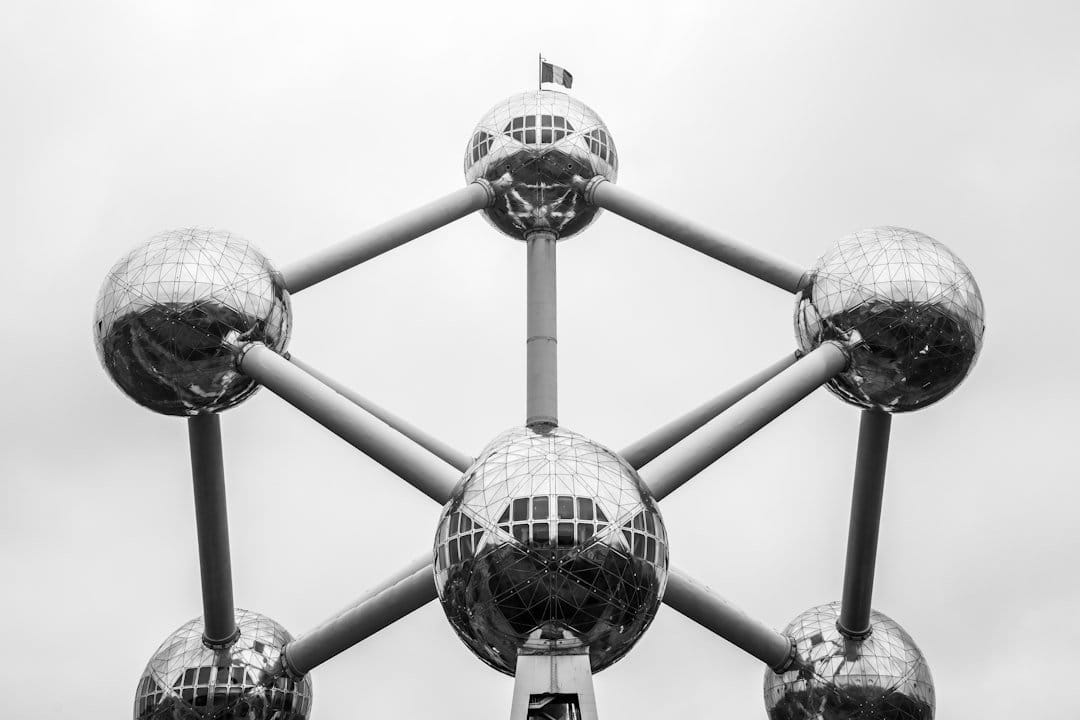
I used to hear “Brussels is announcing a new framework” and immediately assume someone had built a fresh PDF instead of a real plan. Very European. Very elegant. Very useless.
I’m less smug about it now.
Because one of the most interesting trends in Europe has almost nothing to do with the internet’s favorite lazy argument — “haha Europe only regulates AI.” What’s actually happening is weirder, slower, and way more important: Europe is building the plumbing. Cross-border plumbing. The kind nobody tweets about until it bursts and floods the whole building. And if you’ve ever lived in an old apartment in Rome, you know plumbing is not a metaphor. It’s a threat.
That’s the part people keep missing. The EU isn’t just writing rules for AI. It’s slowly, unevenly, sometimes painfully trying to stitch together a political and economic operating system that can survive shocks — cyberattacks, energy chaos, payment disruptions, labor pressure, climate stress, all the fun stuff. AI is going to sit on top of that stack whether people like it or not.
Not sexy. I know.
Also probably the whole game.
Everyone Wants an AI Champion. Europe Is Building the Grid
The loudest AI story in Europe is always the same: where’s the European OpenAI, where’s the €100 billion giant, where’s the founder in a black t-shirt explaining civilization on a podcast. Fine. Fun. Great content.
Meanwhile Europe is doing something much less photogenic. It’s building the grid those companies would need if AI stops being a toy and starts becoming infrastructure.
That distinction matters. If AI is just autocomplete with venture funding, then sure, startup logic wins. Move fast, break things, post a thread, raise another round, order Erewhon. But if AI gets embedded in banking, insurance, healthcare, logistics, public administration, energy systems — then continuity, trust, redundancy, and coordination matter a lot more than founder charisma.
That’s why I paid attention to the European Commission’s March 2026 report on financial resilience. Buried inside the driest language imaginable is the real story: the EU wants systems that keep working under stress. Geopolitical shocks. Cyber incidents. Natural disasters. The report points to DORA, the Digital Operational Resilience Act, as the common framework for managing ICT and cyber risk across finance.
People love mocking this kind of thing because it sounds peak Brussels. Acronyms. Compliance. Grey carpet energy. But if you’re building AI products for regulated sectors, this isn’t side content. This is the content. Your product is only as real as the rails under it.
The Commission also framed this as part of a broader “preparedness union” strategy, which sounds like something invented by consultants in a bunker, but the instinct behind it is right. Europe is slowly moving from “let’s regulate the problem” to “let’s make the system harder to break.”
That’s a real shift.
And yes, Europe is still fragmented. Obviously. I’m not here to pretend the single market is finished just because someone in Brussels made a nice slide. But the direction is changing. Enrico Letta’s Much More Than a Market made the point clearly: Europe either learns to think at continental scale or it accepts decline by fragmentation. He wasn’t being dramatic. He was being Italian. There’s a difference.
The old cliché — America innovates, China scales, Europe regulates — is getting stale fast. Europe is trying to become something else: a systems continent.
Less sexy than a unicorn. More useful than one.
The Boring Stuff Is the Story
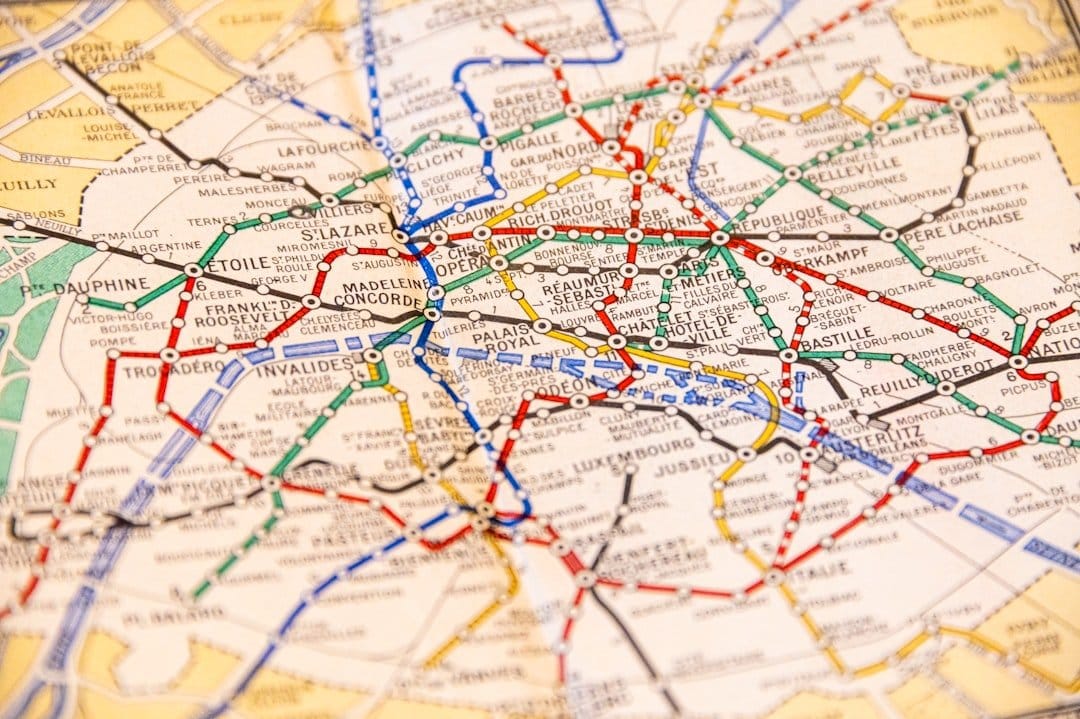
Payments. Cyber rules. Identity. Access to money. Continuity when things go sideways.
That’s the story.
The same Commission report makes a big deal out of payment continuity and access to money, through both cash and digital payment systems, and explicitly links that to the digital euro conversation. Again, not flashy. Hugely important.
I’ve built products where the weak point wasn’t the app. It was the dependency chain underneath it. One vendor goes down. One payment issue hits. One cloud outage ripples through the stack. One regulator interprets a rule differently on a Tuesday morning. Suddenly all the demo magic dies in public.
That’s why I’d rather build on boring infrastructure that works than on hype that evaporates the second AWS sneezes.
My hot take is simple: Europe’s obsession with trust and resilience might actually become a moat in AI.
Especially in sectors where vibes do not count as a control system. Banking. Insurance. Healthcare. Govtech. Industrial software. Anything involving money, records, liability, or actual citizens instead of “users” in a pitch deck. In those markets, trusted infrastructure beats chaos in a hoodie.
And this is where the digital euro gets more interesting than people admit. I’m not saying a digital euro magically turns Europe into an AI superpower. Calma. I’m saying that if a continent controls trusted payment logic, public digital infrastructure, and continuity mechanisms, it has a better shot at supporting AI in the real economy than a continent that leaves all of that to external platforms.
That’s not anti-American, by the way. I live in America. I use American tools every day. I also think pretending Europe can talk about sovereignty while depending forever on US hyperscalers and Chinese hardware is unserious.
At some point you either build some of the stack or you admit you’re renting the future.
Interesting Trends in Europe’s AI Future
If institutions are half the story, people are the other half. And some of the most interesting trends in Europe are buried in labor reports that everyone ignores because they read like punishment.
The Joint Employment Report 2026 is actually blunt about the pressures ahead: demographic change, the green transition, and the digital transition. That’s the real AI conversation. Not just “can we train models?” but “can the workforce absorb this shift while the continent gets older and growth stays uneven?”
Because here’s the uncomfortable bit: you cannot sell AI productivity miracles on a continent that still underinvests in skills, labor mobility, startup scaling, and risk capital. You just can’t. That’s not anti-Europe. That’s basic honesty.
I say this as someone who loves Europe enough to be annoyed by it. I’ve done the Brussels-Paris-Milan-Berlin circuit. Great espresso. Great panels. Great words like ecosystem and innovation and competitiveness. And still, way too often, we confuse talking about execution with actually executing.
We still have 27 mini-ecosystems, each with its own rules, tax quirks, procurement habits, and national ego. Bellissimo. Also absurd.
The report talks about “upward social convergence,” which is very Brussels-speak, but the underlying point is solid. If the gains from digital and AI pile up only in a few rich regions and a few elite firms, Europe will crack politically before it scales economically.
That’s the vulnerability people underestimate.
Not just compute. Not just capital. Social cohesion.
A few years ago, after spending enough time bouncing between New York and California, I started absorbing the standard founder brainworms: Europe is too slow, too cautious, too fragmented, too allergic to ambition. Some of that is fair. Some of it is just software guys mistaking their industry for the whole economy.
Then I’d go back to Europe and remember something Americans often underestimate: institutions still matter there. Public systems still matter. Worker transition still matters. If AI really does hit labor markets hard — and I think it will — Europe asking who gets retrained, who gets left behind, and how regions adapt is not weakness. It’s state capacity.
Ursula von der Leyen said Europe has what it needs to lead in innovation, but that innovators need to scale across the Union. That second part is the whole thing. Across the Union.
Not in one city. Not in one national sandbox. Across Europe.
Otherwise it’s just 27 launch parties and no market.
From Climate Policy to AI Policy, Europe Is Finally in Its Implementation Era
Europe used to deserve the criticism that it was better at targets than execution. I say that with love, and receipts. We were amazing at declarations. Less amazing at making normal life feel different.
That’s why I think the implementation side of climate policy matters so much. Not because every AI founder suddenly needs to cosplay as an energy analyst, but because this is where Europe’s strengths become concrete. Buildings, energy use, renovation, local infrastructure, municipal systems, public procurement — this is the real economy, not a demo day hallucination.
If you grew up in Europe, you know our buildings are usually one of four things: beautiful, freezing, bureaucratically protected, or somehow all three. My nonna’s apartment in southern Italy could survive a medieval invasion but not a modern heating bill. That is exactly why this matters.
This is a very European AI opportunity.
Energy optimization. Building retrofits. Grid balancing. Municipal planning. Logistics. Maintenance. Health administration. Industrial workflows. These are areas where Europe has actual depth, actual need, and actual institutions. AI gets valuable here not because it writes emails faster, but because it helps run physical systems better.
And this is where coordinated EU action matters more than another generic chatbot launch. Shared standards. Shared procurement logic. Shared funding tools. Shared data spaces. Call it boring if you want. Fragmentation is more boring, and much more expensive.
Mario Draghi’s line from the 2024 competitiveness debate still sticks with me: Europe has to act “as if we are one state” in the sectors that matter strategically. That’s the whole point. AI in energy, mobility, buildings, and industry is exactly where that mindset changes outcomes.
Europe does not need to cosplay as Silicon Valley to win.
It needs to stop apologizing for being good at different things.
The Macro Mood Has Changed, and That’s the Test
The ECB’s more recent posture tells you Europe is no longer in full panic mode. Inflation is cooling, even if not perfectly. Good. But weirdly, that’s when the harder part starts.
Crisis mode is simpler. Everyone sees the fire. You patch things. You hold emergency meetings. You invent acronyms at speed. In normalization mode, you actually have to build. That’s tougher. Voters are tired. Budgets are tighter. Every government suddenly rediscovers its domestic excuses.
Europe is resilient, yes. But let’s not act like we’re sprinting. We’re jogging with decent posture and a lot of committee oversight.
That’s why I think this moment matters. If Europe waits for perfect conditions to invest in AI infrastructure, skills, energy systems, and deeper integration, it will wait forever. There will always be another election, another coalition drama, another fiscal constraint, another reason this is somehow not the right time.
Mi dispiace. This is the time.
The direction of travel is becoming clear: either Europe coordinates at scale, or it remains a premium market for everyone else’s technology.
And I’m tired of that second option being dressed up as sophistication.
The real pro-European argument for deeper coordination isn’t some niche federalist fantasy for people who get emotional about train timetables — though, for the record, I absolutely do. It’s that capital markets, energy interconnection, digital infrastructure, defense capacity, industrial policy, and AI deployment are no longer separate files. They’re one file now.
That’s the systems-continent story.
And yes, I know saying “Europe should act more like one country” instantly summons the usual arguments about sovereignty, bureaucracy, democratic distance, and all the rest. Some of those critiques are fair. But the alternative in tech is not romantic national independence. It’s dependency.
Usually on companies and governments outside Europe.
That’s not sovereignty. That’s subcontracting.
The Real Bet
The real question isn’t whether Europe can produce one flashy AI unicorn that makes Americans on X post the eyes emoji for six weeks. I hope it does. I like winning. I’m Italian. This is not a culture of modest expectations.
The harder question is whether Europe can turn 27 states, cautious capital, aging demographics, climate pressure, and a giant regulatory machine into one coherent tech civilization.
That’s the bet.
And honestly, that’s why I’ve become more bullish on Europe lately. The center of gravity is shifting from slogans to systems. Financial resilience. Payment continuity. Cyber rules. Labor adaptation. Building renovation. Shared infrastructure. None of this looks cool online. Put it together and it starts to look like a continental operating system.
That might be the most interesting trend in Europe. Not regulation for regulation’s sake. Not another panel about “responsible AI.” Not waiting around for a single messiah startup to save the continent.
The interesting trend is Europe slowly realizing that scale is political.
And if that realization sticks, AI is where federalism stops being theory and starts becoming strategy.