
The Digital Nomad Visa Trap Nobody Mentions
Approval is the easy part. The real cost of a digital nomad visa shows up later in taxes, housing, paperwork, and daily instability.
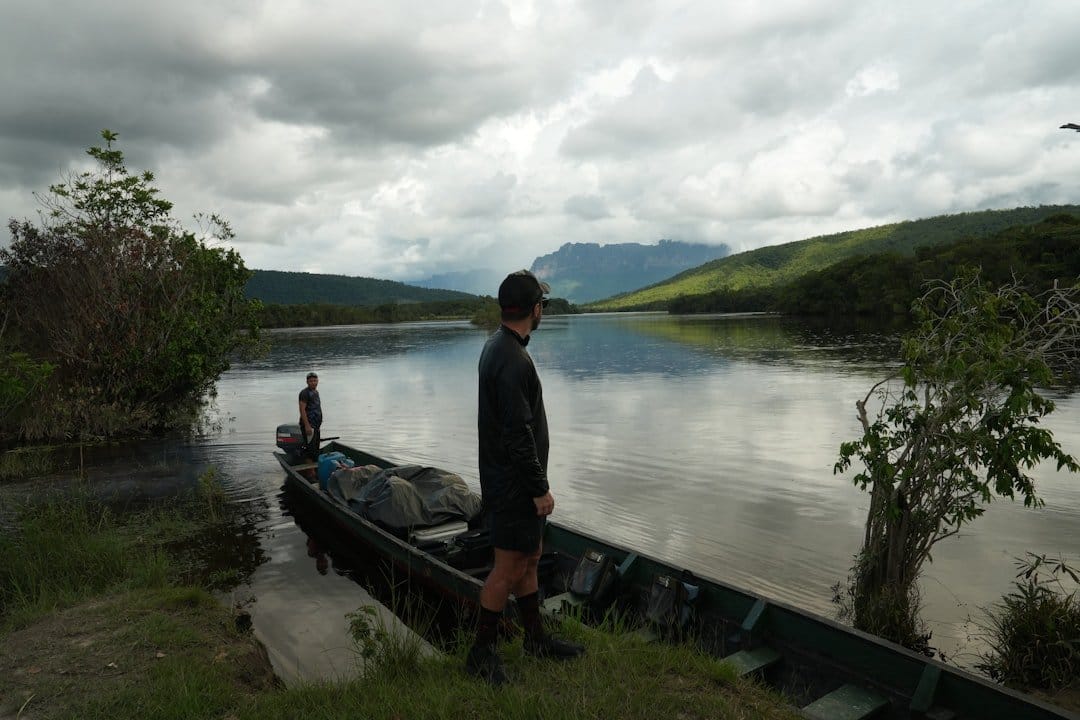
The digital nomad visa trap nobody talks about is not getting approved. It is the paperwork, tax ambiguity, instability, and daily admin that begin after the approval email lands in your inbox.
I’ve taken immigration calls from apartments so beautiful they should have fixed my mood automatically.
Picture it: perfect light, strong cortado, balcony straight out of an Airbnb listing written by a poet on Adderall. I’m supposed to feel like I hacked life. Instead, I’m on hold with some government office, trying to decode a residency rule explained three different ways on three different websites. One says register in 30 days. One says 90. One basically says “ask your local office,” which is bureaucrat language for vai a farti benedire.
That, for me, is the digital nomad visa trap nobody talks about.
The trap is not getting approved. The trap is what happens after. The internet treats the approval email like the finish line: confetti, passport stamp, ocean view, freedom. In reality, that email is usually your welcome packet to a new subscription service called Living Abroad Admin, and the monthly fee is your time, your money, and occasionally your will to live.
I’m not anti-digital nomad visa. I’ve worked remotely from enough places to know they can be genuinely useful. What I am anti is the fantasy packaging. People talk about these visas like a government saying “sure, come” also means your taxes will be simple, your housing will be stable, your social life will magically exist, and your weird little founder-freelancer setup will slide neatly into local law.
Mamma mia. No.
The digital nomad visa trap nobody talks about starts after approval
I’m calling it a scam for dramatic effect.
But only a little.
Most digital nomad visa content obsesses over the sexy bits: income thresholds, application steps, processing times, screenshots of approvals. Very few people post about address registration, health insurance compliance, tax IDs, document translations, bank accounts that require six contradictory proofs of address, or the tiny detail that your landlord might not be able, or willing, to give you the paperwork you need to become legal.
That part does not go viral because it is ugly. It is PDFs. It is stamps. It is fluorescent lighting.
Tourists get the highlight reel. Residents get obligations.
That is the shift people underestimate. The second you stop being a visitor and become a long-stay resident, even temporarily, you enter the world of systems. Systems want forms. Systems want deadlines. Systems want the exact same document you already uploaded, but now printed, signed in blue ink, and brought to an office across town that opens only on Tuesdays for 47 minutes. Bellissimo.
And let’s be adults for a second: governments are not rolling out remote work visas because they are invested in your Eat Pray Slack era. They are doing it for their own reasons.
- Economic development
- Population strategy
- Filling empty housing
- Getting higher earners to spend locally
- Collecting tax revenue if you stay long enough to get interesting
You are not the main character in their policy design. Sorry.
I learned this the hard way in Europe a couple years ago. On paper, the residency path looked clean. Elegant, even. The visa itself was weirdly easy. Almost suspiciously easy. The real pain started after: tax registration, insurance questions, lease issues, local appointments, and one deeply spiritual afternoon where I had to print the same form three times because each clerk wanted a different page signed in a different place. Blue pen only. Naturally.
My nonna would have called that una presa in giro.
That is the first trap. People think the hard part is getting in.
Usually, getting in is just the trailer.
Cheap rent is cute until you need a real life
I love a bargain. I’m Italian. It is basically cultural.
If I can get a beautiful apartment, walkable streets, and espresso that does not taste like burnt depression for less than New York or Miami, obviously I’m listening. But a lot of people choose nomad destinations the way they choose boutique hotels: based on aesthetics, price, and vibes. Fine for a week. Maybe a month. After that, the boring stuff starts charging interest.
Can you get decent healthcare without turning it into a side quest? Can you sign a proper housing contract? Is the internet reliable, or “mostly fine except when it rains and Mercury is in retrograde” reliable? Is there a coworking space with actual workers, or is it just twelve crypto guys and one person filming a “day in my life” near a fake plant?
This is where I become deeply unsexy.
I grew up in Italy, so I have a fairly high tolerance for romance and chaos in the right ratio. I understand the charm of mild dysfunction. A delayed train. A shop closed for reasons no one can explain. A long lunch that derails the entire afternoon. That is culture. That is texture. I respect it.
But there is a difference between charming inefficiency and “my internet has been down for nine days and now my client thinks I joined a monastery.”
That difference matters when your income depends on remote work.
I’ve stayed in places that were objectively affordable and still expensive in every way that mattered. Expensive in time. Expensive in stress. Expensive in those tiny daily frictions that make you irrationally tired by 3 p.m. You save money on rent, then spend it back on taxis, coworking passes, backup SIM cards, translation help, short-term housing gaps, and random admin nonsense that somehow always requires cash.
And then there is the social part, which everyone ignores until they are lonely enough to start over-attaching to one barista.
You can be in a stunning place and still feel weirdly unmoored. I’ve had months abroad where everything looked perfect on paper and I still felt like I was living inside a very pretty waiting room. No rhythm. No people. No favorite grocery store. No gym I actually liked. No friend I could text when my landlord sent me a cheerful voice note that was definitely bad news.
That part got me more than I expected.
I used to think I was great at solitude. Turns out there is a difference between independence and low-grade isolation. One feels like freedom. The other feels like ordering too much takeout and pretending you are “optimizing for flexibility.”
Sure, Luca.

The instability part nobody puts in the relocation reel
Here is the less fun part.
If you are staying somewhere for months, maybe a year, you are not choosing a vacation anymore. You are choosing exposure. To bureaucracy, yes, but also to politics, protests, strikes, regional tension, flight disruptions, border issues, and the general fact that the world has gotten a lot less predictable than the average relocation thread on Reddit would have you believe.
A digital nomad visa can make you feel official in a place that is still fundamentally unstable.
That sentence annoys people because the whole nomad fantasy runs on emotional certainty. You got the visa. You found the apartment. You know where to get good coffee. You feel established. But residency status does not equal predictability. It just means you have paperwork.
I’ve made this mistake myself. I’ve looked at a place through the lens of weather, food, cost, and visa ease, and treated safety like a static checkbox instead of a moving target. That is dumb. Affectionately dumb, but still dumb. Conditions change fast. Flights get canceled. Advisories shift. Insurance gets weird. Embassy guidance changes. A nearby conflict that felt abstract suddenly becomes very concrete when your route out disappears or your easy base becomes logistically annoying overnight.
If you are there for four days, you can roll with that. If you are there for nine months with a lease, a work setup, and maybe a cat because you got emotionally attached and overconfident, disruption gets expensive very fast.
And if your backup plan is “I’ll just leave,” okay. Leave how? To where? With what documents? On what notice? Using which money?
I’m not catastrophizing. I’m talking like someone who has stared at three airline apps at once and pretended to be chill.
Taxes are where everyone suddenly becomes mysterious
Now we get to the part where otherwise smart adults start acting like Victorian children when asked a direct question.
Taxes.
People love saying, “I’m on a digital nomad visa,” with this breezy little shrug, like they have transcended geography itself. Ask where they are actually tax resident and suddenly everyone turns into a philosopher. “It’s flexible.” “My setup is international.” “My accountant says it depends.” Ah yes, depends, the favorite word of every founder about to learn a lesson the expensive way.
This is a huge part of the digital nomad visa trap nobody talks about.
The trap is not always a giant tax bill. Sometimes you will not owe more. Sometimes you might even get favorable treatment. The trap is ambiguity. Compliance burden. Accountant fees. Deadlines. Treaty questions. Employer mismatch. The very unserious assumption that because your work is flexible, your legal reality must be flexible too.
It is not. Not even close.
Founders and freelancers are especially bad here. I say that with love because I am one. We confuse mobility with clarity. We think: my clients are global, my company is registered here, I’m living there, I’m billing online, I’m only kind of in that other place, so this probably all fits together neatly. Sometimes it does. Often it mostly does. Occasionally it absolutely does not, and you find out after paying an accountant a sum of money that makes you briefly lose faith in civilization.
The nastiest version of digital nomad tax issues is not even the bill. It is the low-level uncertainty. Living for months in this vague fog where nobody can give you a clean answer without five caveats and a disclaimer. Are you triggering tax residency? Do the days count the way you think they count? Does your visa actually permit the kind of work arrangement you have? Is your foreign employer exposed because you are working long-term from another country? Have you accidentally built a life that works socially and aesthetically but not legally?
That last one happens a lot more than people admit.
And yes, part of the reason people do not talk about it is obvious: taxes ruin the fantasy. “Come work from paradise” sells. “Cross-border compliance uncertainty” does not. Nobody is making dreamy B-roll of themselves in a photocopy shop trying to understand treaty language.
Probably because it is hideous content.
What I ask before any visa application now
At this point, if I’m looking at a new country, I do not start with “Can I get in?”
That is amateur hour.
I start with: would I still want to live there without the visa? If the answer is no, I probably like the idea of the place more than the place itself. Red flag. Loafers on, but still a red flag.
Then: would I still want to be there if rent jumped 30% and the novelty wore off? Because rent moves, neighborhoods change, landlords get creative, and first-month dopamine is not a housing strategy.
Then: how fast could I leave if something changed next month? Not theoretically. In practice.
- Flights
- Backup countries
- Cash reserve
- Insurance
- Documents
- Phone plan
- Where my stuff is
- What happens to the lease
Then the really boring one: who handles my taxes, healthcare, and admin when the honeymoon phase ends? Not “I’ll figure it out.” Not “some guy on Reddit said.” An actual person. An actual process. Ideally one that does not require me to have an existential crisis in a copy shop.
And yes, I still look at incentives. I’m not above seduction. If a country or region wants to throw money at remote workers, of course I’m going to look. I have eyes. I also have rent. But I treat relocation incentives the same way I treat startup growth hacks: if the offer looks unusually generous, I immediately want to know what problem they are trying to solve, and whether I am comfortable becoming part of that solution.
That is the maturity test.
The best move is usually not the place with the flashiest visa, the prettiest launch headline, or the most aggressively aesthetic co-living video. It is the place with the least friction. The place where your work setup functions, your legal setup is boring in a good way, your daily life is stable, and your nervous system is not quietly paying for your freedom with compound interest.
I used to think freedom meant maximum optionality. More countries. More movement. More loopholes. More flexibility.
Now I think freedom is way less sexy.
Freedom is a setup that does not drain you.
So next time you see a shiny new remote-work visa getting passed around like a golden ticket, ask the rude question behind the digital nomad visa trap nobody talks about: if this offer is so good, what problem is the country trying to solve, and are you sure you want to become part of the solution?
That is where the real decision starts. Not with the approval email.
With the part nobody posts.